
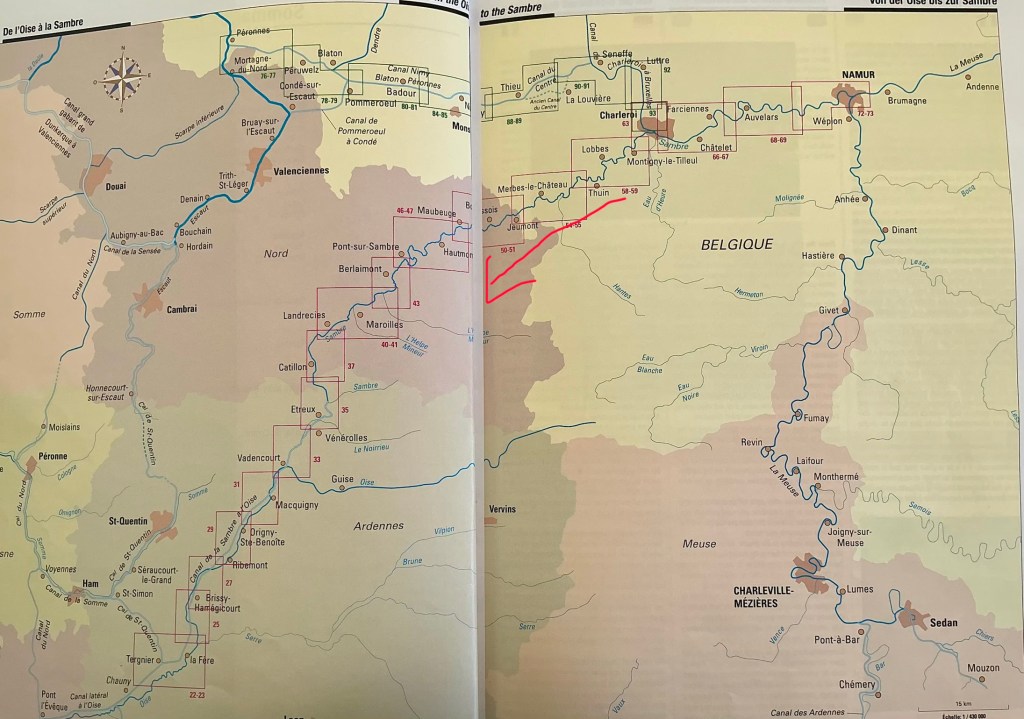
The river flows north from France into Belgium, eventually joining the Meuse at Namur. Since we were travelling south, we turned right at Charleroi and spent our first night moored at Marchienne. The next day we tackled our first lock (of the 57 locks we would need to navigate to the Canal St. Quentin.) Lock number 10, Monceau sur Sambre is operated by a lock keeper, who graciously takes your lines. This was much appreciated by the crew (that’s moi) as the lock is around 5 meters deep. We were going up, which is quite a reach. The next 9 locks are manually operated by a lock keeper. The joy of this system is you are part of a chain, so the lock is prepared for you to enter once you arrive. You just breeze through, no calling on the radio, or hanging around for a reply. I’m all for this locking system! Certainly it is a time saver. And it is also fun to chat to the lock keepers, practicing my school girl French.
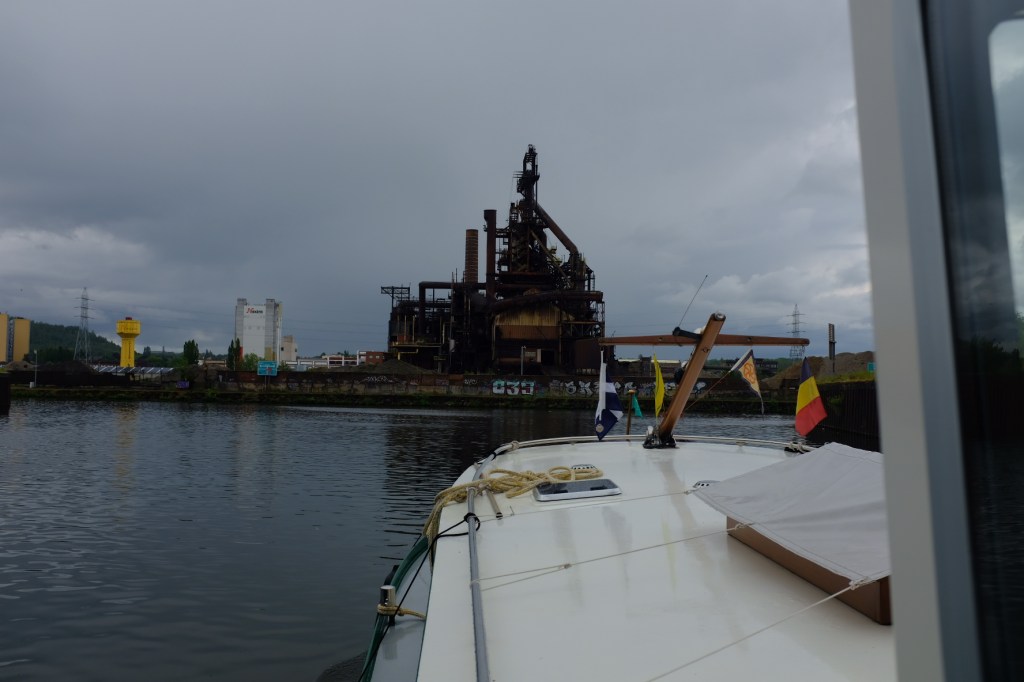
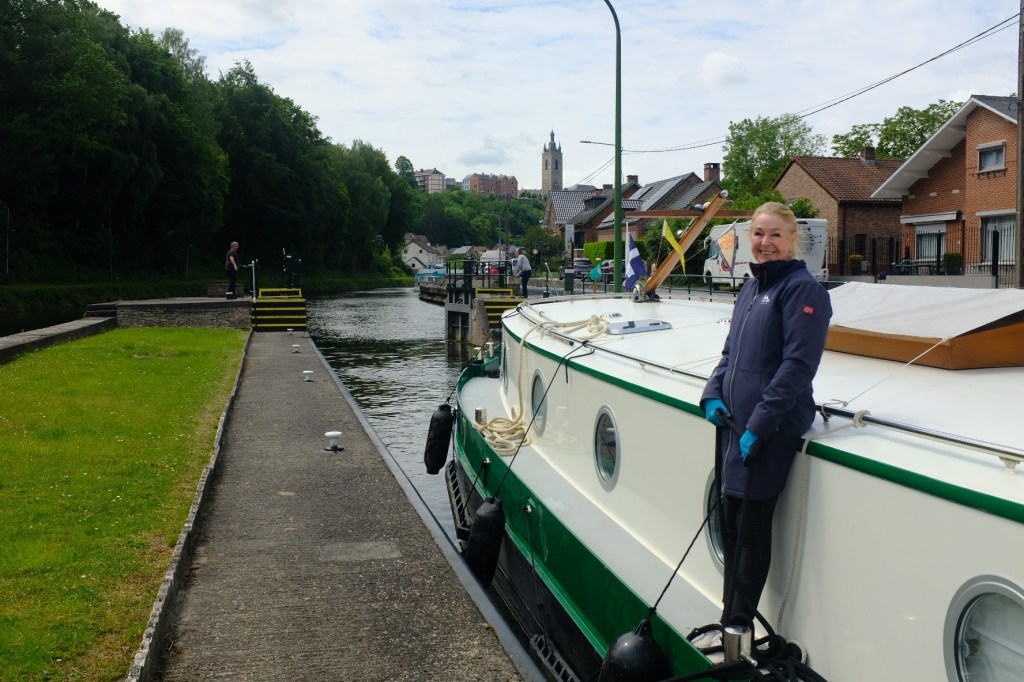
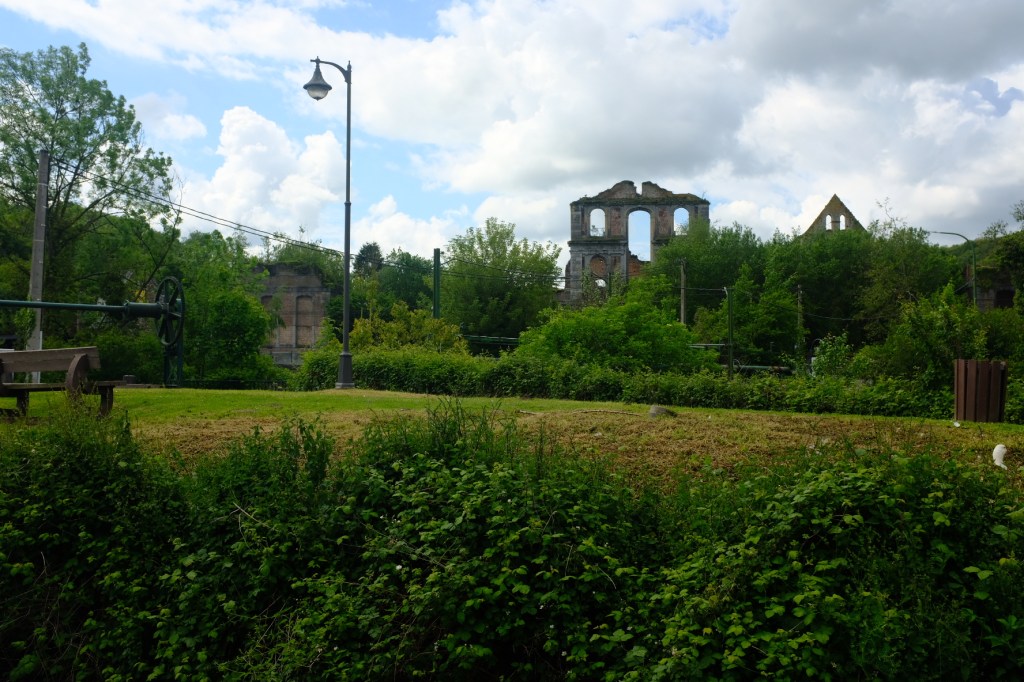
We had left the old industrial heartland of southern Belgium and made our way to the peaceful countryside, small villages and ancient ruins. We stopped at Thuin, an old barging port in time for their annual festival.
The festival of st.Roch, 3rd Sunday in may
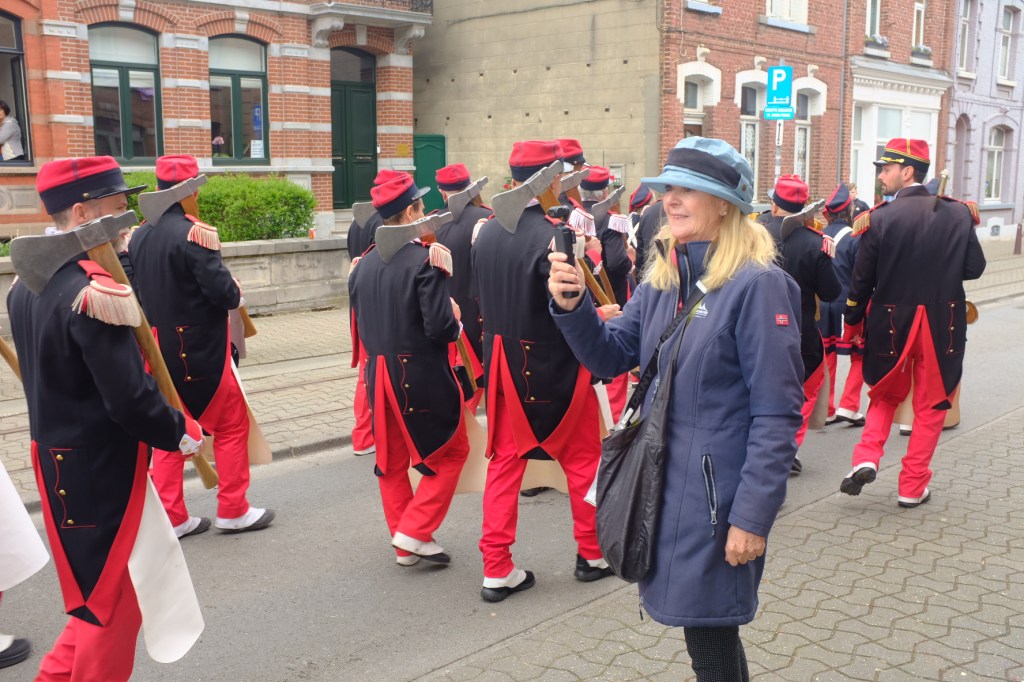
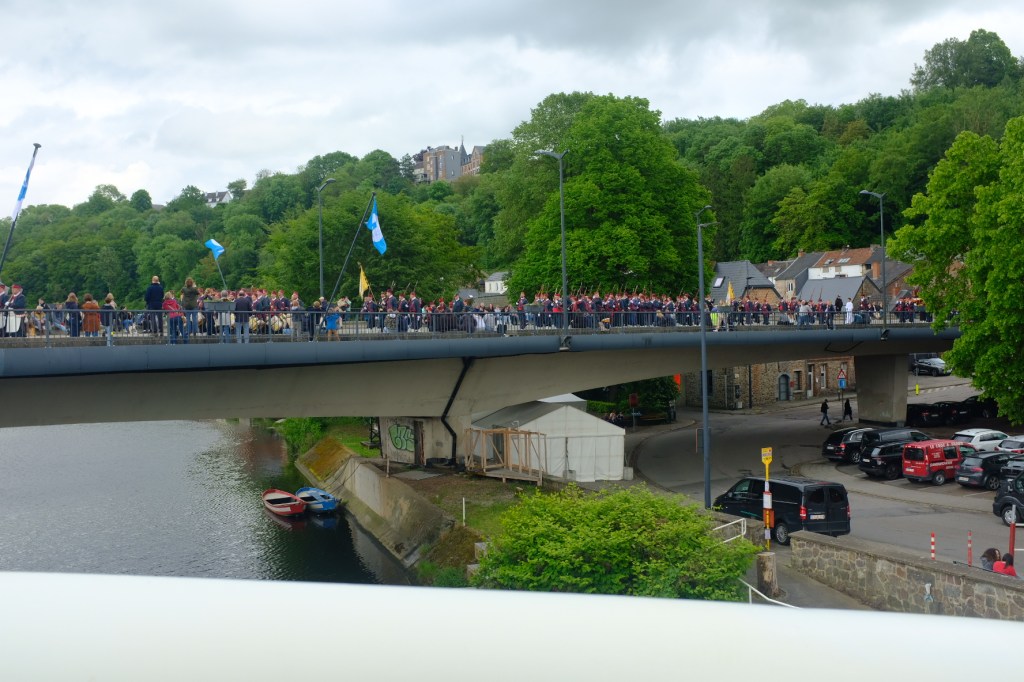
The festival commemorates the help received from St. Roch during the towns fight against the Spanish in 1654. The saint didn’t actually partake in the battle as he died in 1376. Rather when the Spanish army were defeated by the citizens of Thuin this victory was attributed to the intervention of St. Roch. He again intervened in 1866 and saved the town from an epidemic of cholera. A very busy fellow! The 3 day festival involves both a military marches and a religious procession.
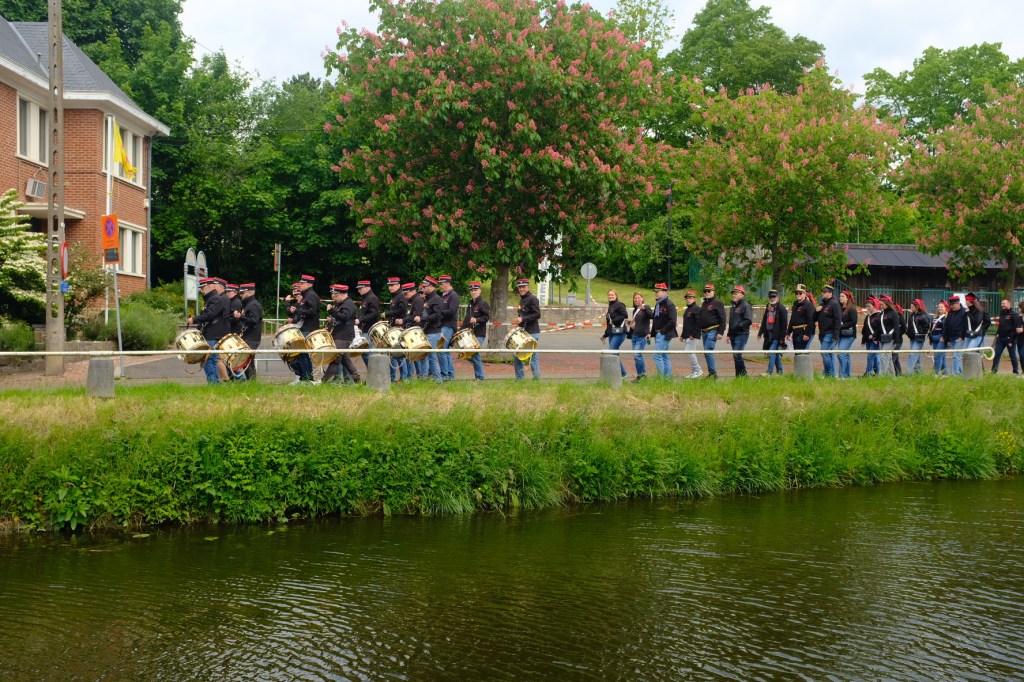
Sunday was the big day. The saint’s icon was taken from its niche in the Eglise Notre Dame Vaux de Thuin and carried through the town, accompanied by more than a dozen marching bands. Many of the participants carried axes and guns, which were fired repeatedly throughout the day and well into the night. Every so often a cannon would go off and make us jump out of our skin. At times, it felt a little like what I imagine being in a war zone might be like.
The Statue of the saint being removed from the niche
And here comes the saint! Or at least his statue
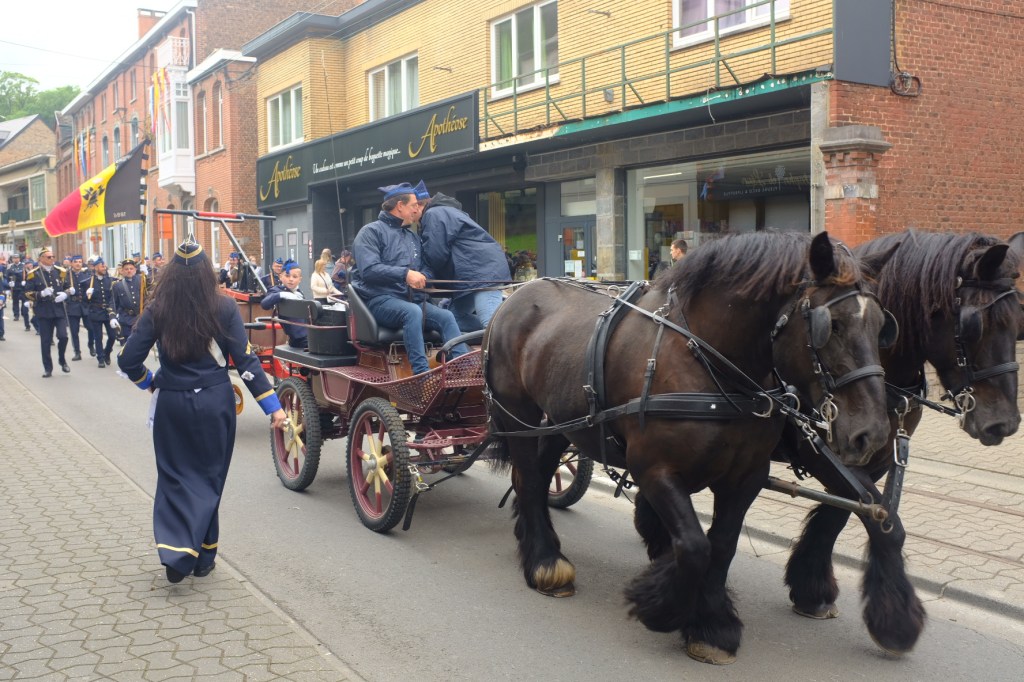
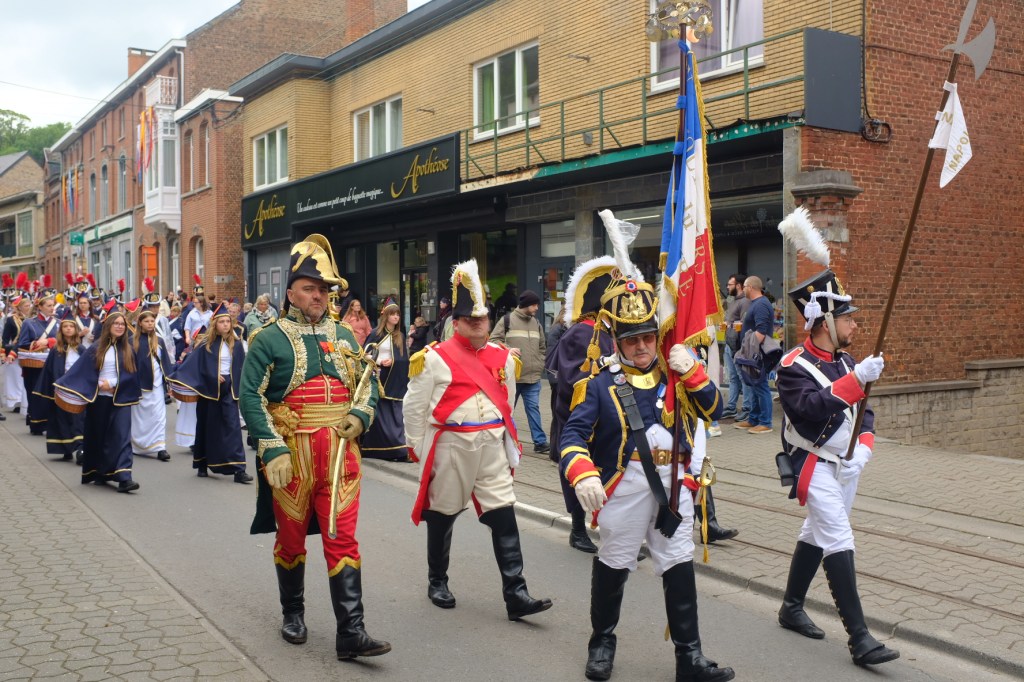
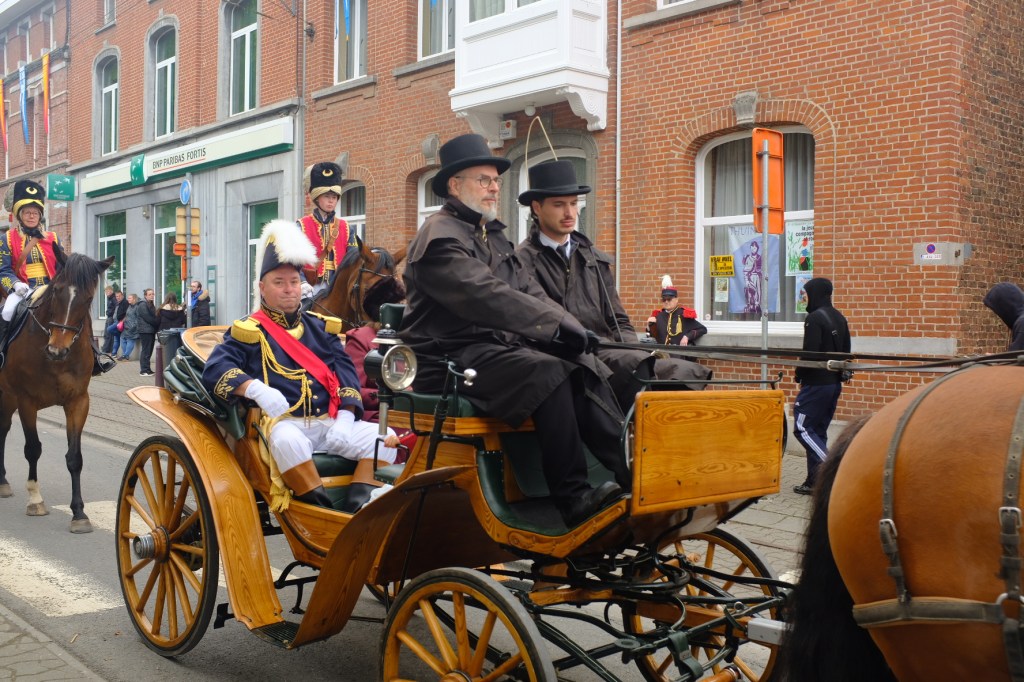
After all the excitement we retired back to our boat to enjoy a little peace and quiet. We left the next day with the town still celebrating. We were now entering France, our first stop the unremarkable town of Boussois. Very pretty mooring with an attractive garden, but that’s about all you could say about the town. We had also left behind the manually operated locks and had picked up our tele commander that would help us navigate the next 9 locks. It is interesting to note that this route into France was closed for 15 years due to the collapse of 2 aqueducts, reopening in 2021. The cost of this exercise was over 20 million euros, with another annual spend of 2 million euros to encourage local tourism. Unfortunately most of the local villages have done little to take advantage of this opportunity to generate economic benefits to the region as a whole.
With our trusty push button tele commander which automatically sets the locking process in motion, on board we continued the climb up the hill to Berlaimont. Now I could have stayed a little longer in this pretty village that boasts a very good supermarket and an excellent boulangerie. But the rain had set in , which was not conducive to exploring. I have discovered one of the delicacies of this region, salt and pepper baguette. You must try one, it is certainly on a par with crystal salted butter!
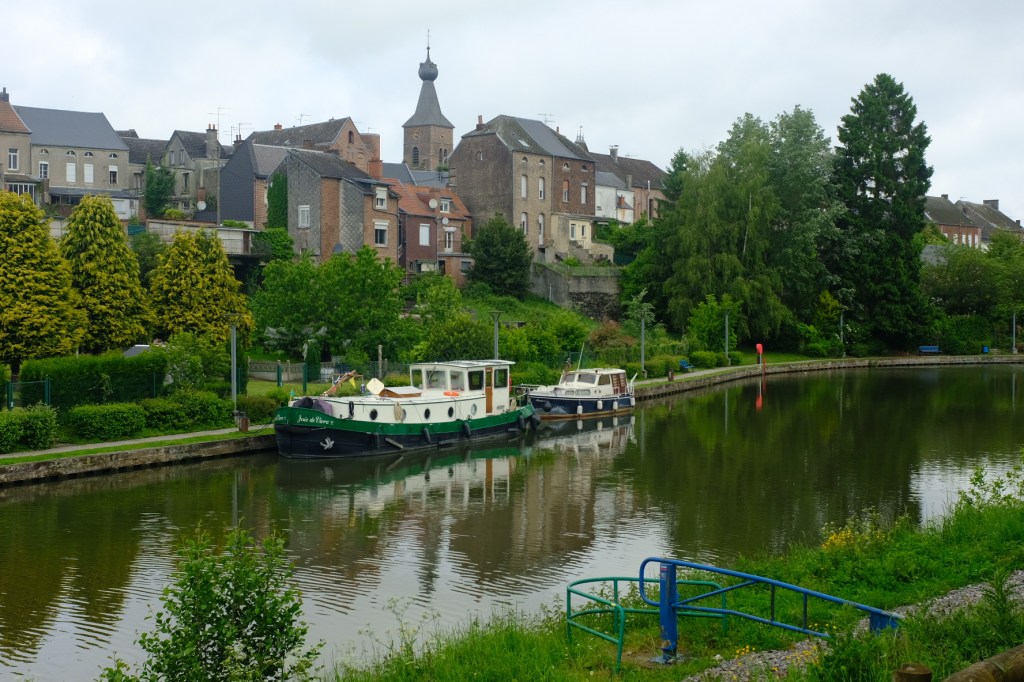
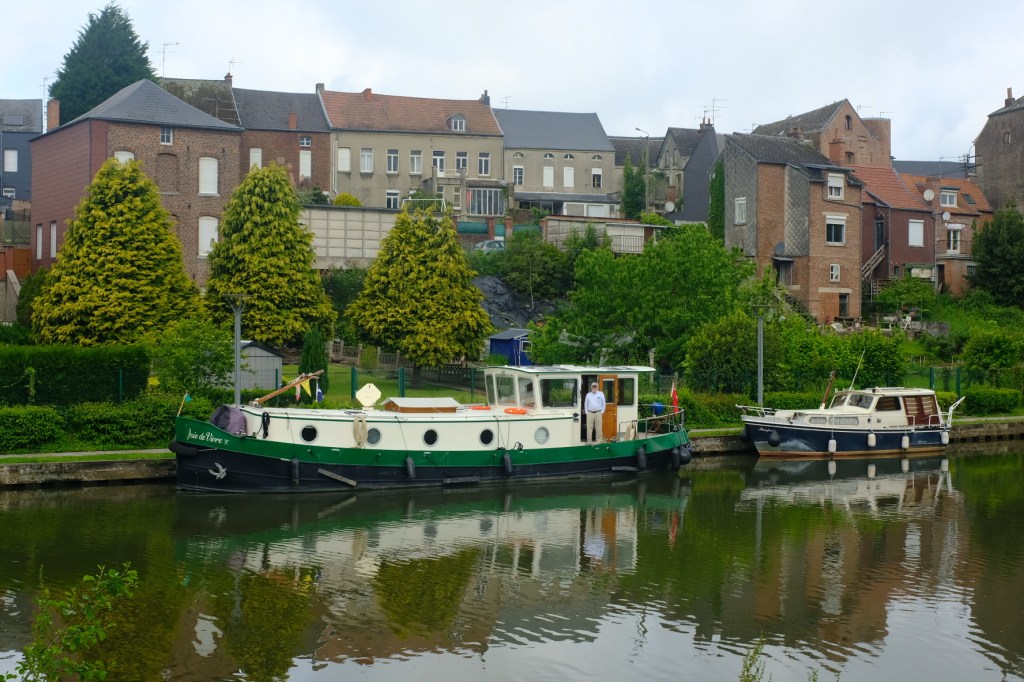
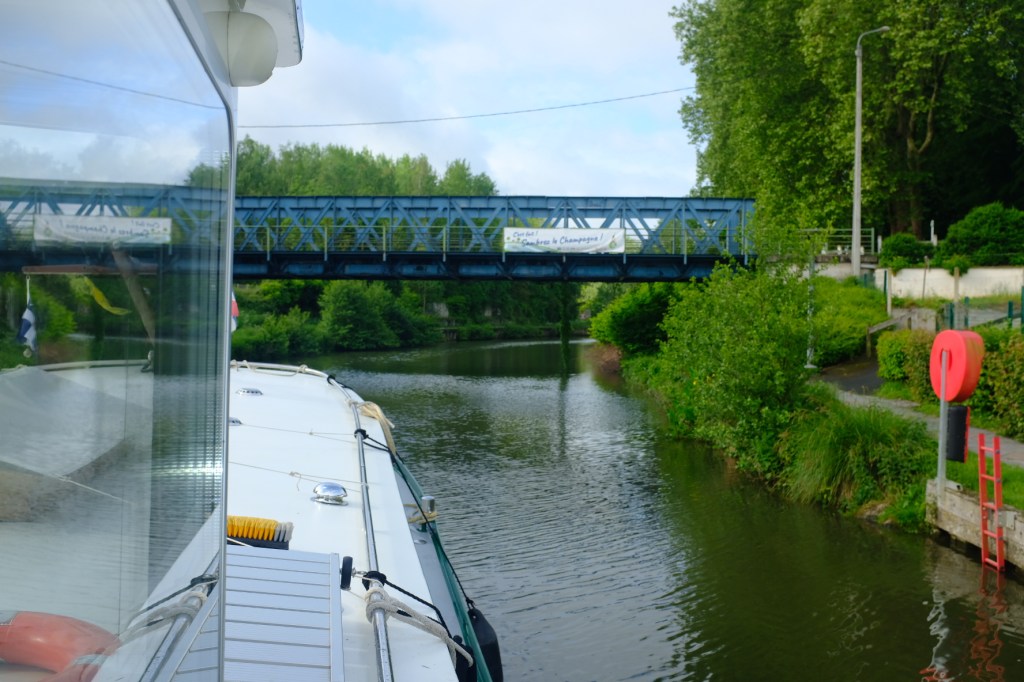
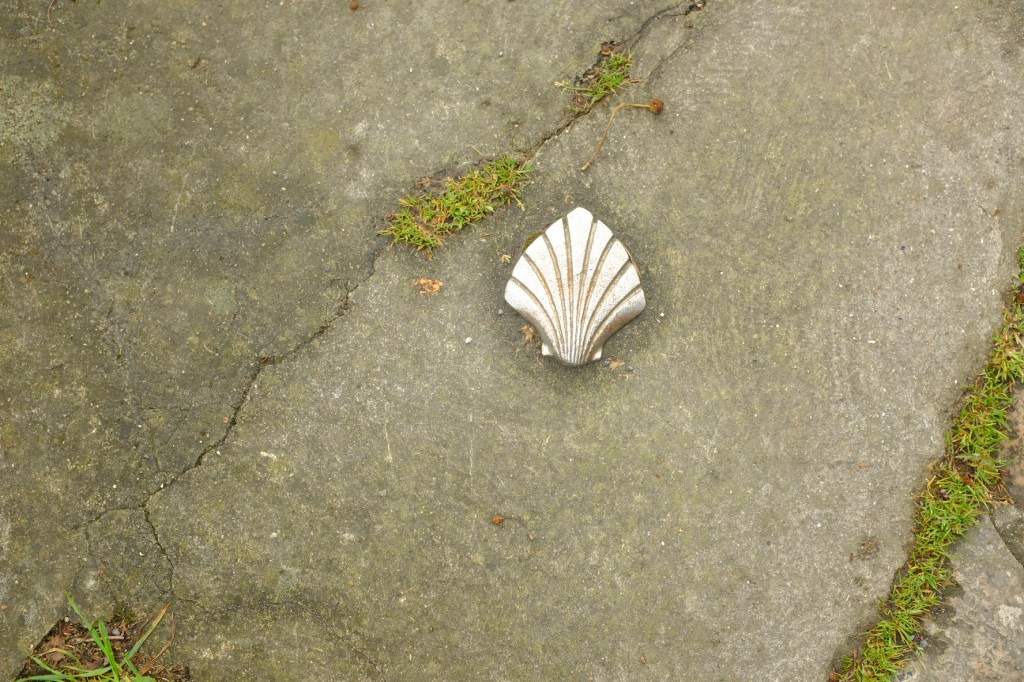
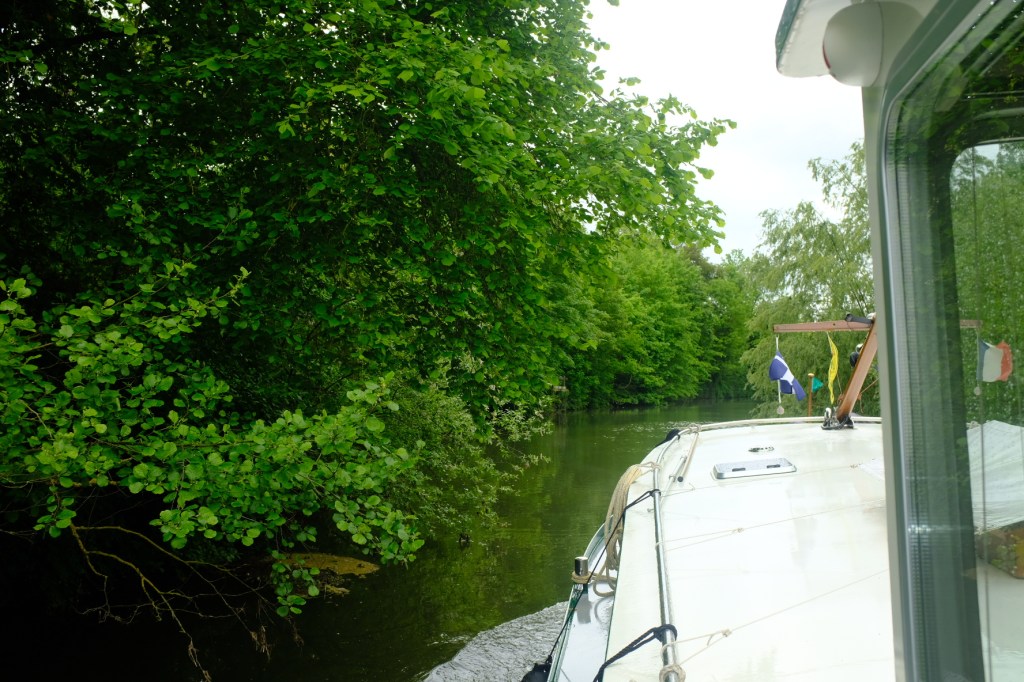
The river beyond the town of Landrecies was canalised between 1835-1837 providing a link between the Seine and the Meuse. The captain thanked the gods that we were now entering a reasonably straight section of the waterway passing through the profoundly rural area of northern France. We had reached the summit level and were now heading downhill towards the Seine.
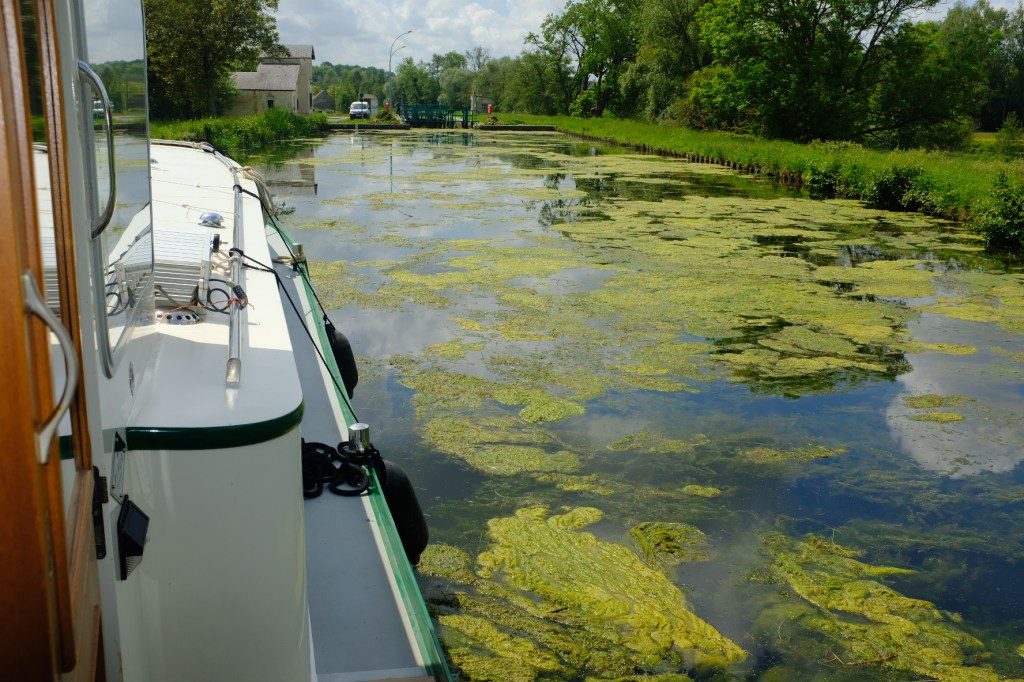
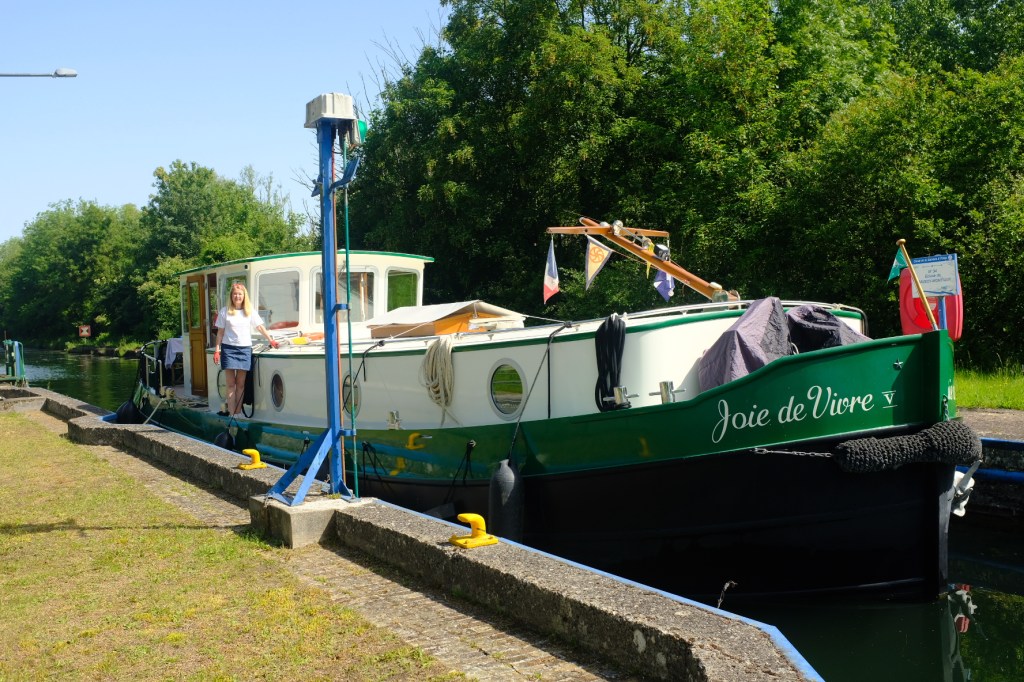
Unfortunately an undesirable aspect of the canals in France is the weed. In addition on the Canal de la Sambre a L’Oise there are also some very shallow sections. Joie de Vivre draws 1 meter and at times she was dragging her bottom through the mud.
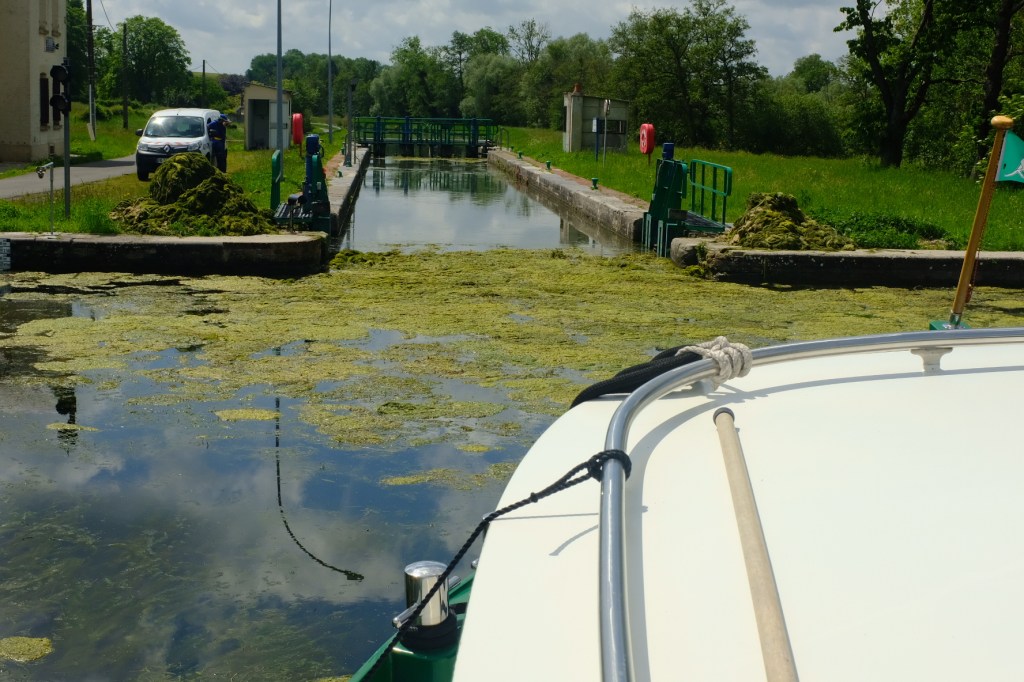
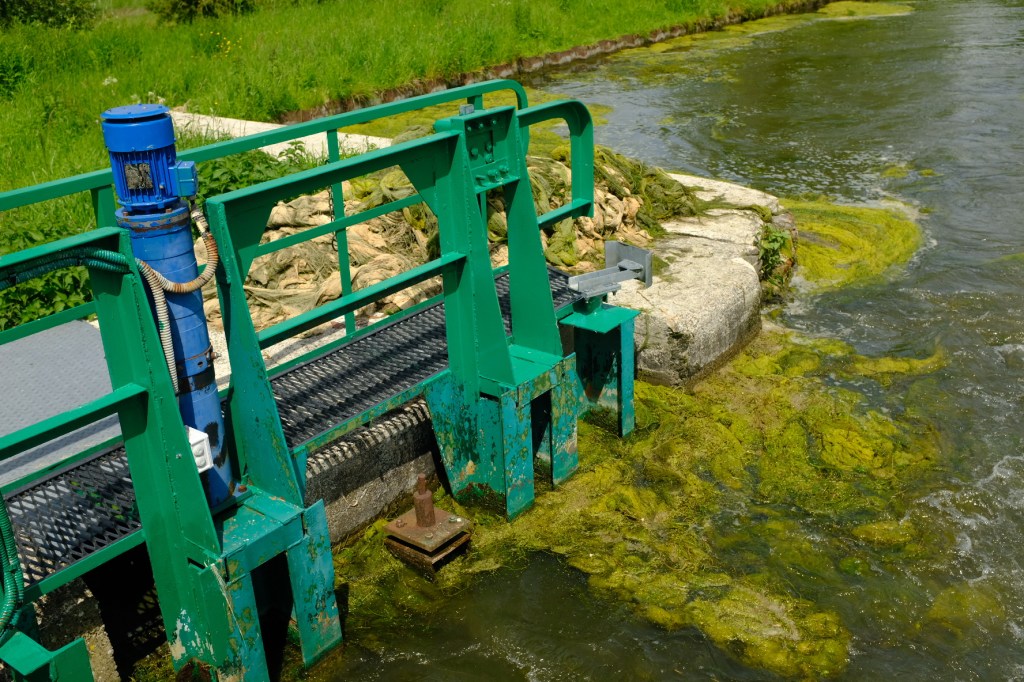
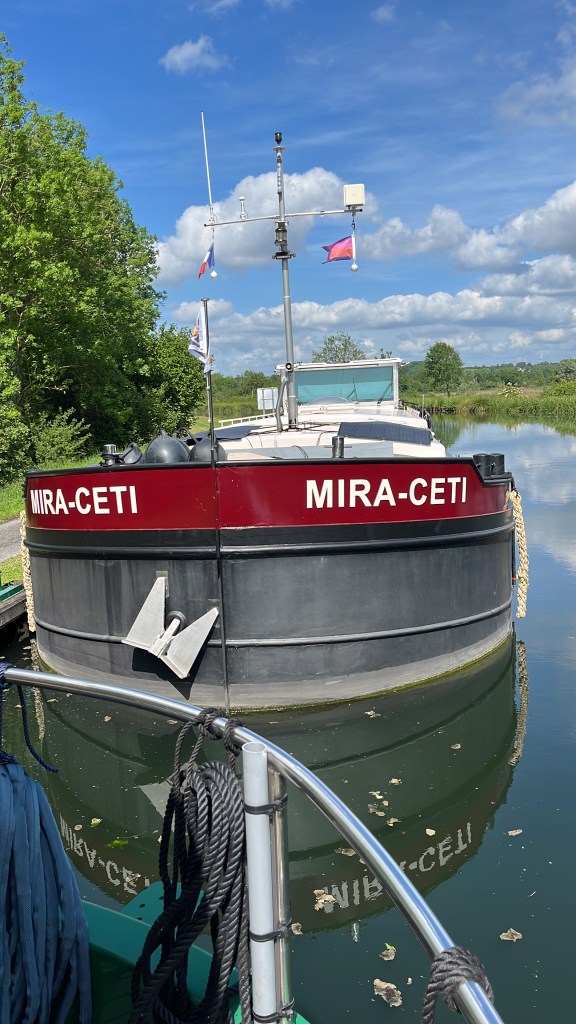
To date we had seen very little traffic on the river, that was until at Valencourt. We rounded the corner to find our friends Conny and Peter from Coupure moored up.
From Vadercourt the canal follows the course of the River Oise, with a number of aqueducts crossing the river. Most of the villages and towns are up the hill, about 1km away from the canal. Arriving in Ribemont, I had time to walk up the hill to discover a very pretty village. The unmissable monuments in the town are:
The abbey (this is now a private property, so no visitors.) In fact you can’t even see the building from the road as it is hidden behind trees.
The museum of Nicholas Condoret, who was a leading figure of the Enlightenment movement. The museum was closed.
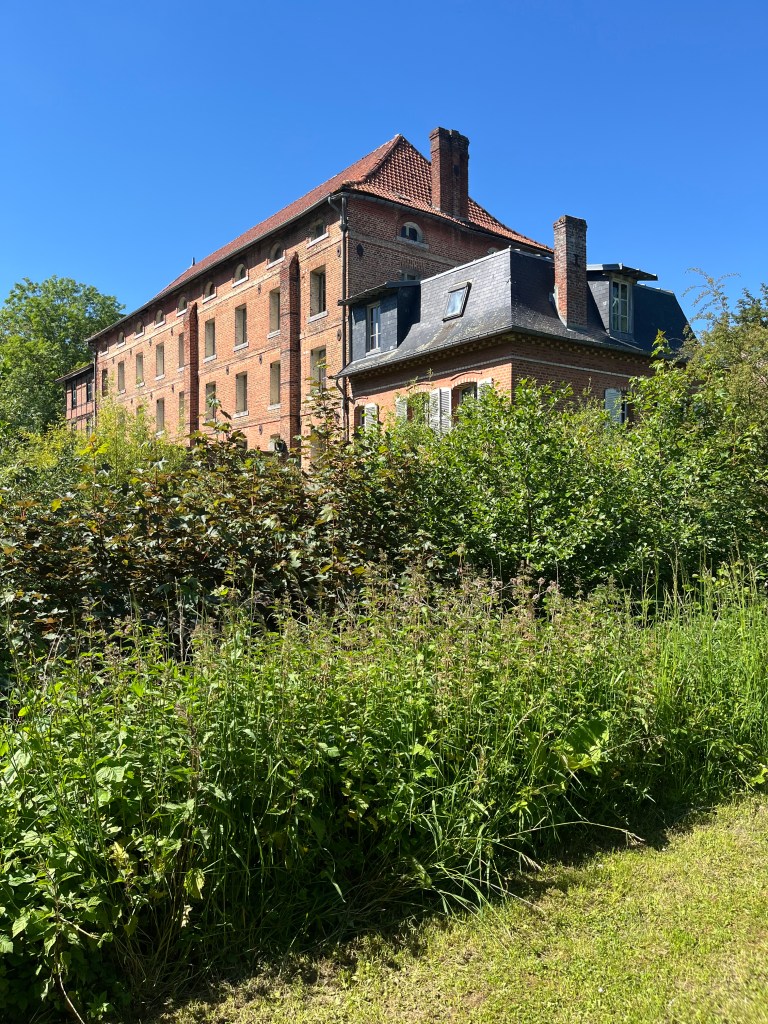
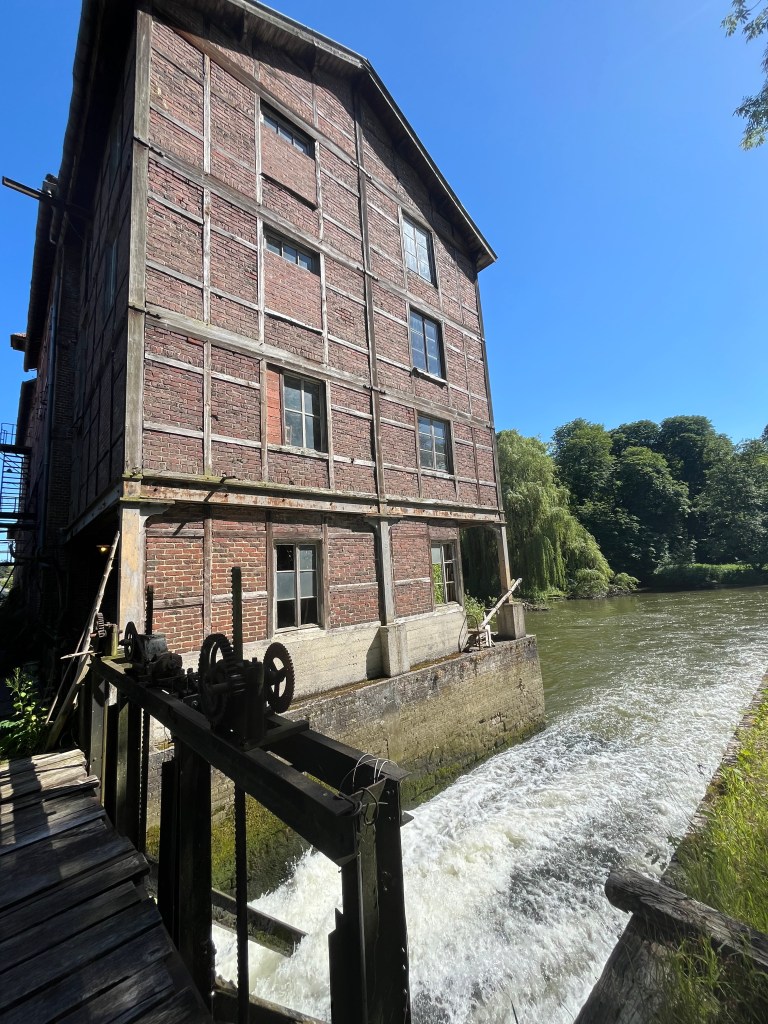
Moulin de Lucy, a 5 story brick building, that was originally a flour mill, but was transformed at the beginning of the 20th century into a cotton mill specialising in dying, mercerising and winding of yarns. This enterprise continued until the mid 1970’s. The building is listed as an historic monument, but is badly in need of repair.
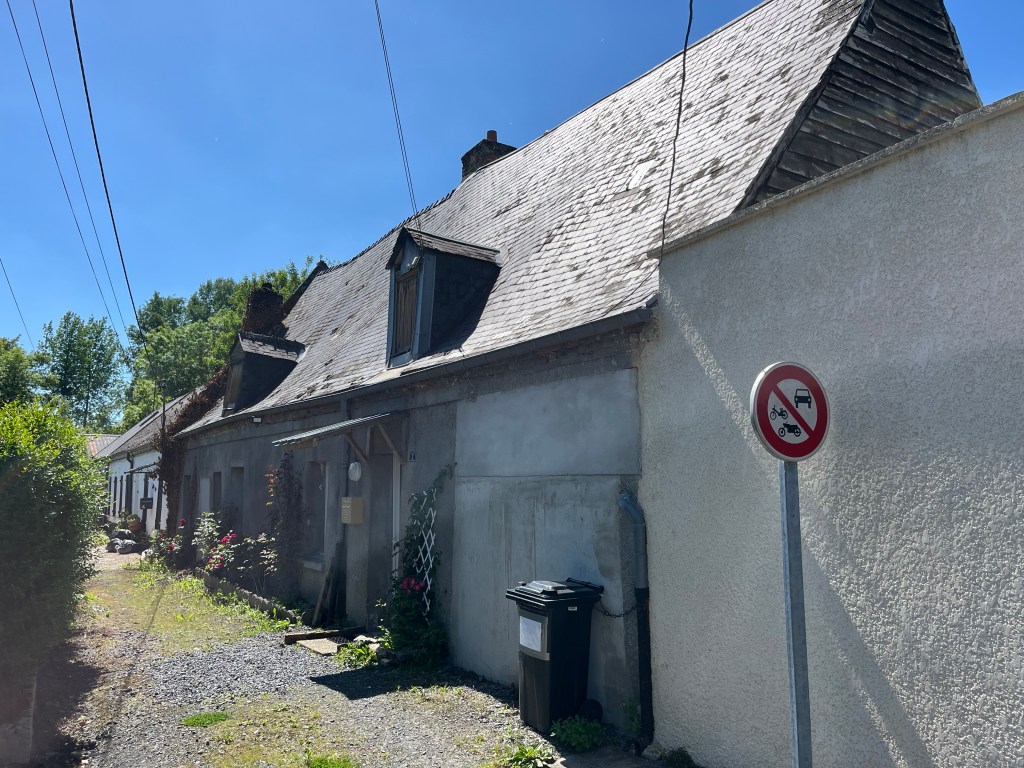
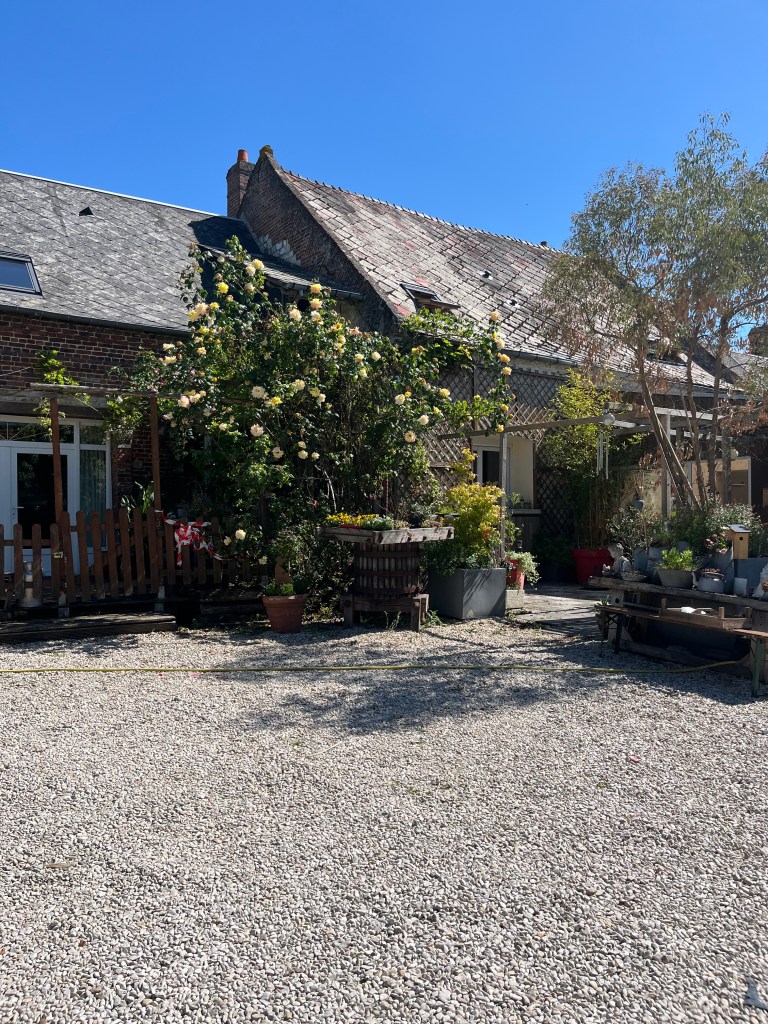
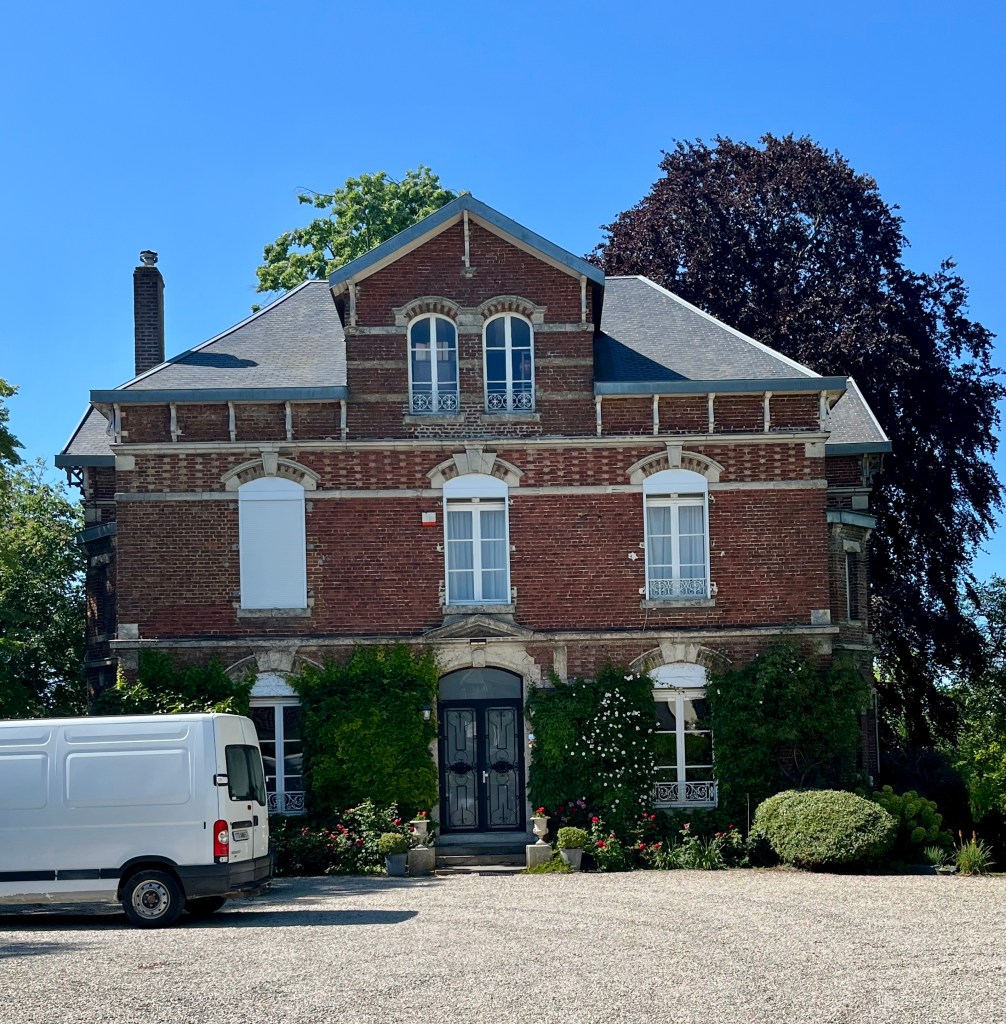
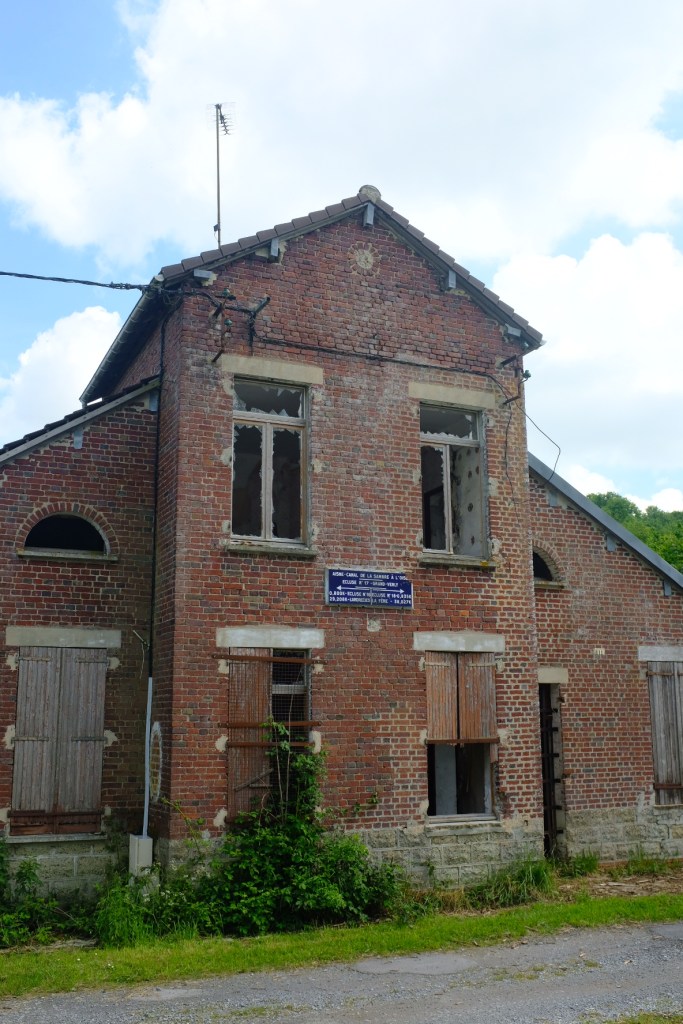
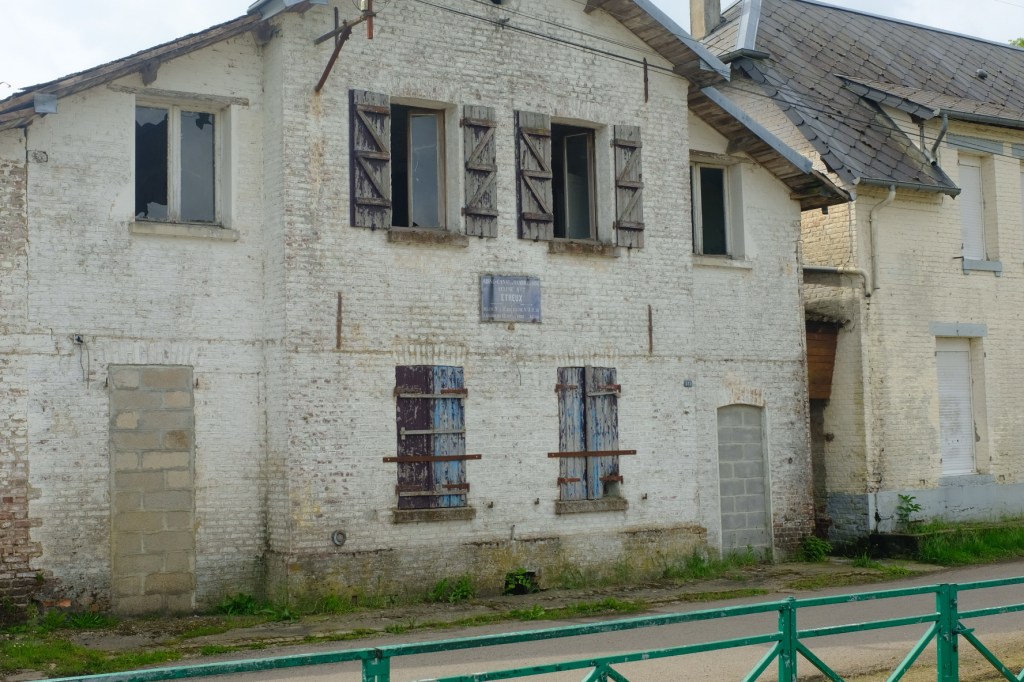
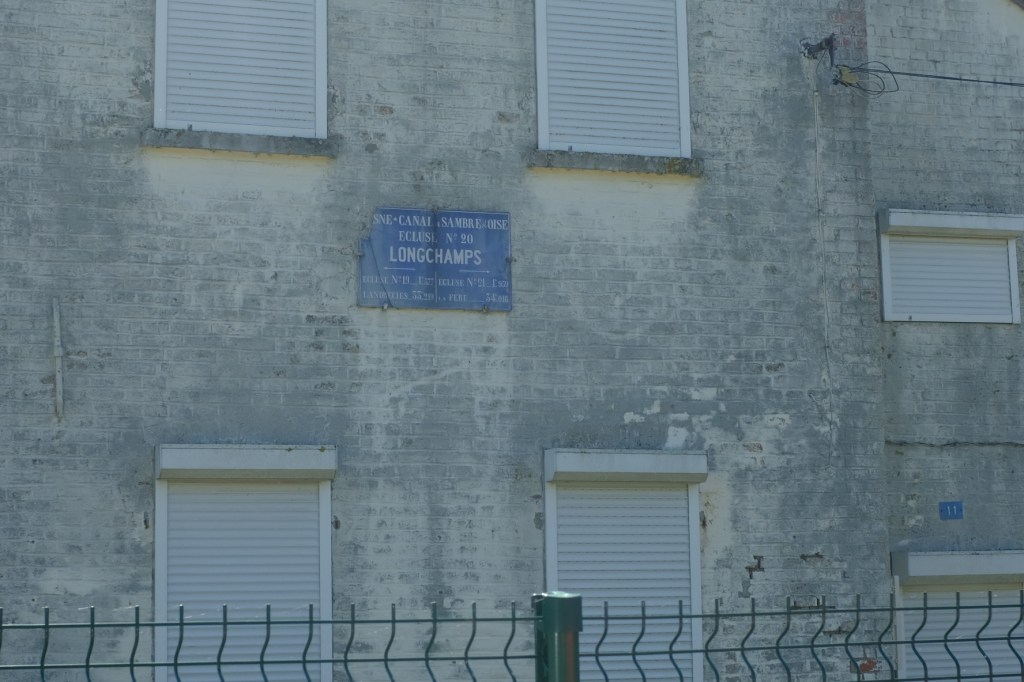
The following day was to be our last on the Sambre and the Canal de Sambre a L’Oise. A yet unrecognised opportunity of the canal was the abandoned lock houses. I’m sure if the objective of opening the canal to through traffic was to encourage tourism, then these lock houses could be redeveloped as B&B’s. Oh well ,maybe in the future.


Leave a Reply