
This was a new adventure for us as we navigated down the Seine from Paris to Rouen, 236kms and 7 locks.
This stretch of the river has been one of Europe’s greatest highway for more than 2,000 years. Long before railways and highways the Seine was a major transport hub carrying goods between the French interior and the sea.
One of the most dramatic chapters in the river’s history came with the arrival of the Vikings in the ninth century. The Seine was ideal for the shallow draught Viking longships and its banks were lined with rich abbeys and prosperous towns, just ripe for the picking. In addition the Frankish kingdom was divided by civil war, making it easy prey for the raiders.
Rouen was attacked and burnt in 841. This successful raid encouraged larger expeditions. For the fans of Netflix series “The Vikings” you will recall that Ragnar Lothbrok attacked Paris in 845 and was paid a hugh ransom in silver by Charles the Bald in order to save the city.
The Vikings continued their annual attacks until 911, when the Viking leader Rollo remained in the Seine Valley after the raids. He negotiated a peace settlement with Charles the Simple, in which he received lands around Rouen and the mouth of the Seine in exchange for defending the river from further Viking attacks. This resulted in the creation of Normandy (literally ‘the place of the Northmen’.)
Today we shared the river with commercial barges and cruise boats. We found that private Bateau de Plaisance (that’s us), were not encouraged to explore this French waterway, given the lack of facilities available.
We left Arsenal and cruised down the river, traversing Paris for the second time this season (third time overall).
After stopping at Port Seine de Parisii on our first night, we made our way to Meulan and were lucky enough to secure the only mooring available.

Meulan is one of the oldest river towns on the Seine, and is about 40kms west of Paris. Initially a Gallic trading post, then an important river crossing in Roman times, it became the home of the most influential nobles in medieval France and England. Robert de Beaumont, count of Meulan, fought alongside William the Conqueror becoming one of England’s greatest landowners and later the first earl of Leicester. Sitting on our back deck on Joie de Vivre, we looked over the Petit Pont , a medieval bridge that once formed part of the towns fortifications.
Giverny
To visit Giverny, Monet’s garden, you can quite easily take a 1 hour train ride from Paris, or you can travel on a boat for 3 days!! We choose the later option. The nearest town to Giverny is Vernon and again we were lucky enough to secure the last mooring, this time with free water and power.
I had tried unsuccessfully to secure tickets for Giverny on line. With no confirmed entry we caught an Uber and queued for 1 hour. Not such a chore as we stood next to a French couple who lived in Paris. The wife worked renovating antique art pieces. Currently she was occupied in restoring some of the wallpapers in the Carnivalet museum.
We had planned on 2 days in Vernon, but on returning to the boat after our Giverny sojourn we discovered that the locks would be closed the next day (July 14th Bastille Day). So we threw off our lines and cruised to our next port, Muids. Again another single dock (only 18 meters in length) that we managed to secure. No power this time around.
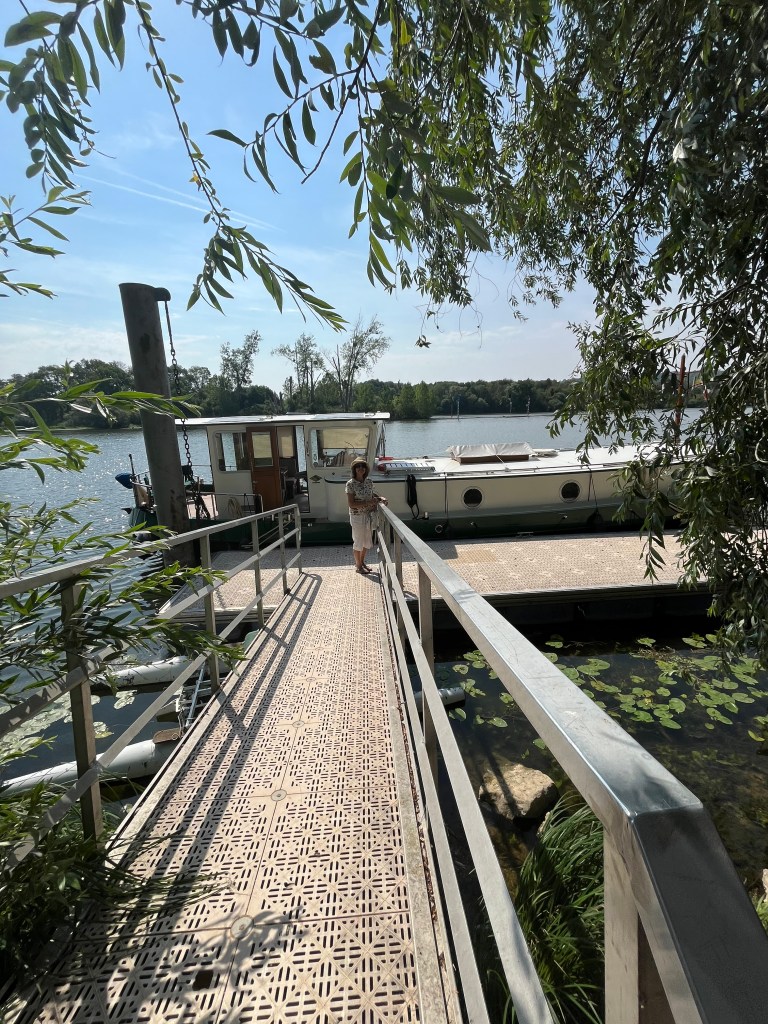
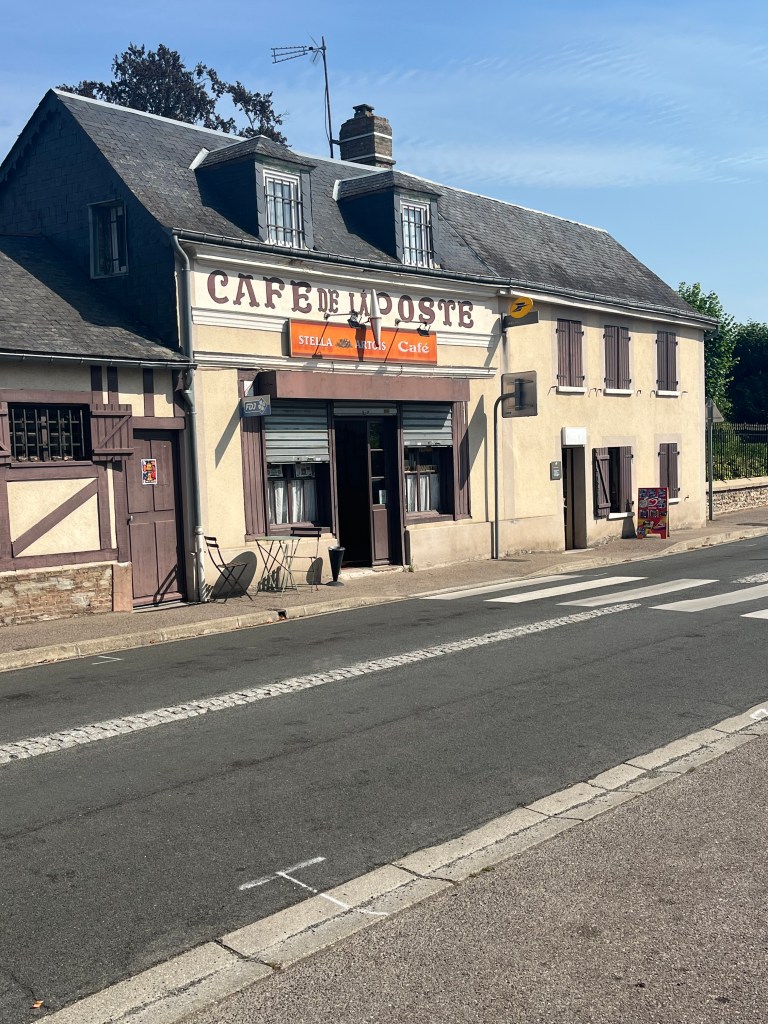

There were 2 other places that we would have liked to visit along this part of the river. Unfortunately they did not provide suitable moorings for pleasure boats. Instead these towns only catered for cruise boats
La Roche Guyon


Andelys


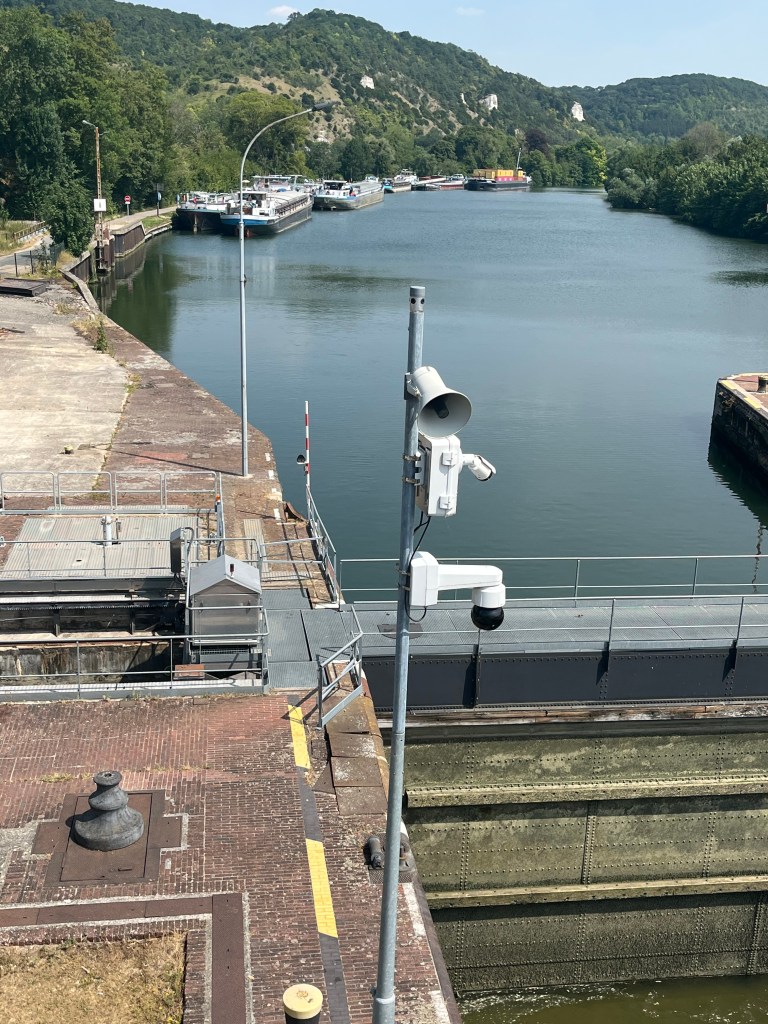
After clearing the lock before Muids on 13 July, we cruised on to our next stop at Poses. The lock here marks the last major dam on the Seine before it reaches the sea. Before the river was canalised in the 19th century, this stretch was known as the most formidable obstacle on the Lower Seine. The “Peruis de Poses” was not a rapid but a long, fast-flowing bottleneck where the river was forced between islands and rocks, driving a powerful current. This passage stretched for nearly 3 km and produced a flow of 10 to 12 km/h, which made upstream navigation virtually impossible. With the construction of the barrage, the river level upstream rose by several metres, effectively eliminating the “Peruis de Poses.” Now, we simply had to time our departure with the ebbing tide to run the 40 km downstream to Rouen. The tidal influence from Poses was about 2 to 3 km to begin with, then steadily strengthened as we approached Rouen.
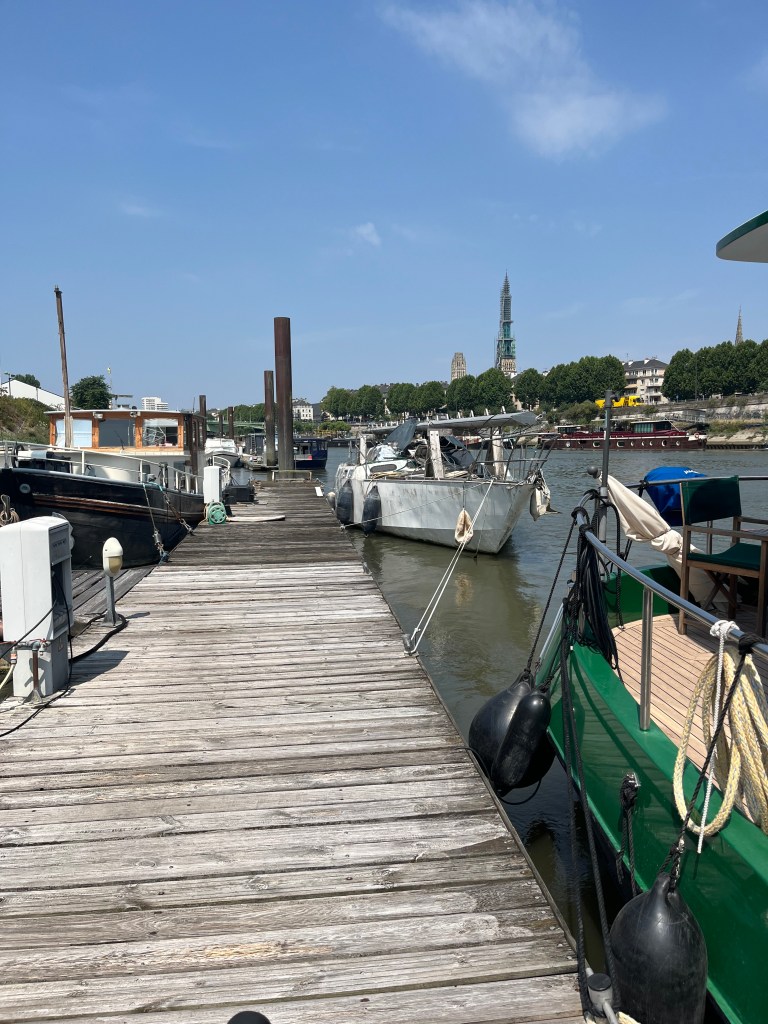
There are 2 available moorings in Rouen, a marina, a little out of town, and a Halt Nautique, closer to town. Despite several attempts I could not contact the Halt Nautique to we winged it instead. Like so many moorings that we had found on this section of the river the Halt Nautique had been abandoned and given over to permanent live aboards that were taking advantage of a free mooring. And this one also had free power and water! Again we manoeuvred into the last spot available and settled in for a 3 night stay.

Rouen is a medium size French city with about 115,000 residents in the metropolitan area. It is home to several universities of about 40,000 students and is one of France’s busiest inland ports due to its location on the tidal Seine. It is the historic capital of Normandy, and although it is identified with the Viking Rollo, it was originally settled by the Romans, with a history dating back 2,000 years. The city prospered under the Norman dukes, including William the Conquerer (who was the 6 times grandson of Rollo). That warlike blood must be inherited! We had plenty of time to explore this amazing city.
Rouen Cathedral
The construction of the cathedral commenced in the 12th century and evolved over 400 years. It is crowned by a cast iron spire rises to 151 meters, the tallest in France. Currently undergoing restoration, it is surrounded by scaffolding. The strong Viking connection in Rouen is emphasised not only with the placement of Rollo’s tomb in the cathedral but also a chapel that holds the relic of St. Olaf, king of Norway from 1015 to 1028. He played a major role in establishing Christianity in Norway and spent some time in Rouen when he was forced in to exile.
St. Joan of Arc
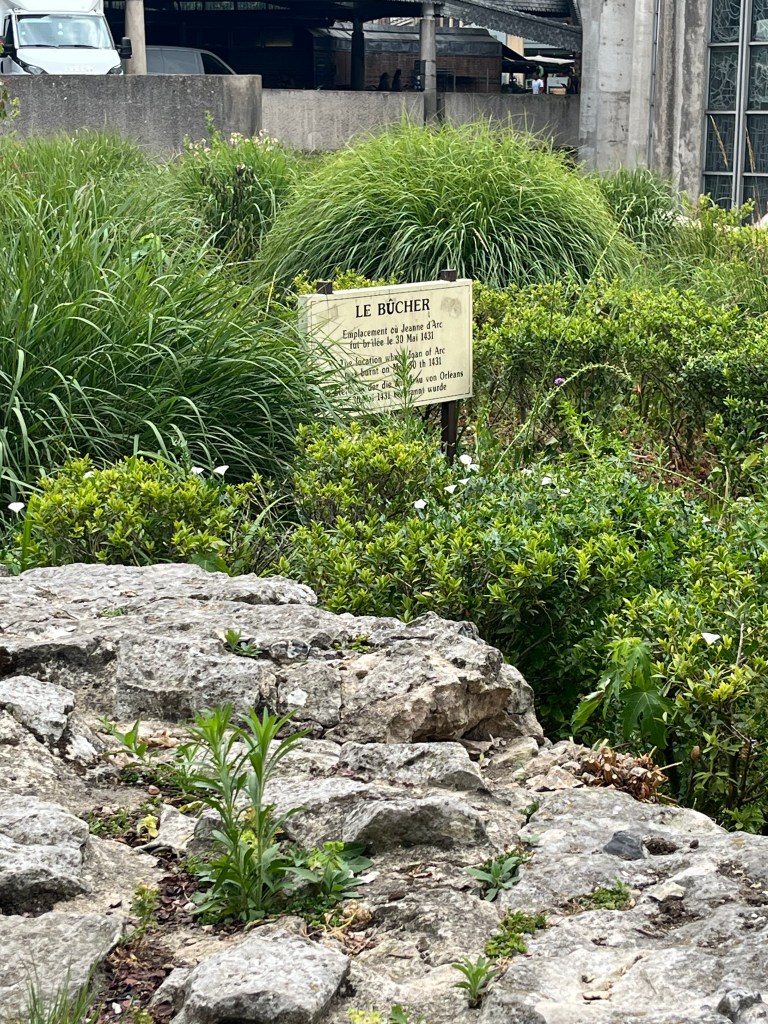

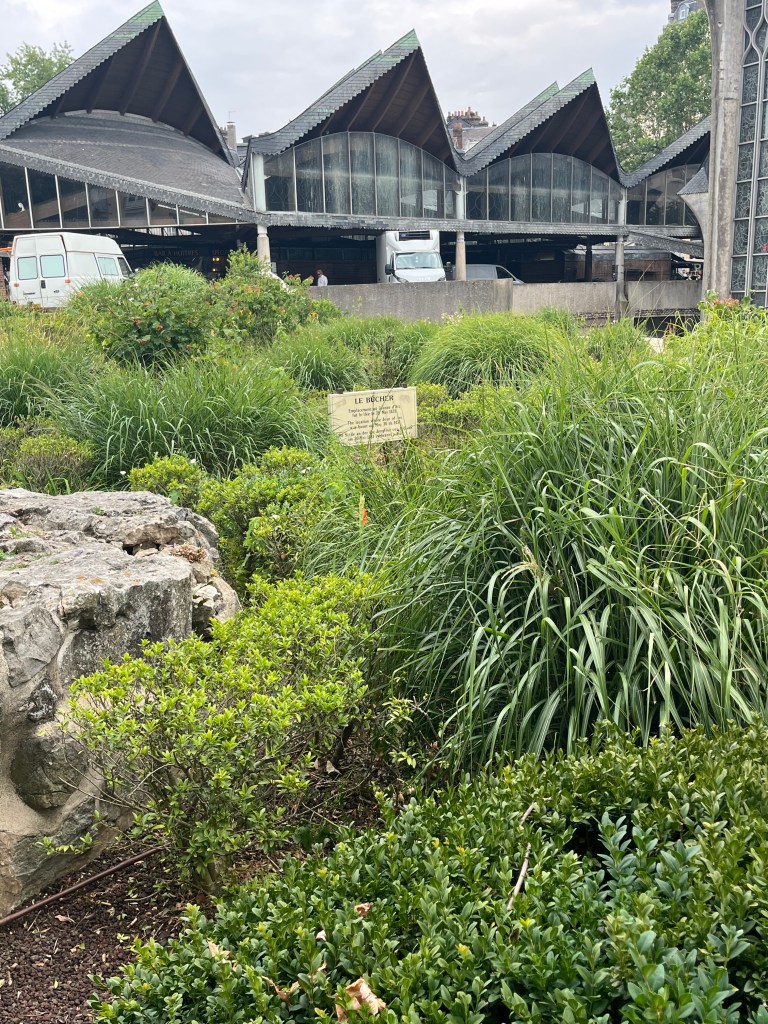
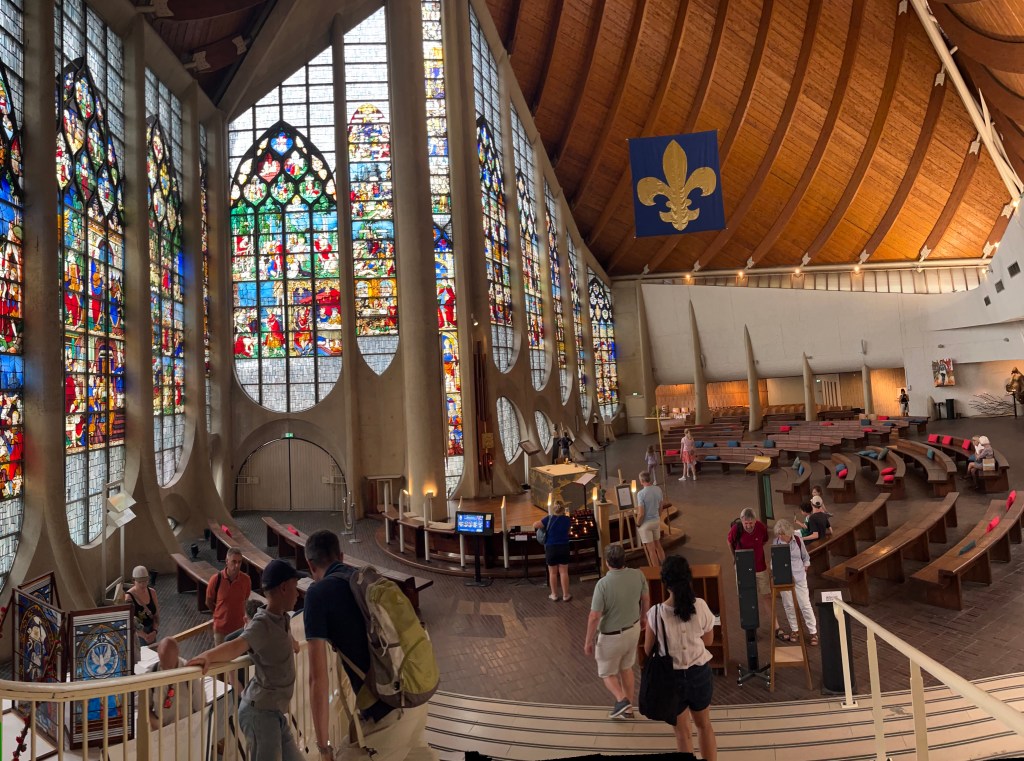
The story of Joan of Arc is forever linked with Rouen. Although she was captured and imprisoned in Compiegne she was condemned by the ecclesiastical court closely associated with Rouen and burnt at the stake in the Place du Vieux Marche on 30 May 1431. It seems that Joan’s major crime was the wearing of men’s clothes. On learning more about her story I think she was just another powerful woman who was cut down by a vicious group of misogynists.
Today the site of her martyrdom is marked with a garden, a cross and a modern church built in 1979.
Having immersed ourselves in Vikings and the story of Joan of Arc, we wandered the medieval streets enjoying the streetscape of the half wooden houses that seem to tilt at impossible angles

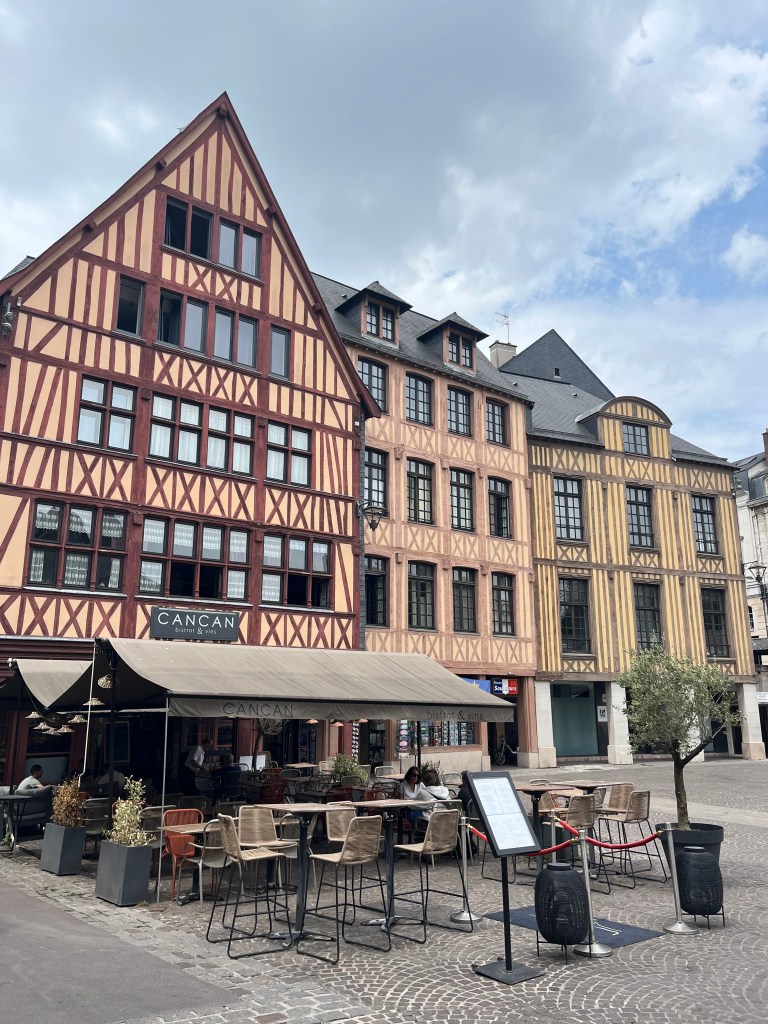
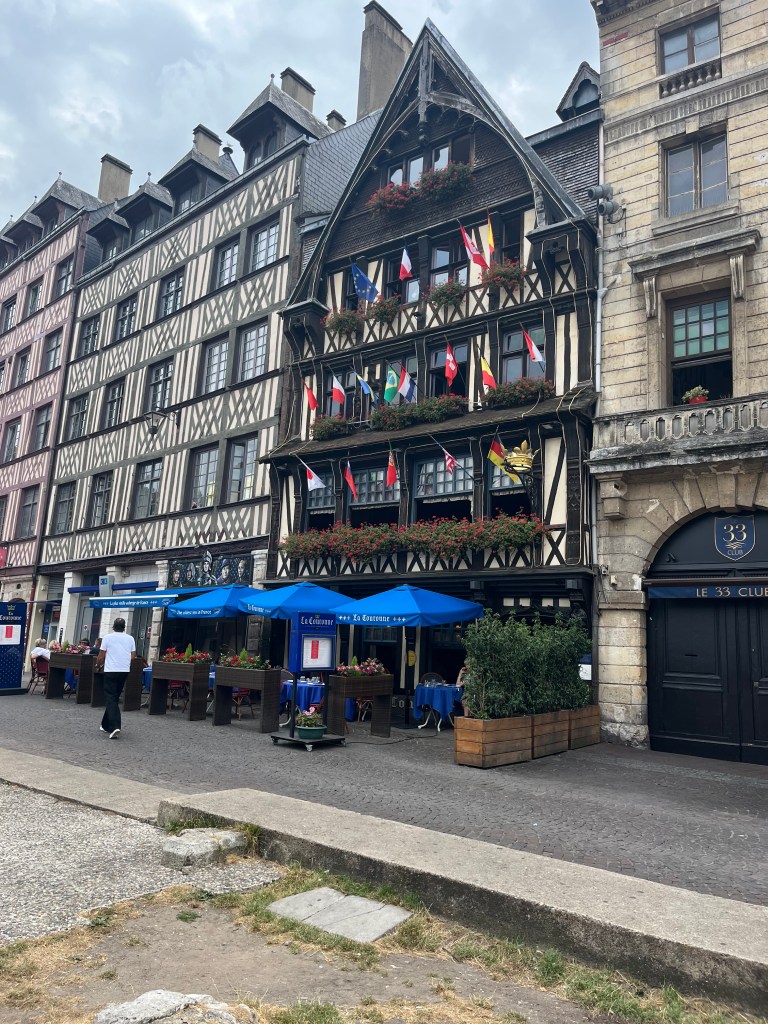
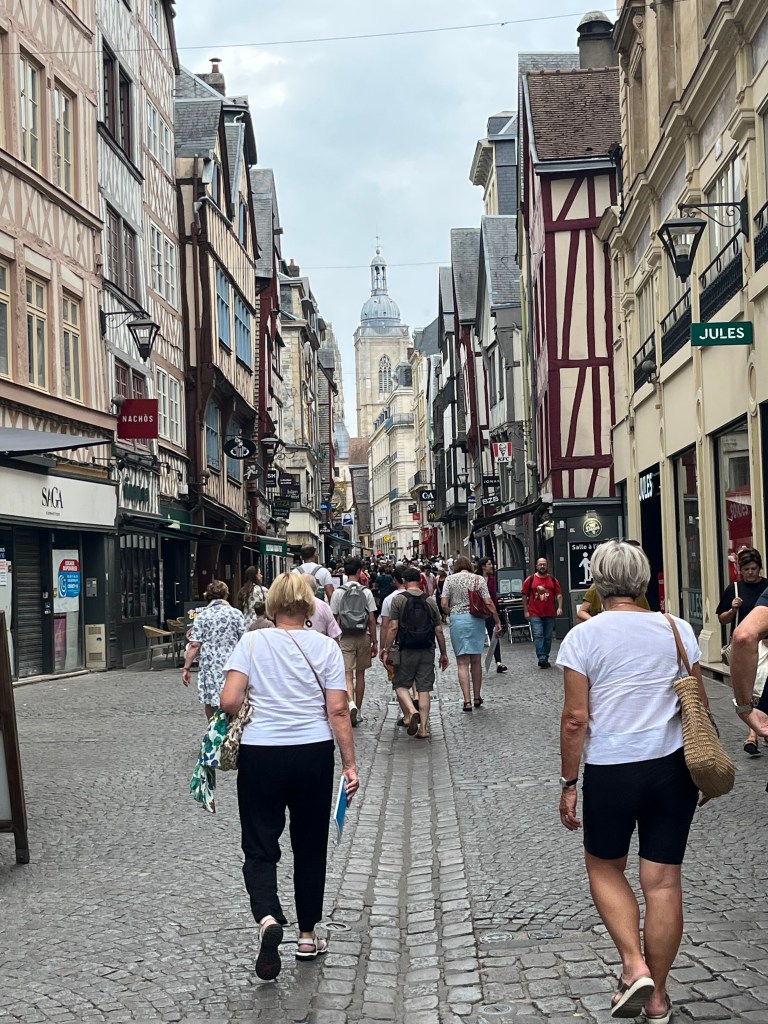
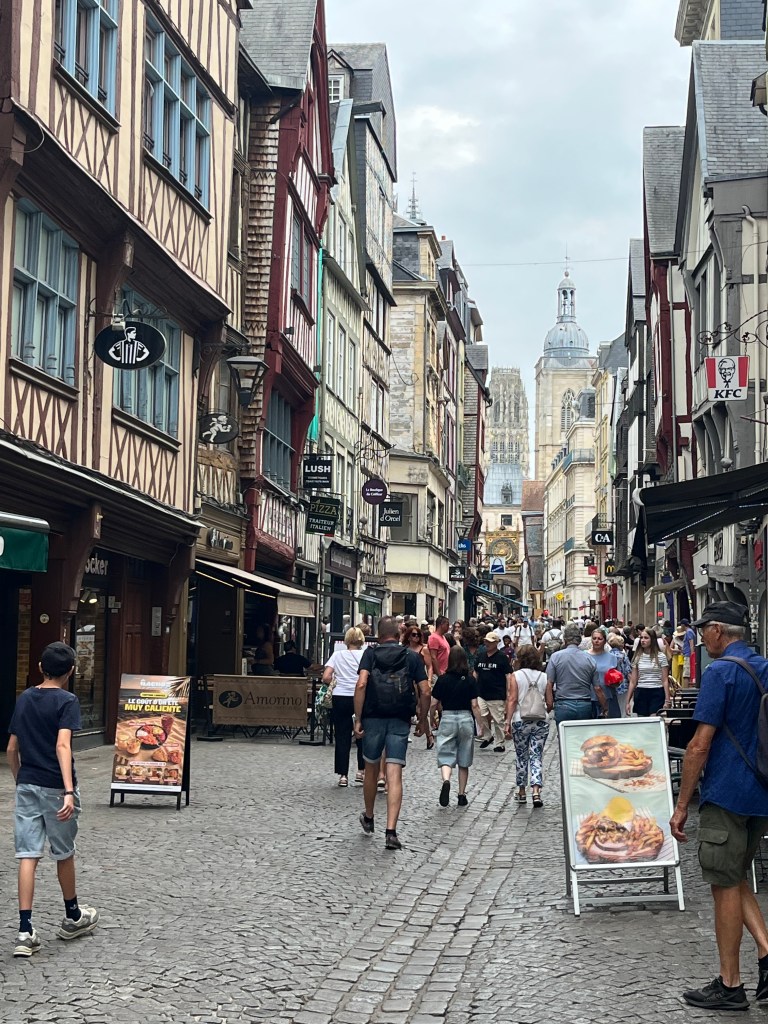
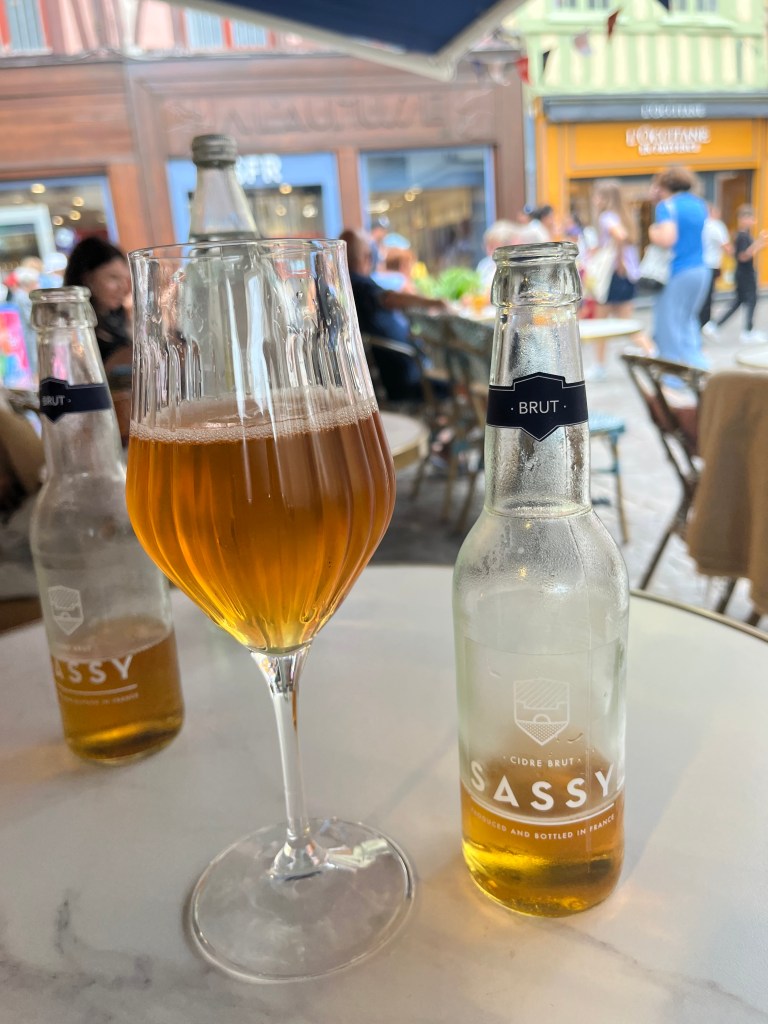
We did make sure there was time for refreshments along the way
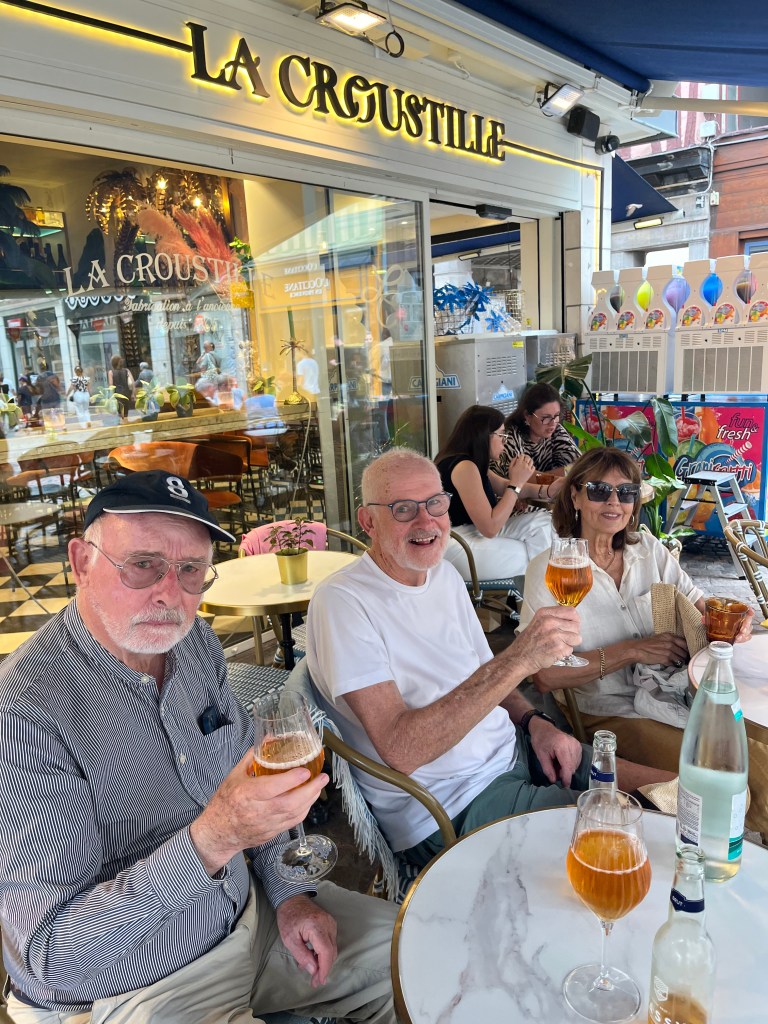
We farewelled Viv and Geoff at Rouen, sending them on the train to Paris. For Peter and me it was time to cruise back up the Seine, turning left at the L’Oise to head north.


 Karen’s Travel Blog
Leave a comment