
Sitting here in Brugge, only 8 degrees outside our cosy boat, with the rain tinkling on the roof, I am beginning to think that we should have already started our trek back to Melbourne. But we have another few weeks yet! Time to catch up with the last leg of our voyage for this year and reflect on our epic adventure.
We rested in Antwerp for 6 days, giving Peter plenty of time to investigate the local chandeliers and arrange for our Simrad system to be updated. For me, I had time to investigate parts of the city that I had not previously done on my last visit in 2019.
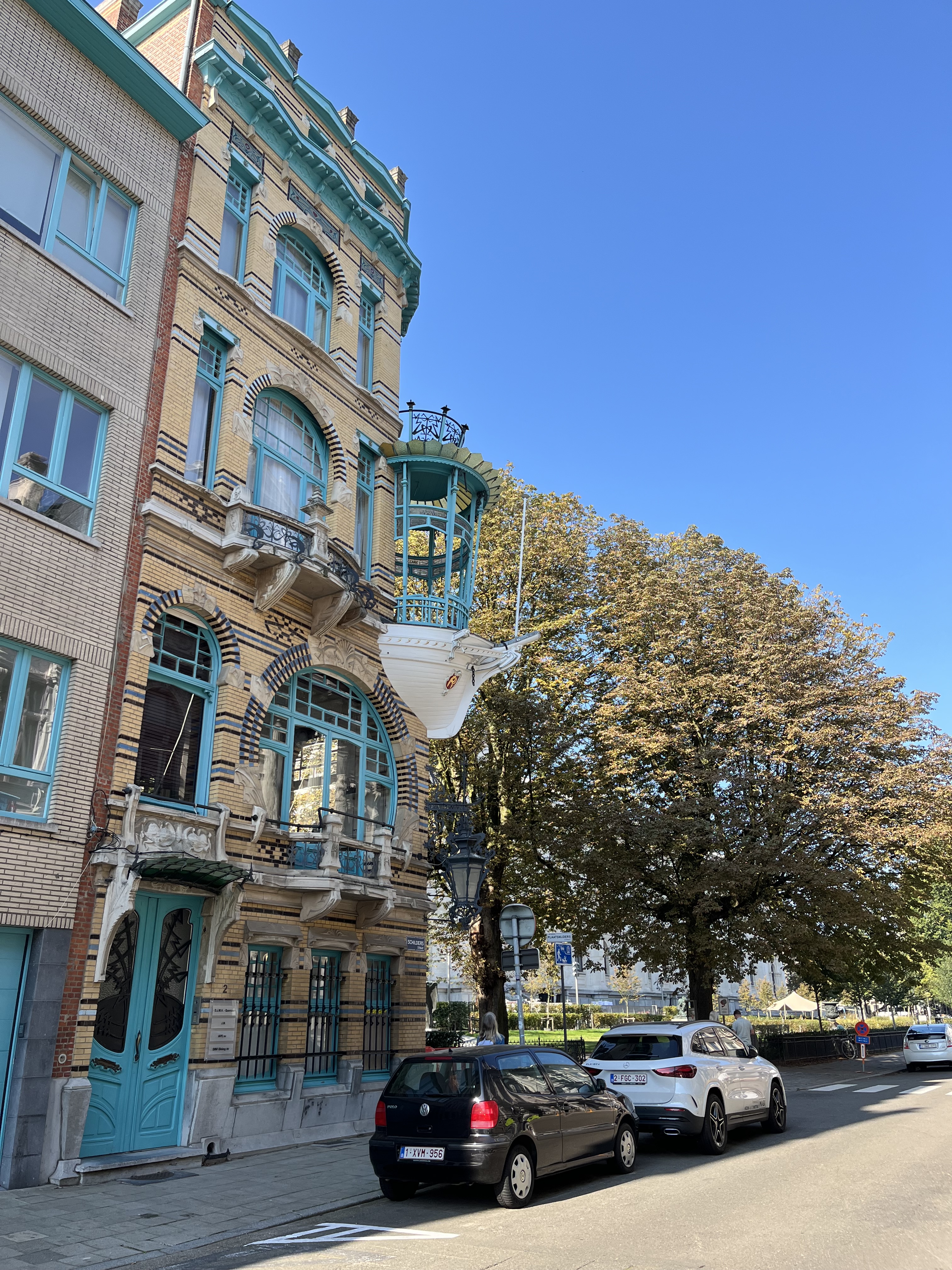
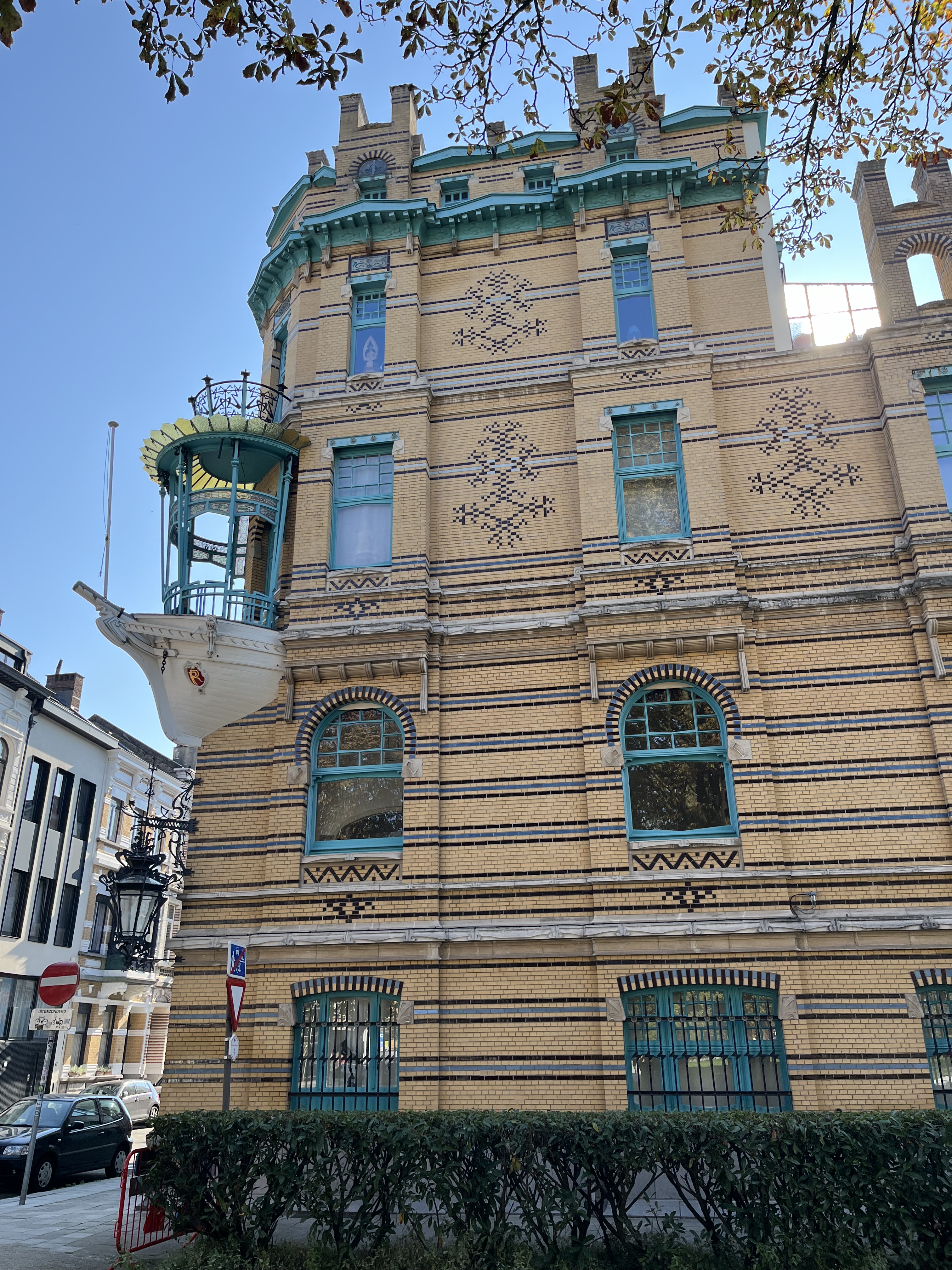


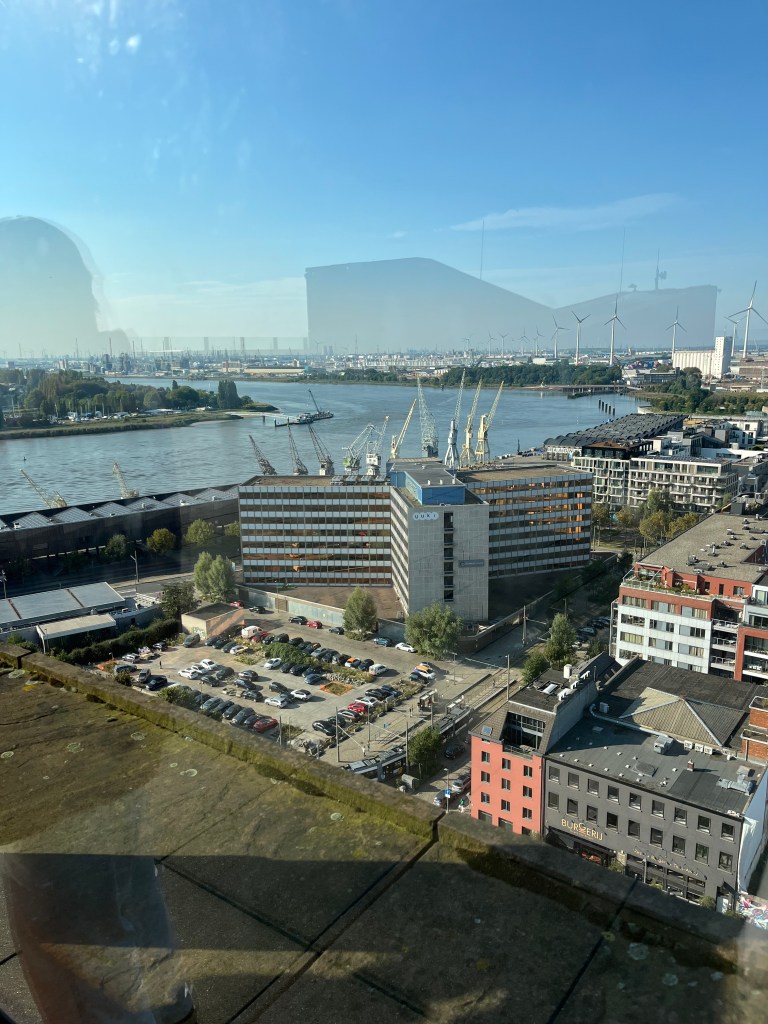

The building is decorated wth silver hands that represent not only the symbol of the city (yes the hand is a symbol of Antwerp) but as a memento of its patrons and the many hand prints from all over the world that have left their mark on this city.
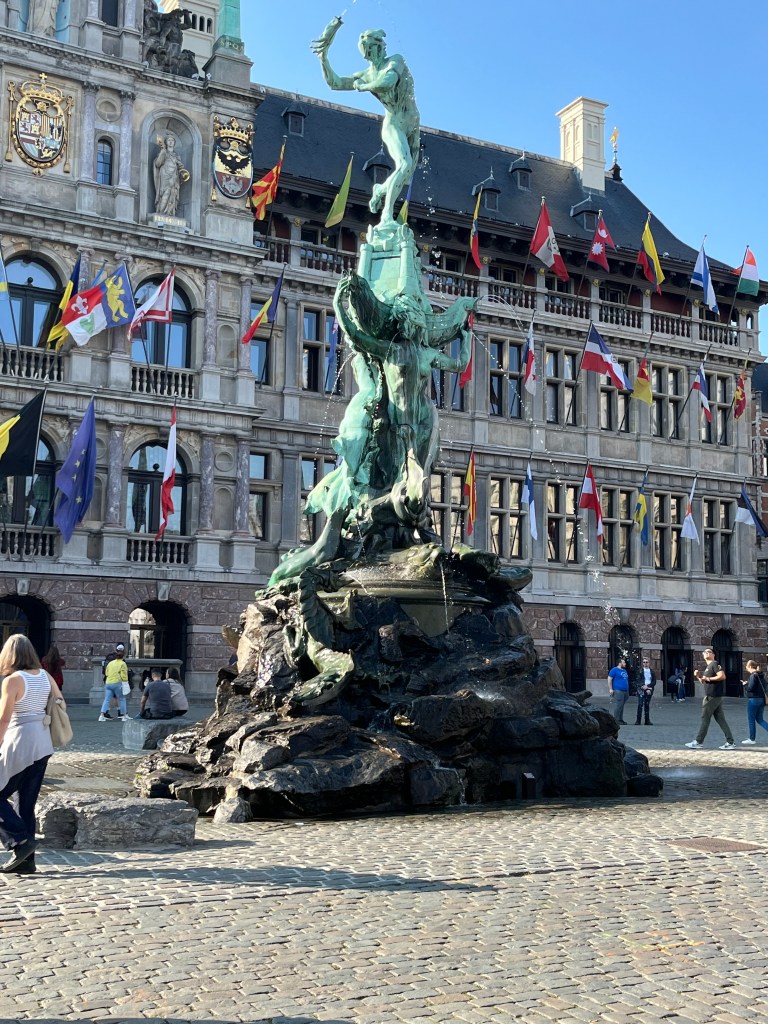
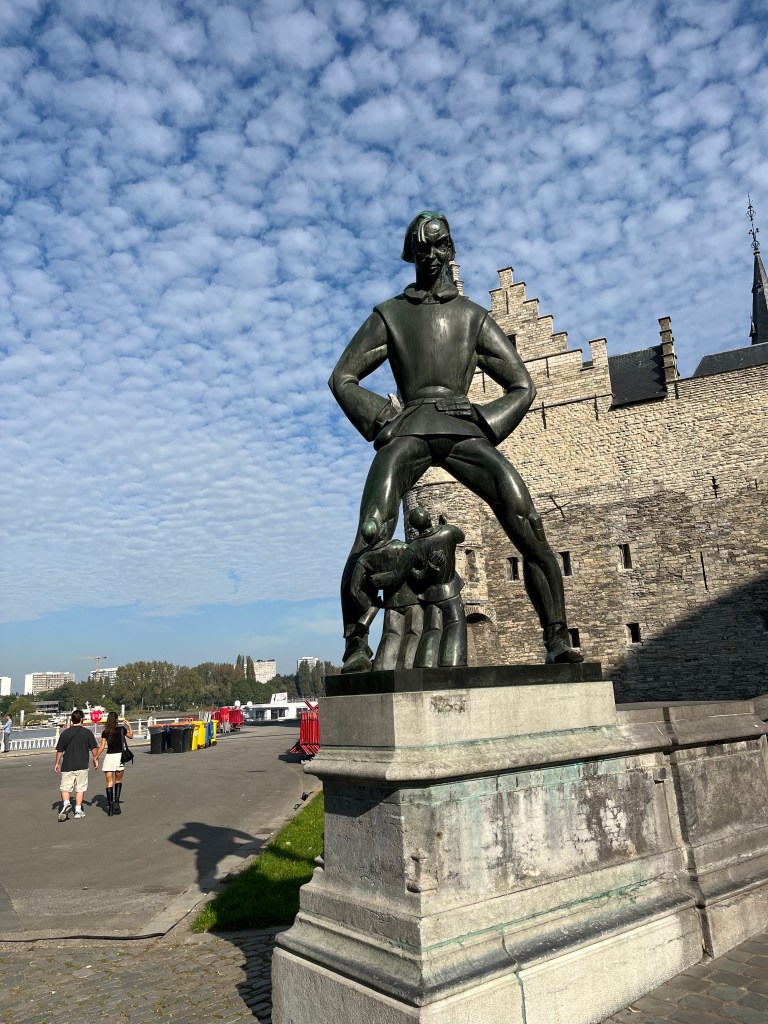
Now it’s time to tell you the stories about the giants of Antwerp. The first giant was Droun Antigoon, who guarded a bridge over the Schelde demanding tribute from passing mariners. If this tribute was not paid he would cut off the right hand of his victim and throw it into the river. That was until another giant arrived, Salvia’s Brabo who repaid the favour by cutting off Droun’s hand

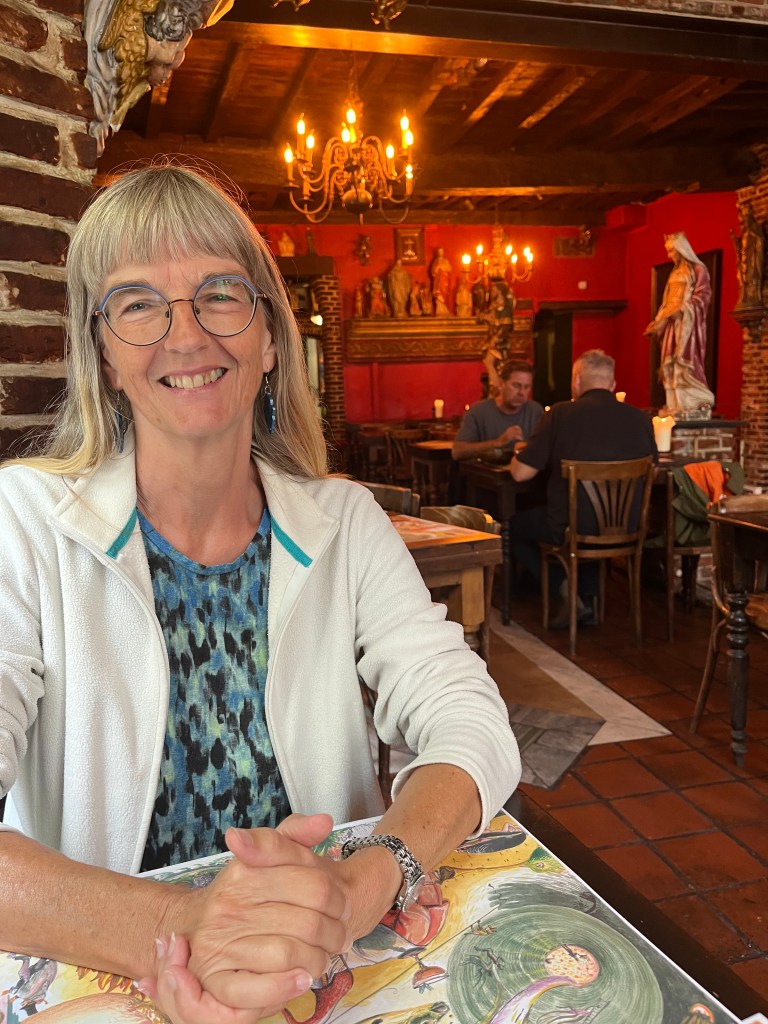
Close to the Cathedral is the Elfde Gabon, a restaurant and beer hall with a spectacular interior

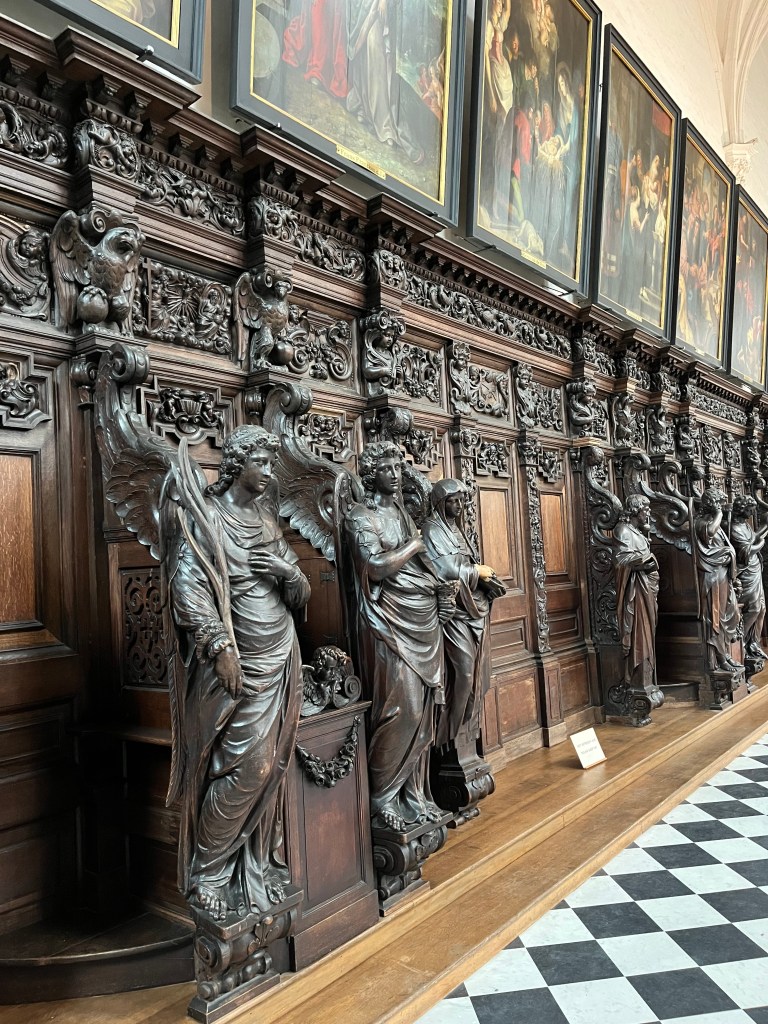
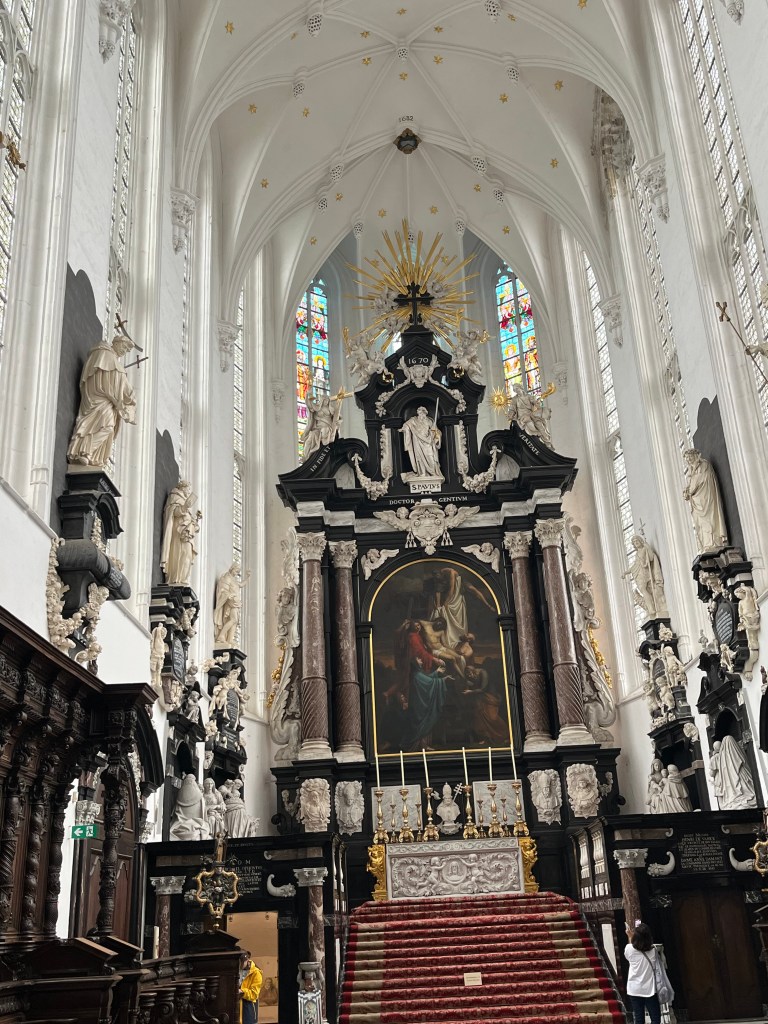
And now I hear you ask about a visit to a church or cathedral. Yes, well we did go to St. Paul’s , which is in the sailor’s district just a few steps from the Schelde. Originally built in 1275, then demolished and rebuilt in 1571, then extended and refitted in 1662. The most striking element of this church are the craved oak Baroque confessionals that line each side of the aisle. These 10 confessionals are joined by carved panels that give the impression of one continuous piece of furniture.


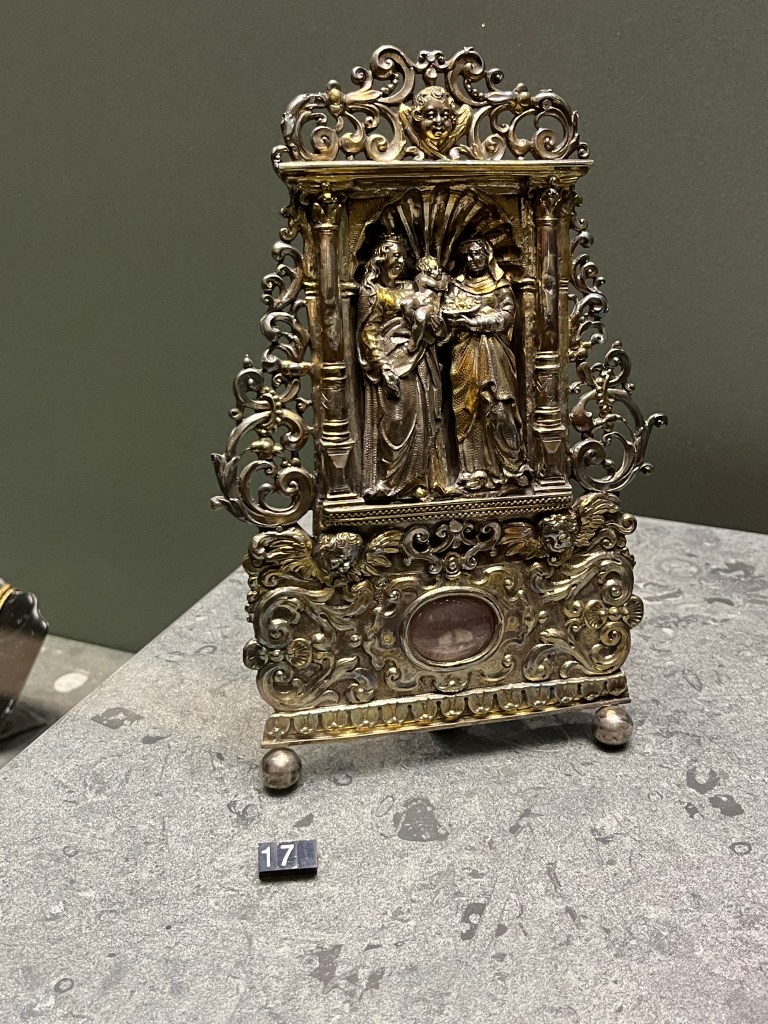
On display are a few Rubens and a treasury containing religious icons and reliquaries.



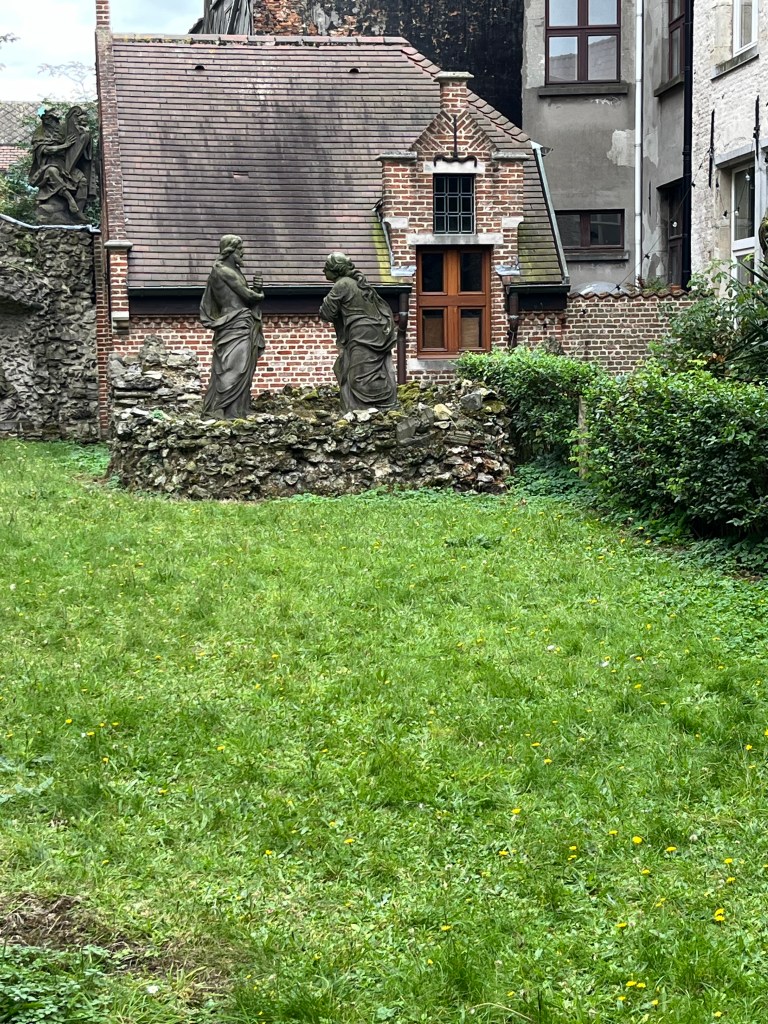
In the garden of the church is the Calvary, built on the side of the church and located on the site of the ancient Dominican cemetery. It contains 63 life size statues on 3 terraces with an image of Christ on the cross at the top.


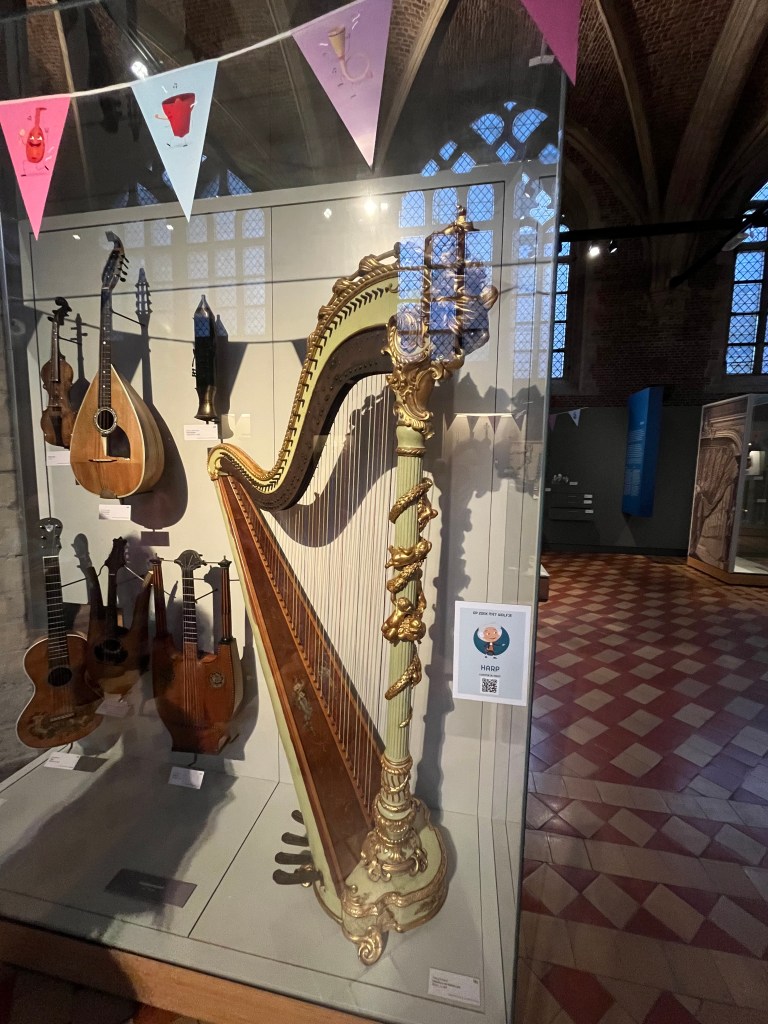
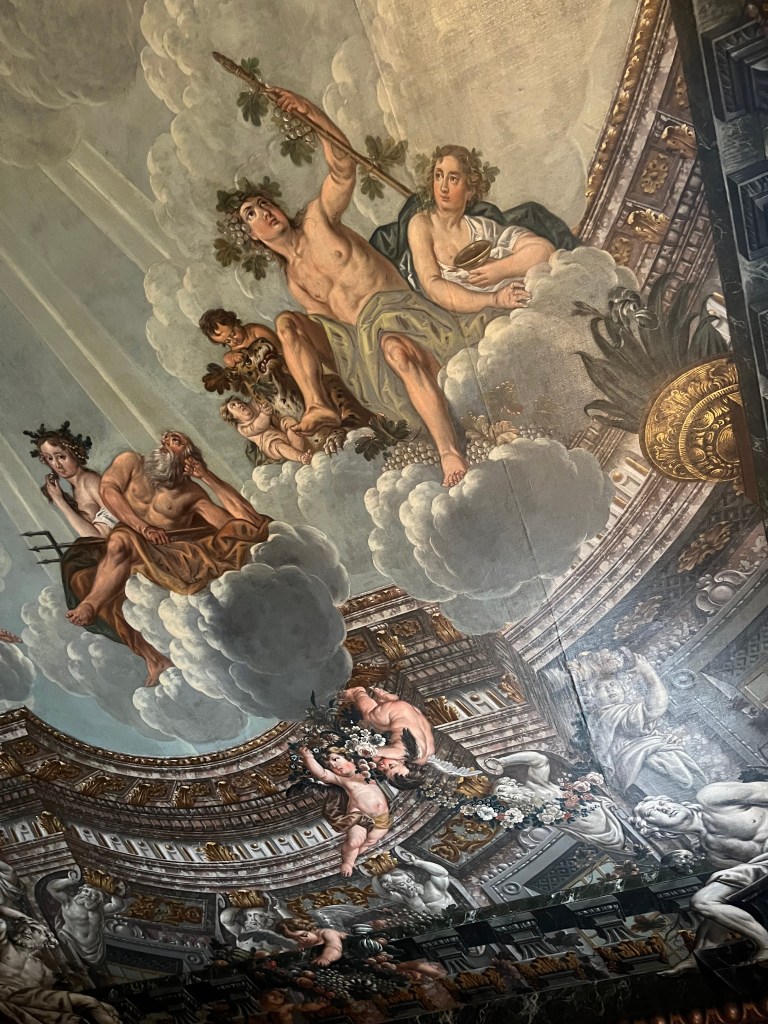
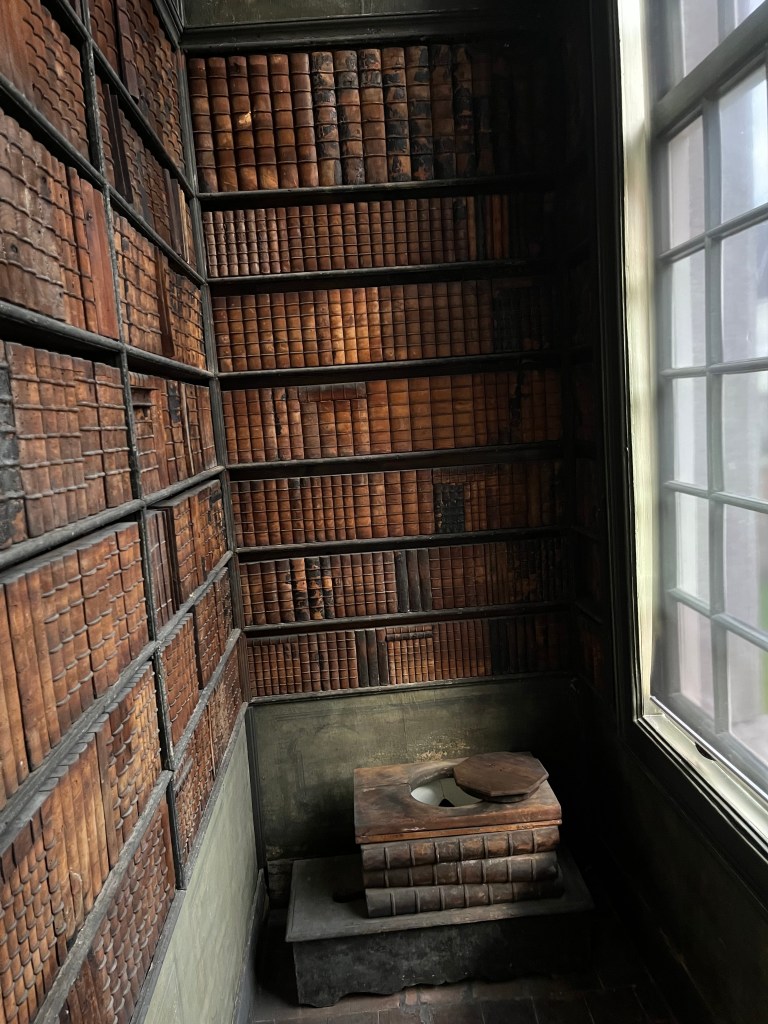
Other points of interest were the Vleeshuis museum which houses antique musical instruments and the Hofkammer. The Vlees house, or old meat market will be closed for a few years, while it is being renovated. The Hofkammer is an 18th century garden house which boosted a beautiful painted ceiling and a book toilet (who doesn’t like to read a book while visiting the smallest room in the house!)


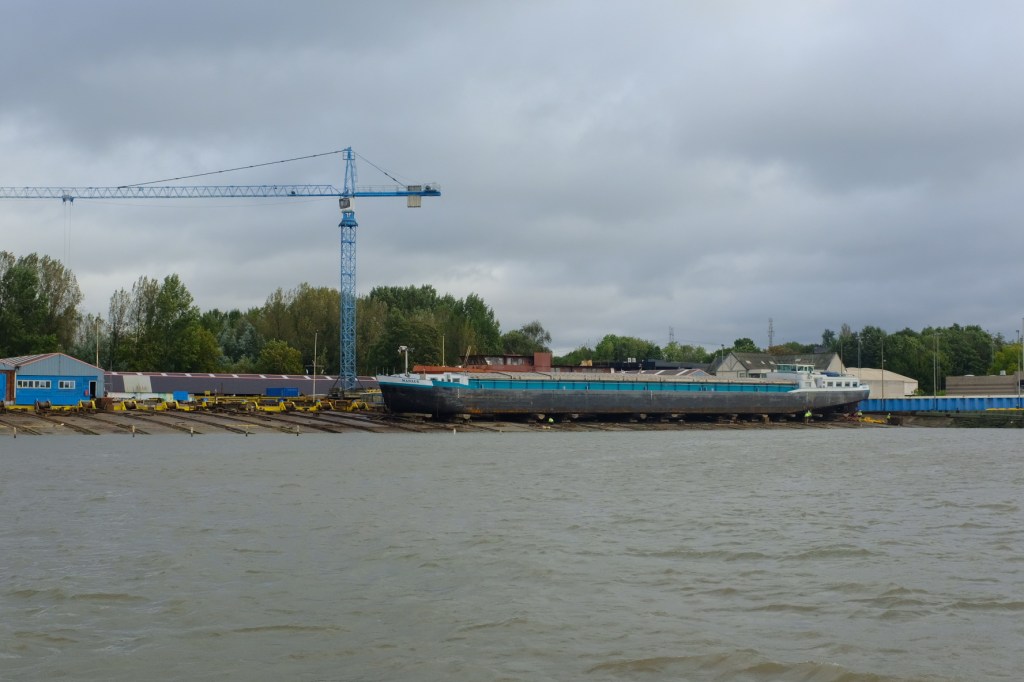
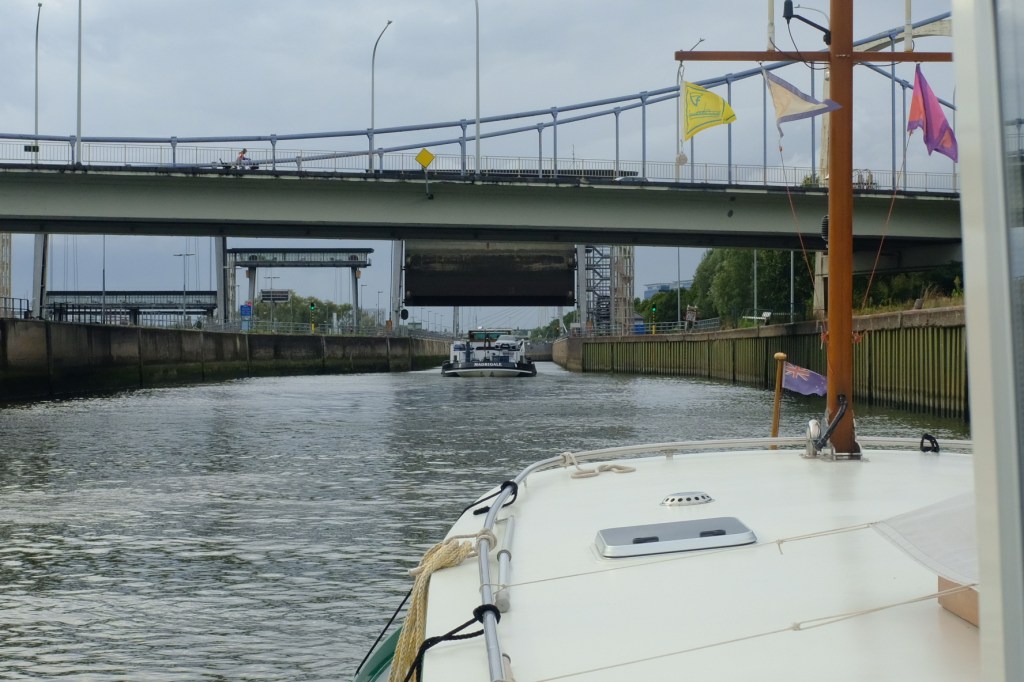
So it was goodbye to Antwerp as we rode the tide up to Ghent. Leaving at 8.30am we had a bit of help from the tide. It turned a few hours before we reached the lock at Ghent dropping our speed from 11 to 12 kms per hour to 7 or 8 kms per hour, but this was manageable.




 Karen’s Travel Blog
Leave a reply to Jill Bartrum Cancel reply