After all the excitement of Sail Amsterdam, it was time to take stock and plan our trip back to Brugge. We left our port in Waterguezen and returned to Sixhaven (where we usually stay in Amsterdam). A walk into town showed a much quieter city than the one we had experienced the previous week. There certainly had been a mass exodus of both people and boats!
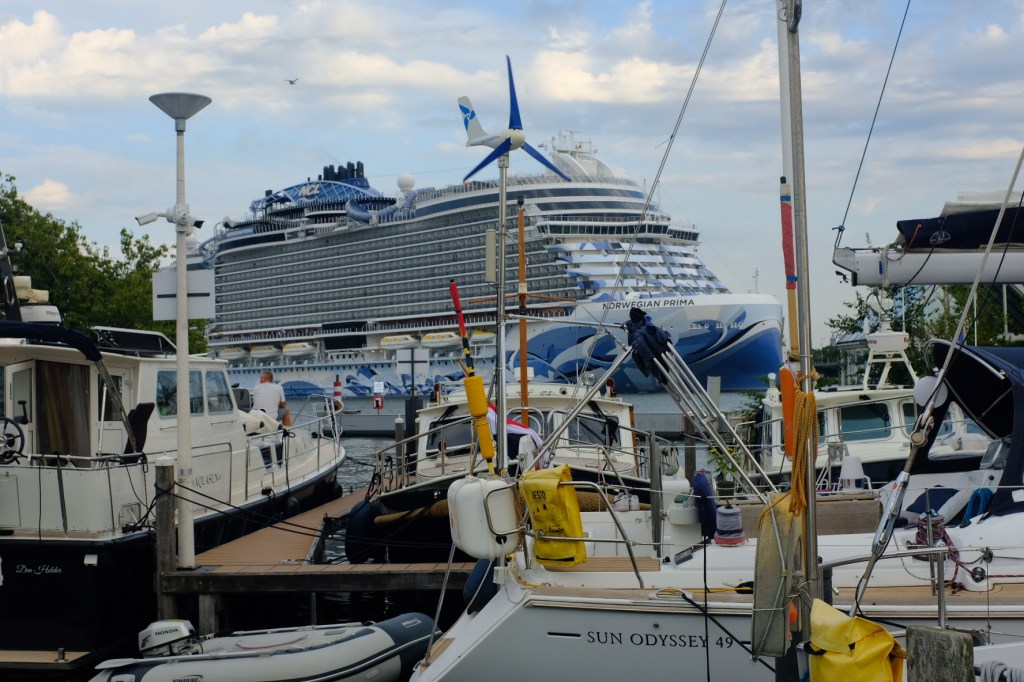
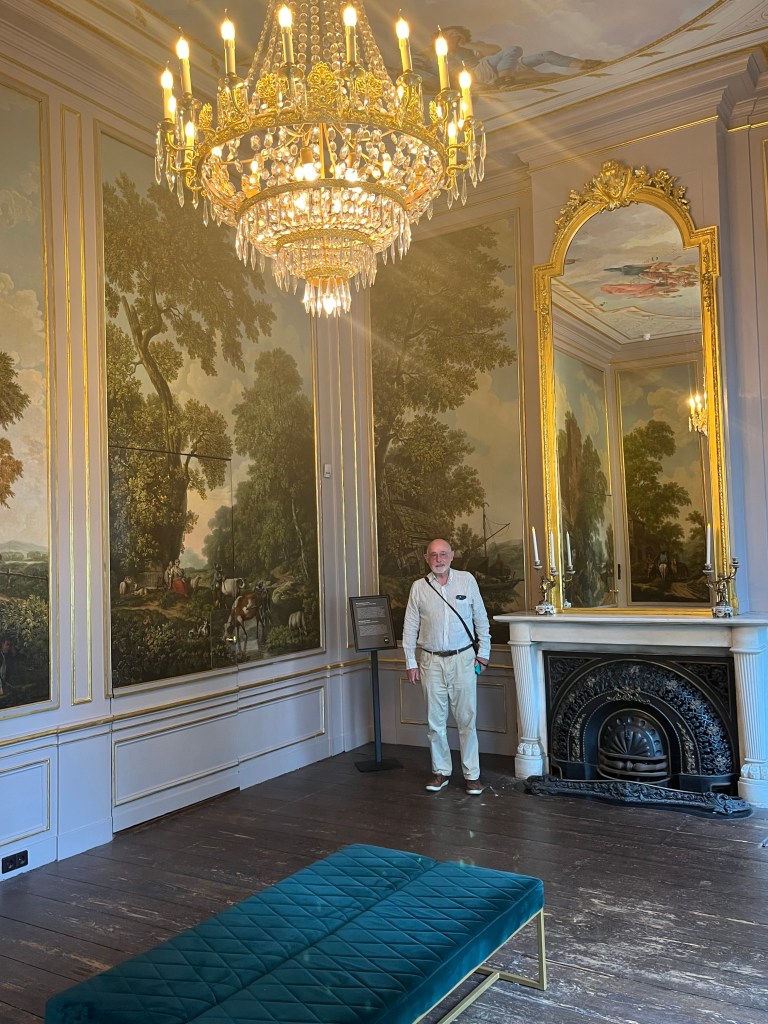
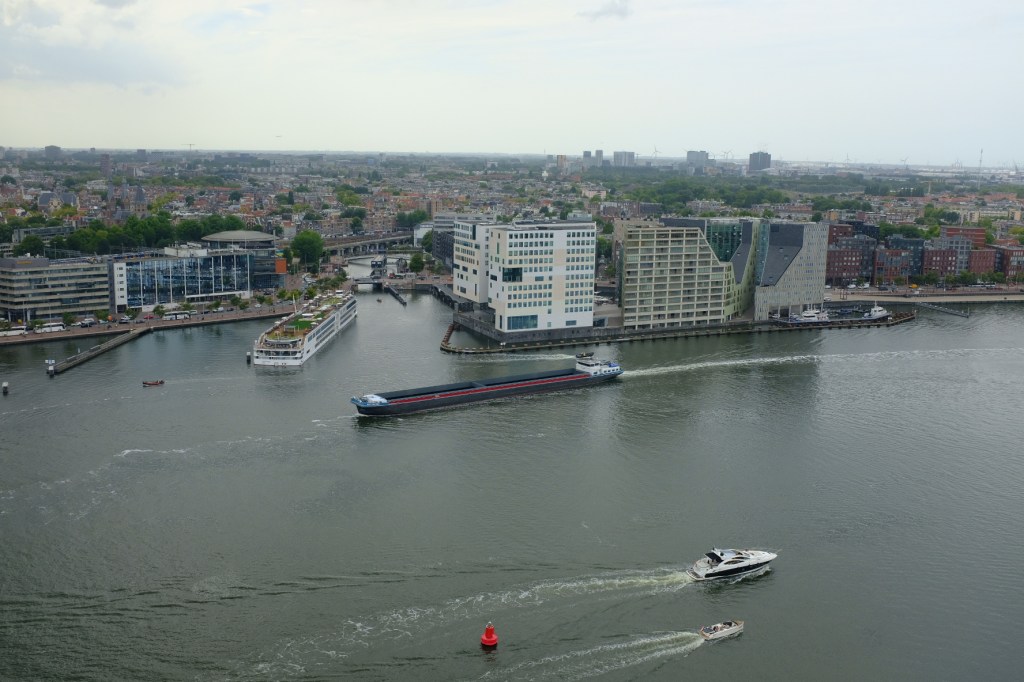
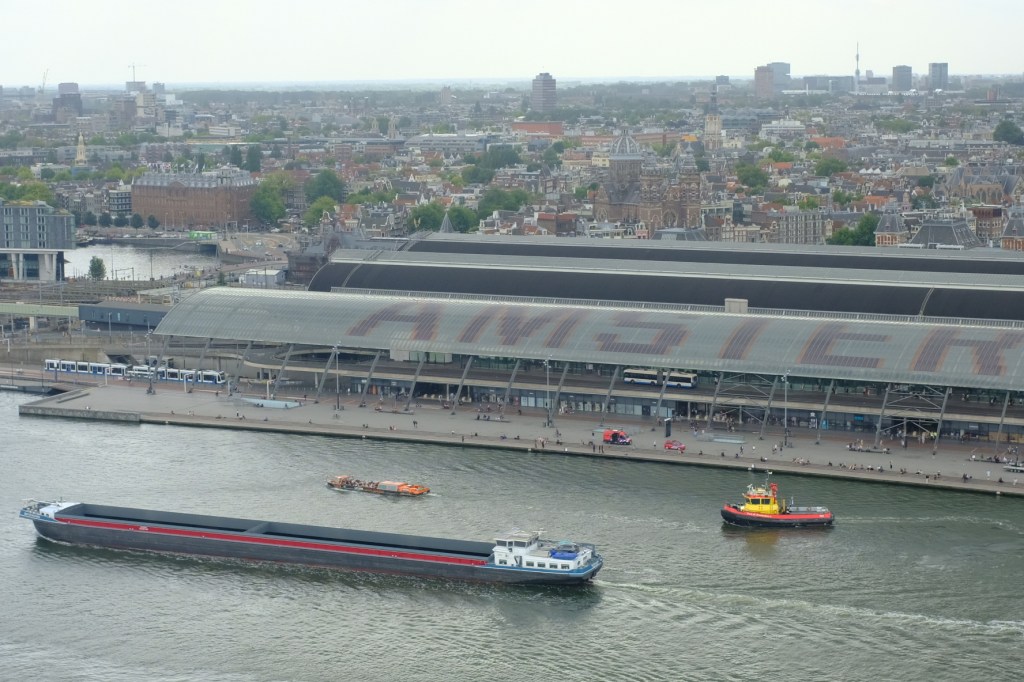
With the tall ships having exited the IJ Haven the cruise ships returnedI managed to drag Peter along to the Museum of the canals, situated in a 17th century house on the Herengracht. The museum is an insight into the development of Amsterdam, which was driven by the need for more space for its burgeoning populationThe houses along the canal’s are actually sitting on wooden piles that were driven into the mud. No wonder some have a bit of a leanDuring Sail Amsterdam the A’Dam tower was the site of the fireworks display. Remarkably the event ended on the Sunday night and by Monday, everything was back to business as usual.
4 nights in Amsterdam and we said ‘tot zines’ (goodbye) for another year and cruised a well known route to Haarlem.
From Amsterdam to HaarlemWhat better way to celebrate Peter’s birthday than with a visit to the Tyler Museum in Haarlem
I walked the remains of the old city walls, and came across the Museum of the city of Haarlem, which is situated opposite the Frans Hal museum. This museum tells the story of the city through a number of its notable citizens. I found this story quite interesting…..
Kenau Simonsdochter Hasselaer (1526-1588) was a wood merchant of Haarlem who became a legendary folk hero for her fearless defence of the city against the Spanish invaders during the siege of Haarlem in 1573. You probably haven’t picked it up from her Dutch name, but unlike the heroes of the Dutch War of Independence , Kenau was a woman and by all accounts a rather fierce one at that. It is rumoured that she killed her husband in order to take over their shipping business and made 5 voyages a year to import wood from Norway to Haarlem.
Kenau leading a troop of 300 women in the battle against the Spanish
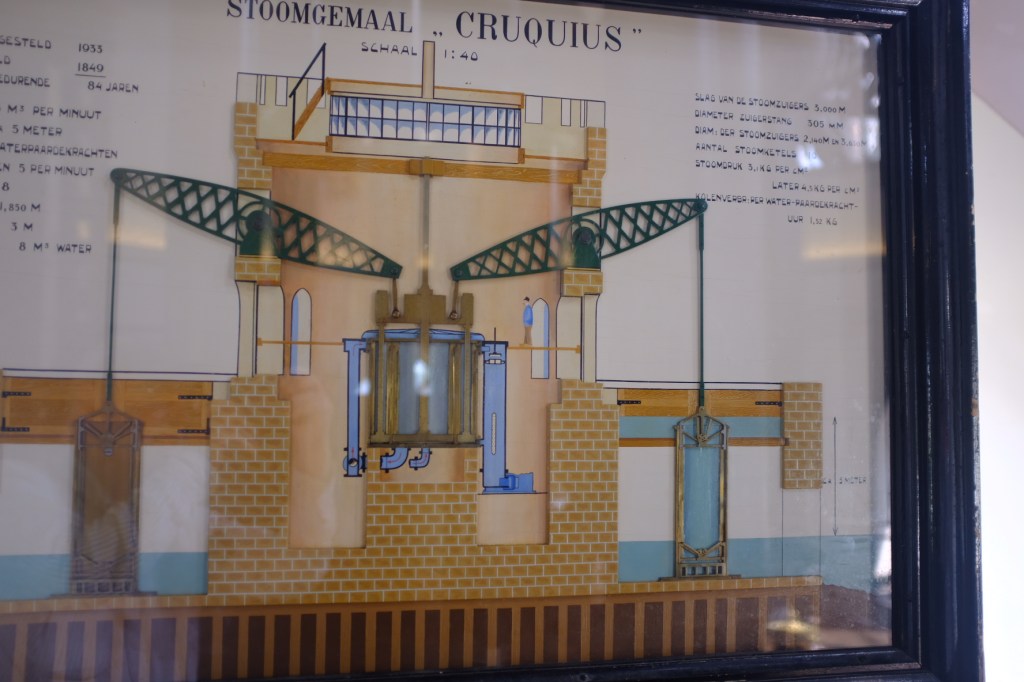
From Haarlem it was on to Leiden, with an overnight stop at Cruquius to visit the museum at the steam pumping station. The museum in the old pump house provides an insight into how the Dutch have reshaped their country over the centuries.
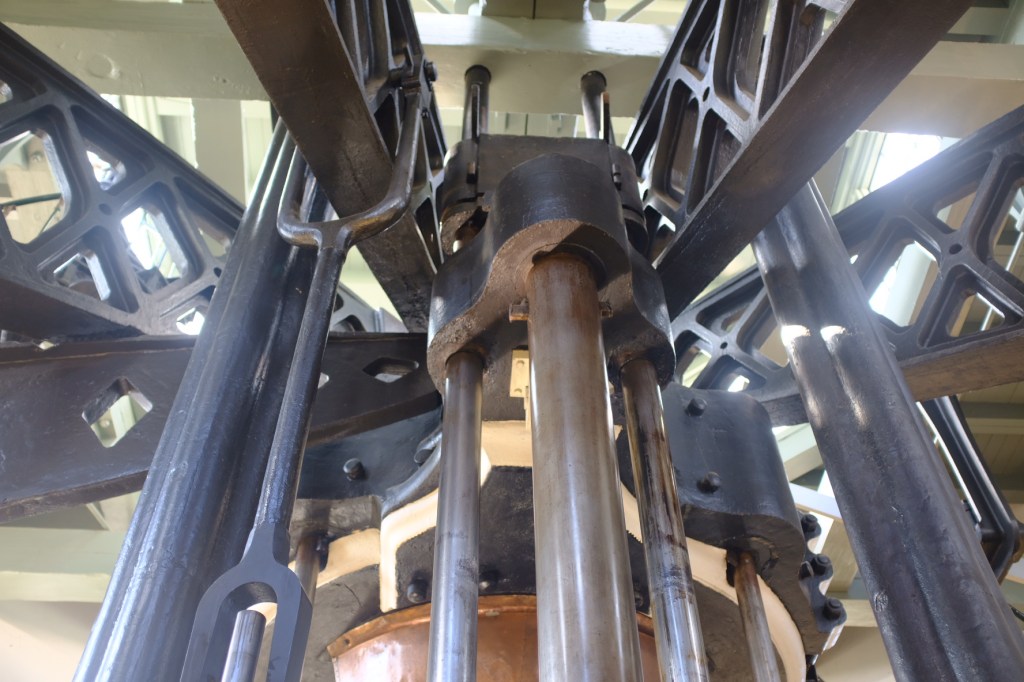
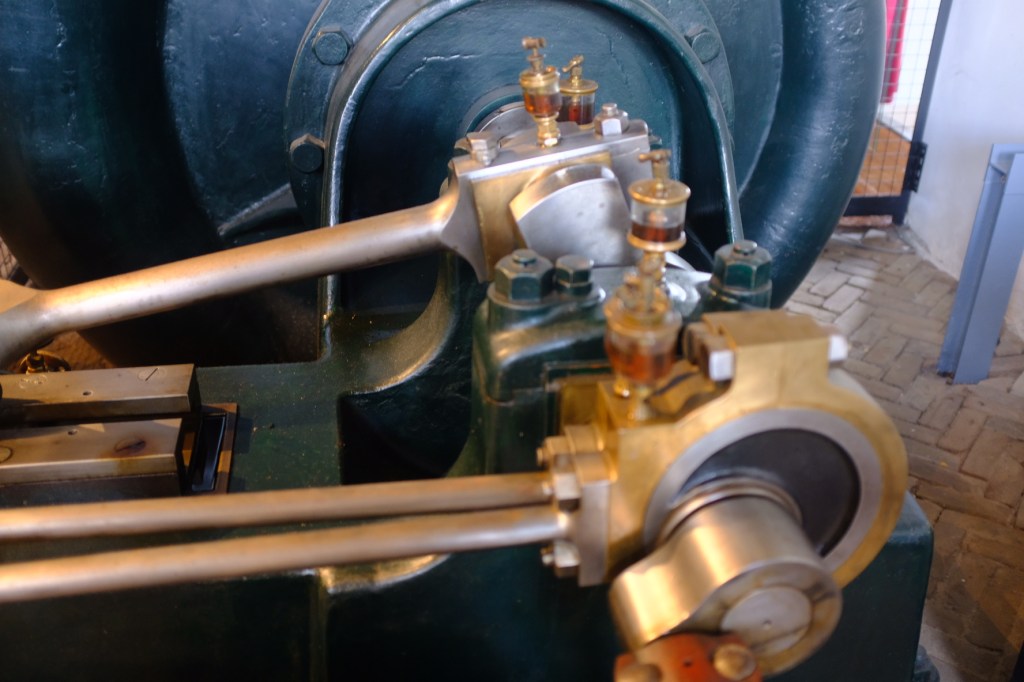
This is a map of southern Holland (mid 17th century). The standout feature is the 170 square kilometre lake in the centre of the map, the Haarlemeere. I have marked with a red arrow Amsterdam, Haarlem and Leiden so you have an idea of the dimensions of this huge inland lake. This could be a dangerous place during a storm, not only for navigation, but over the years it had swallowed many innocent villages. This tendency to for an inland waterway to increase in size is referred to as the water wolf. Many schemes were proposed to control this monster, but it was not until a ferocious hurricane in 1836 threatened to flood both Amsterdam and Leiden that a final plan was sanctioned. A canal was built around the lake (this is the canal that we now cruise along ). Then 3 steam pumping stations were built to remove over 800 million tons of water from the 4 meter deep lake. This massive feat took only 4 years to complete. The water wolf was tamed to create docile farmland and later on, the international airport of Schiphol.The pump in actionThe steam engine that drives the pump in Cruquius is the largest ever built.It is hard to see in the photo but the Ringvaart canal is above the surrounding land, which is about 4-5 meters below sea level. Could you live happily below sea level, especially in these times of climate uncertainty?
Next stop Leiden for a few days and then further down the canal to Delft, just in time to explore the Saturday antique market. Our last stop in Delft was in 2022, so it was time to refresh our memories.
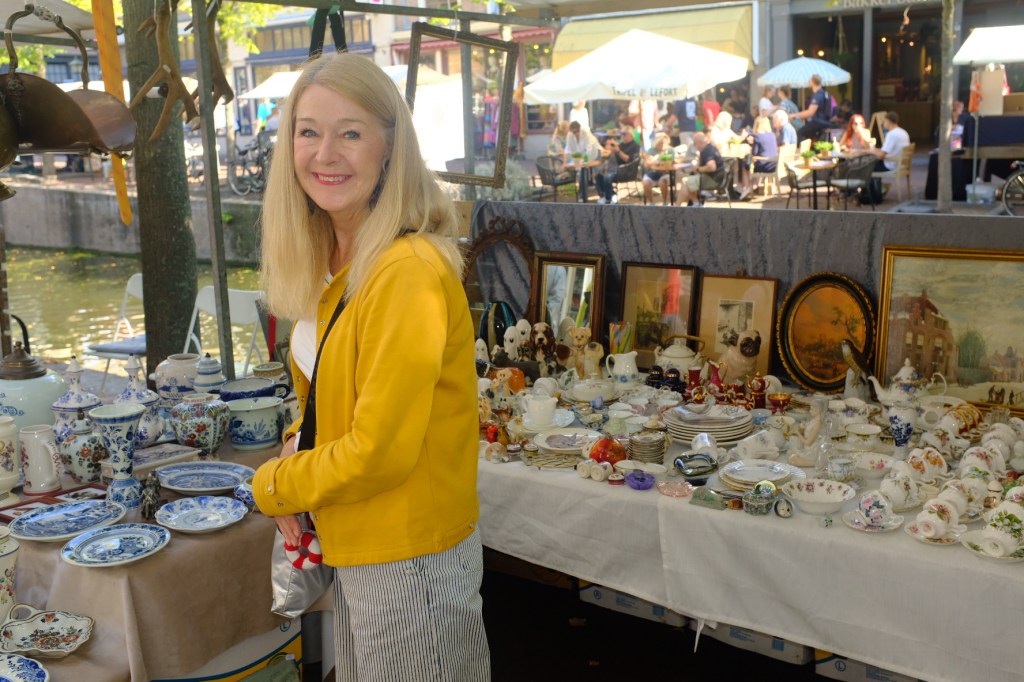
But first we explored the streets and streets of stalls to see what treasures we could find.
So what to see in Delft
Well I suppose everyone has heard about Delft Porcelain. In the 17th century the Dutch East India company introduced the people of Delft to Chinese porcelain, which they promptly copied. Today Delft is flooded with this locally made china, from expensive to tourist pieces. Something for all tastes (as long as it is blue) and for all pockets.
The most celebrated son of Delft is the artist Vermeer, who was born, lived and died in the town. He is buried in the family crypt in the Oude Kirk.
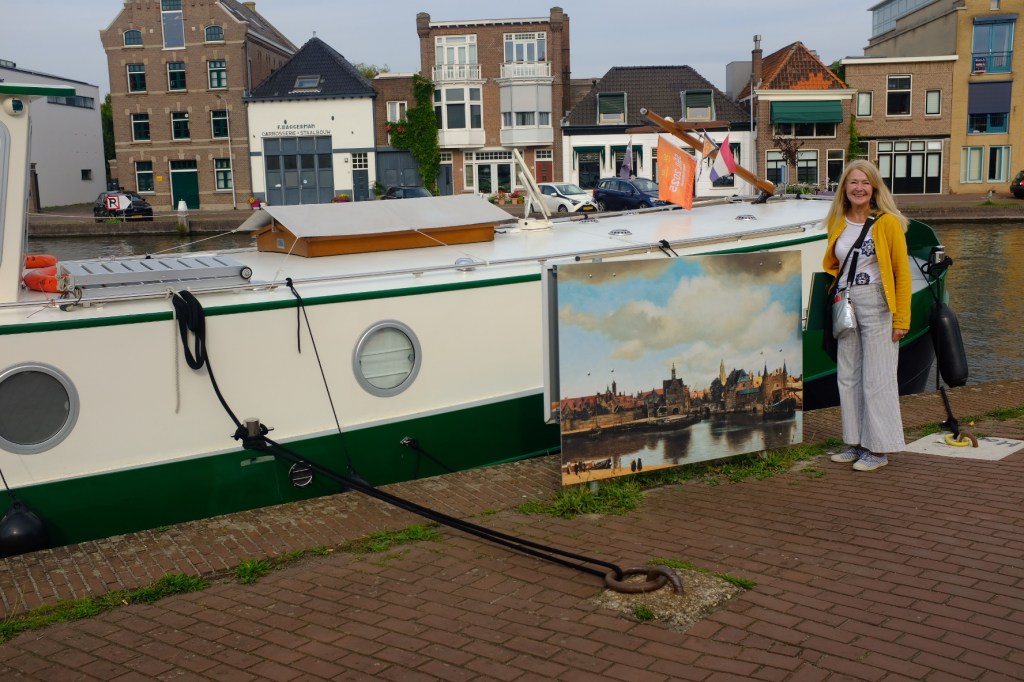
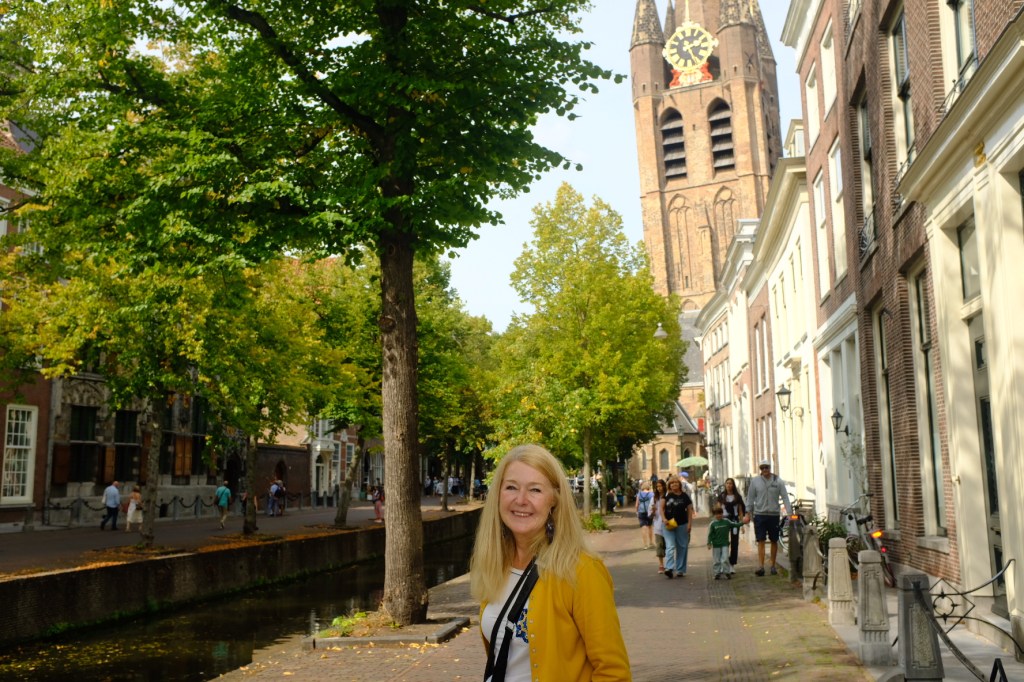
Vermeer painted both the houses and the harbour of Delft. He didn’t paint the Oude Kirk with its distinctive leaning tower.
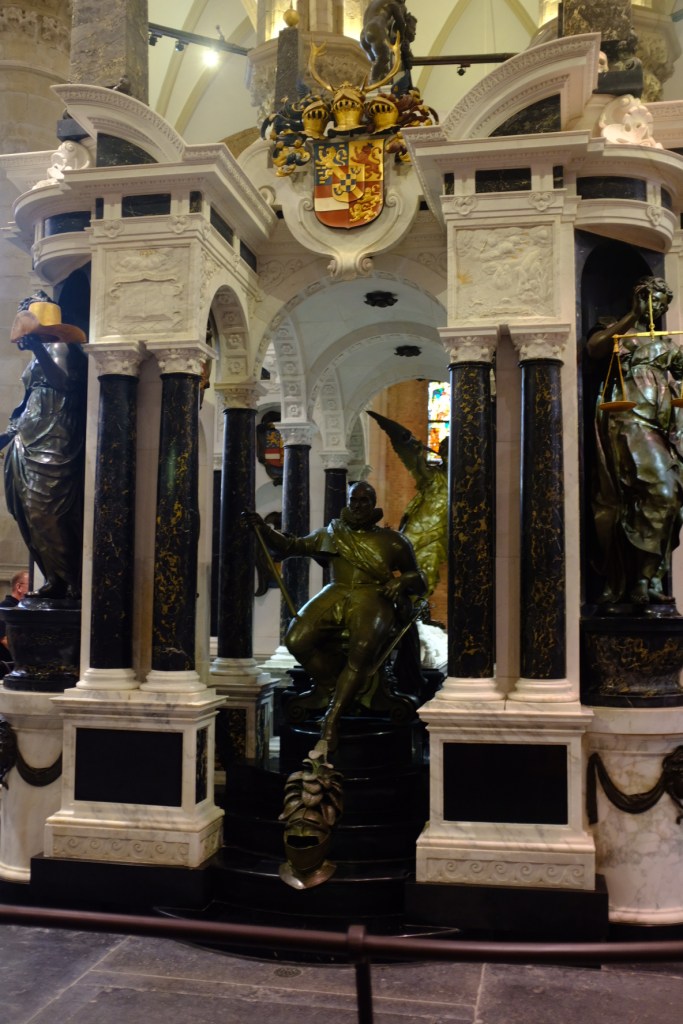
Delft has both an Oude Kirk (built in 1200) and a Nieuwe Kirk (built on the market square in 1381, as a result of a holy vision by a beggar known as Simon). The Nieuwe Kirk is site of the Dutch royal family crypt. The location this crypt was more by chance than anything else. William of Orange was assassinated in Delft in 1584. At that time the location of the Royal Mausoleum was in Breda, which was still under Spanish control. A temporary measure was to bury him in the Nieuwe Kirk, but temporary has become permanent as most members of the royal family have been interred in the crypt.
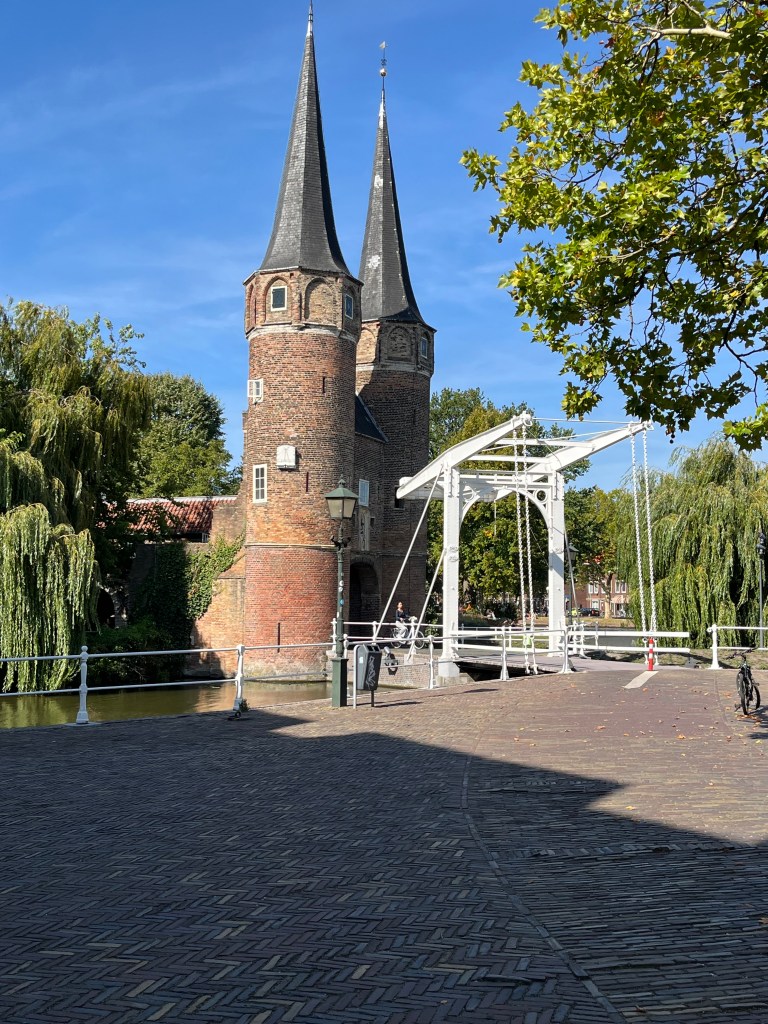
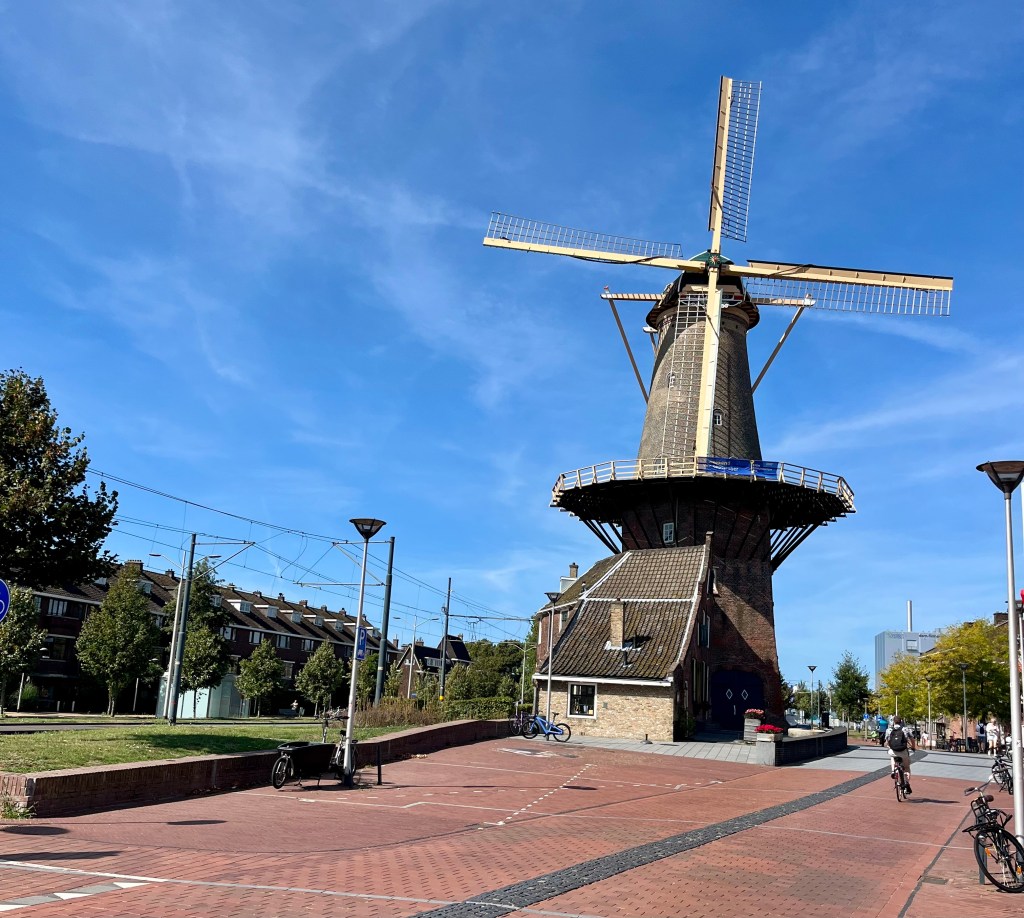
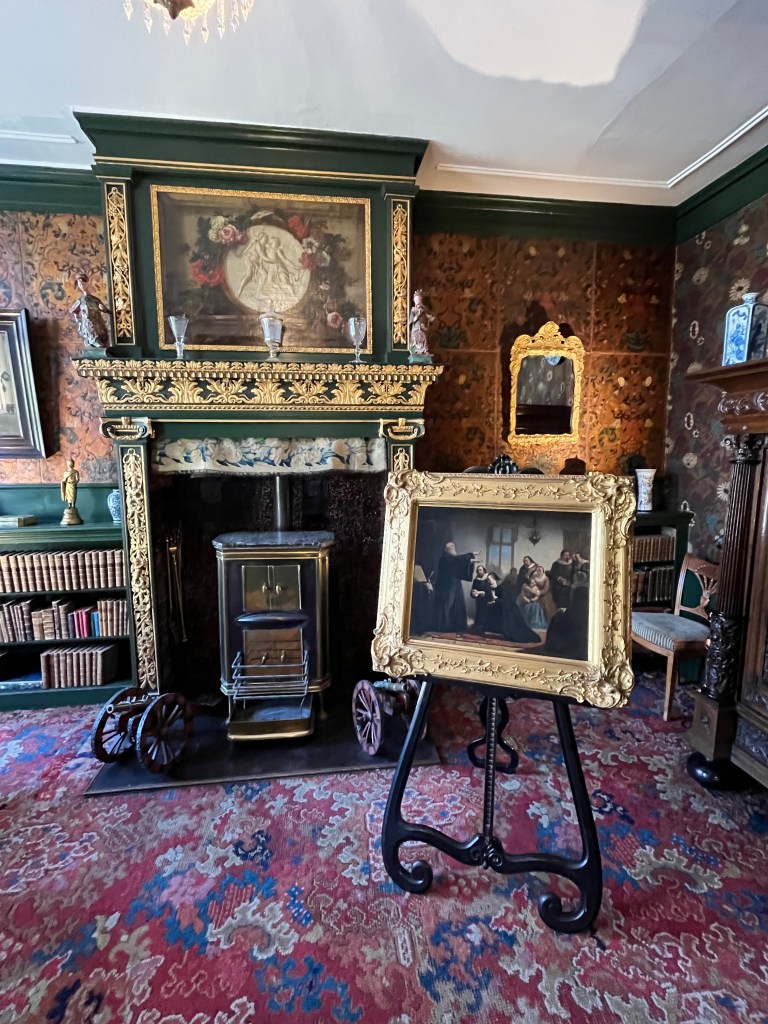
The mausoleum of William of OrangeMore of Delft, from the top left, a house built in the 19th century from second hand materials (these materials were 17th century, now that’s what I call historical recycling), the only remaining town gate (there were originally 8), the only remaining windmill (there were originally 18), a view from the 29 meter high water tower, the facade of the Delft Water Authority and the interior of a 16th century house.The harbour in Delft, not much different from Vermeer’s 17th century painting. So we farewelled Delft and continued south to Rotterdam



















 Karen’s Travel Blog
Leave a comment