
Now it’s time for a little geography lesson. The Netherlands (which literally translates to “lower countries”) is a collection of 12 provinces or states. Two of these provinces are South Holland and North Holland, so when people refer to Holland they are technically only talking about these two provinces.
So we left Yerske in Zeeland and cruised to Willemstad in North Brabant. The landscape of this area is mostly flat, but it is above sea level, so the threat of flooding is not an issue, like it is in other provinces.
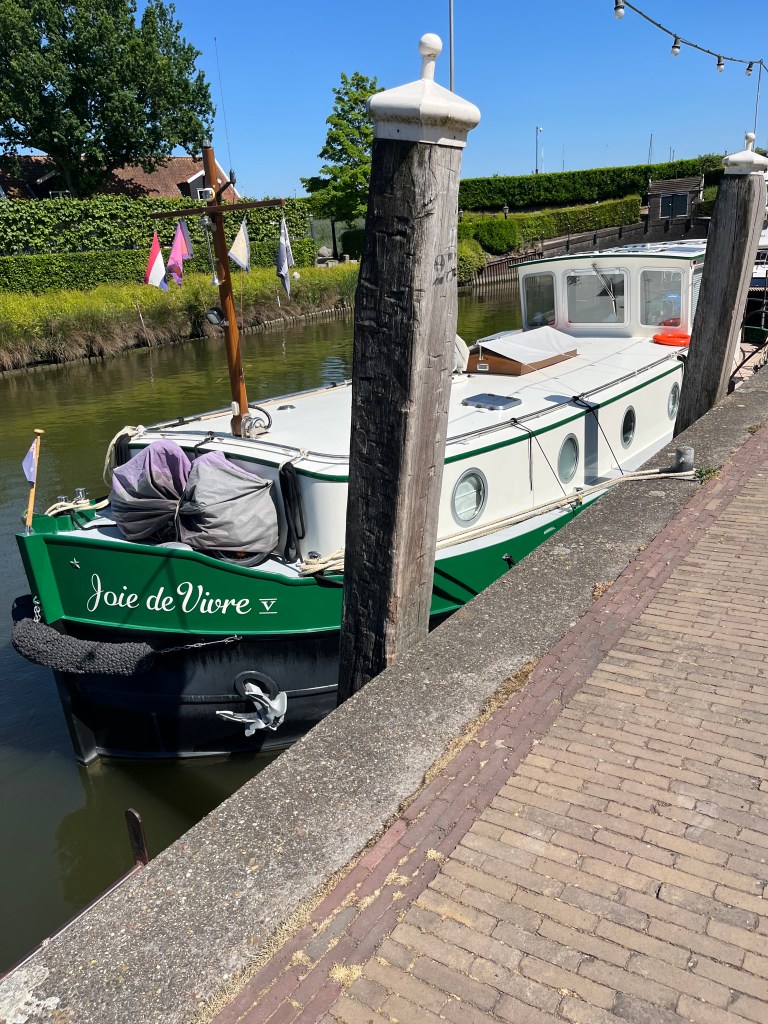
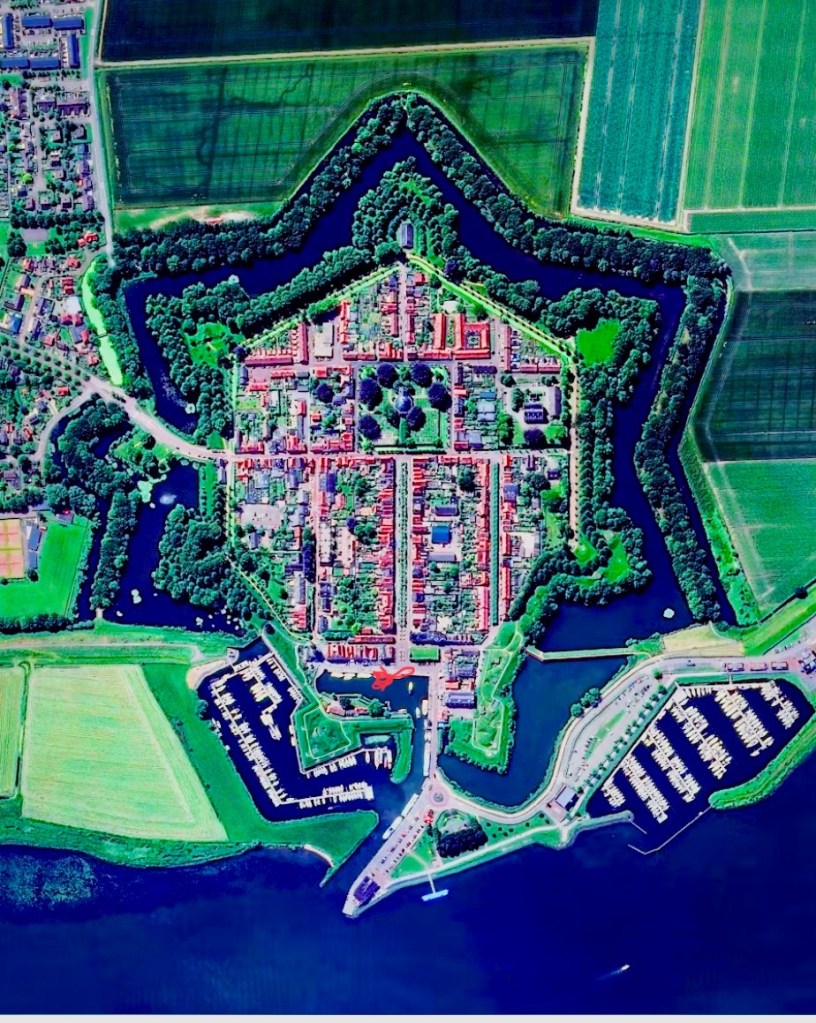

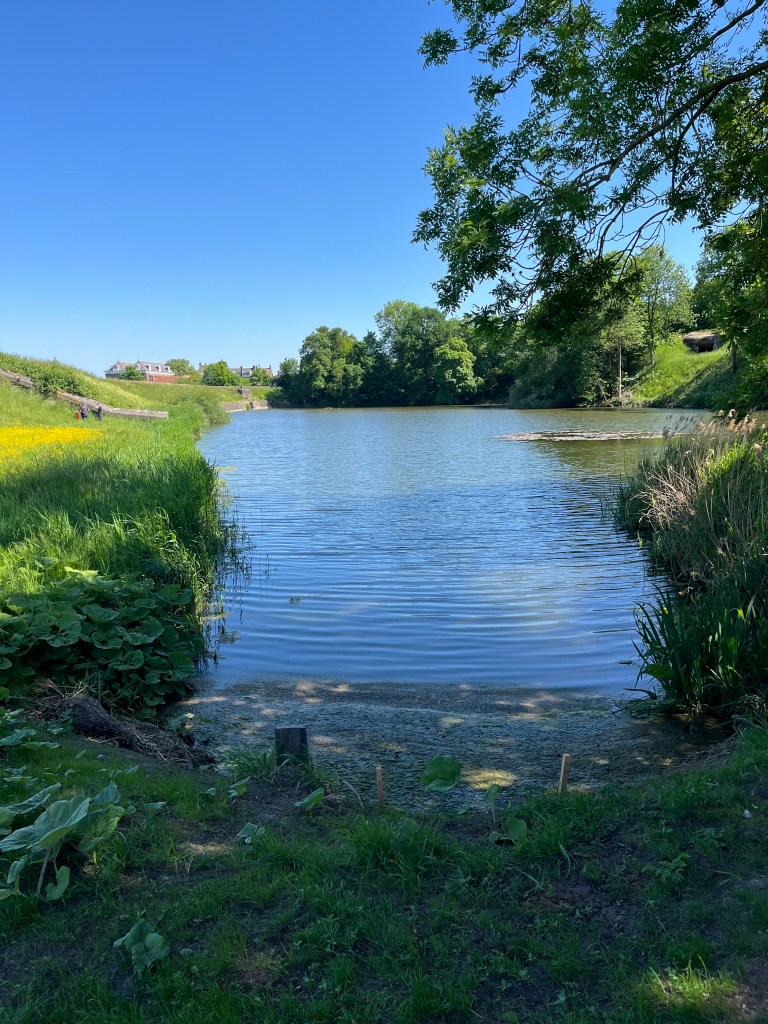
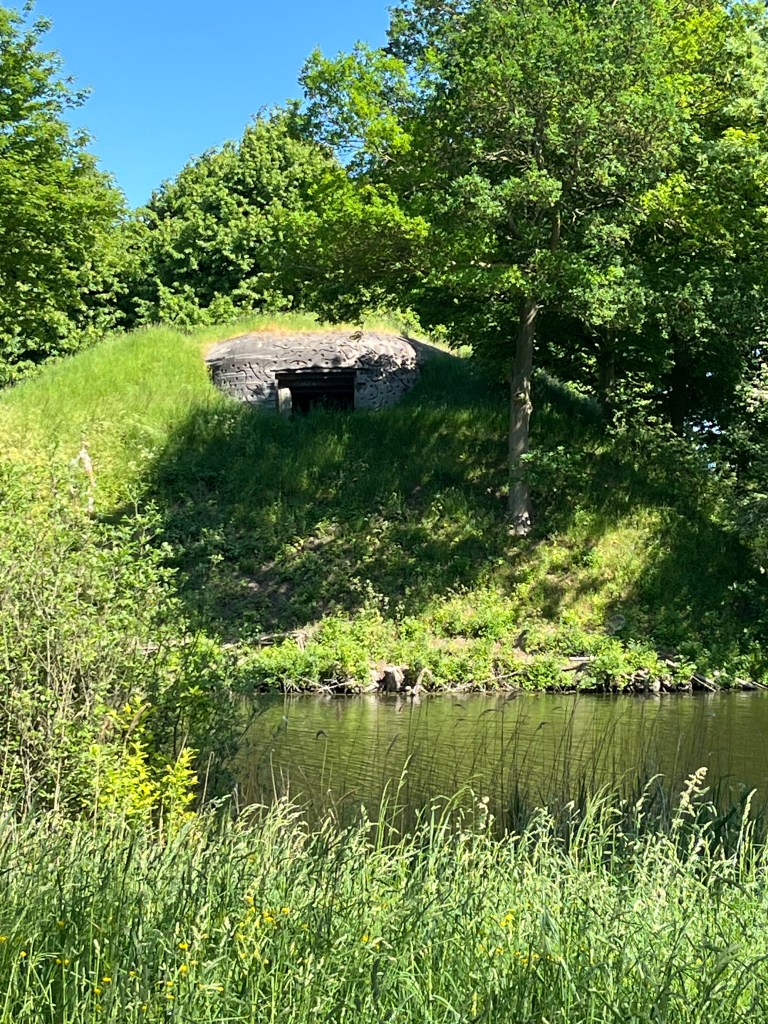
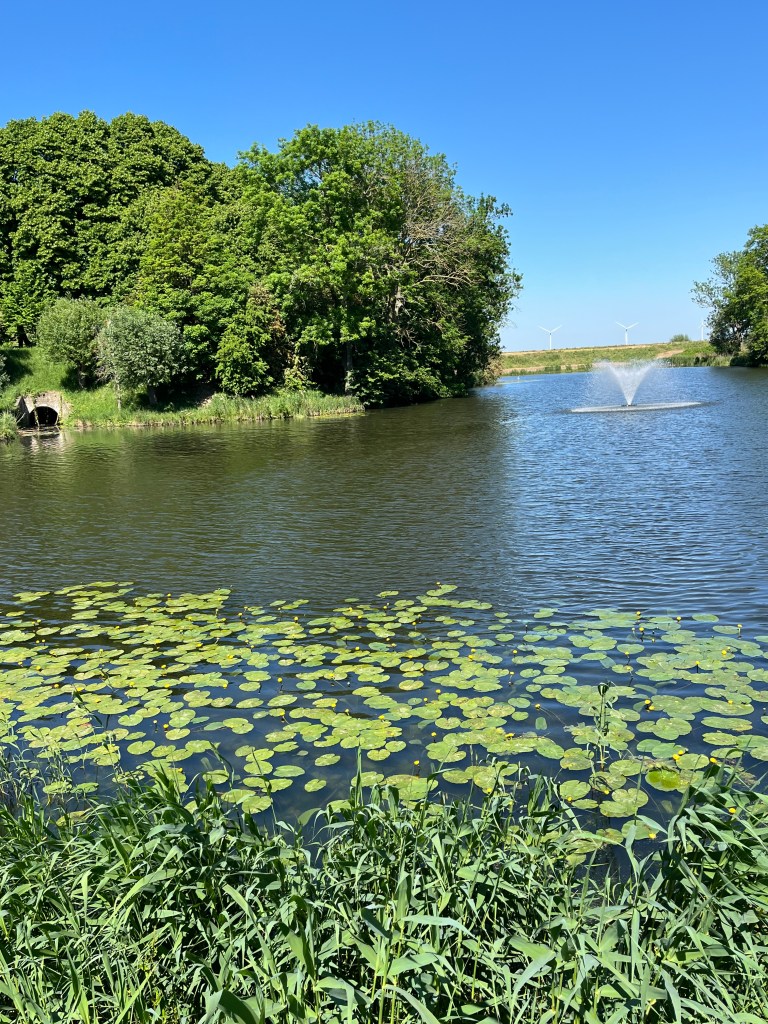
Willemstad is in the province of North Brabant which is mainly a rural area, with more densely populated towns towards the east of the province. As most of the area is above sea level there are not as many canals. Historically the population was predominantly Catholic, though today, like the world over, this religion does not hold much sway with the younger generation.
From the province of North Brabant we headed in a north westerly direction to the province of South Holland and the city of Dordrecht, which claims to be the oldest city in Holland. Situated at the confluence of the Oude Maas, Bender Merwede, Niewe Merwerde, Hollands Deep and Dordtsche Kil, all part of the Maas Rhine delta, it developed as an important market city primarily trading in wine, wood and cereals. And the best mooring in town, Wine Haven! The perfect choice.
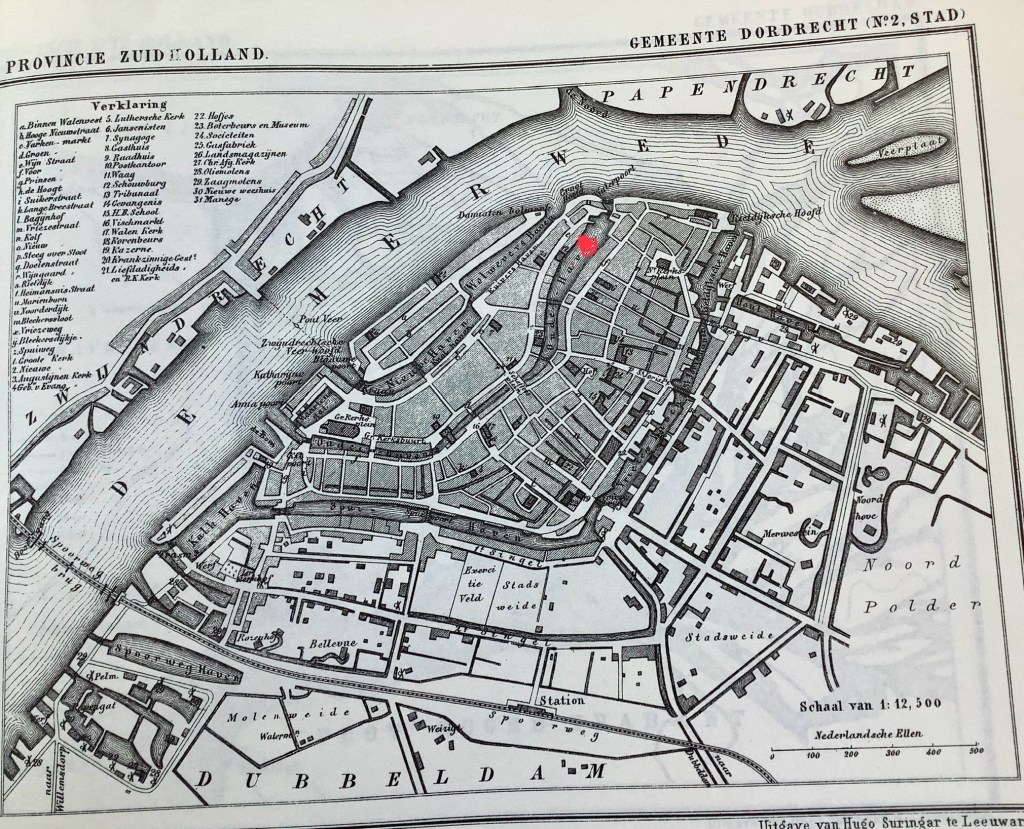
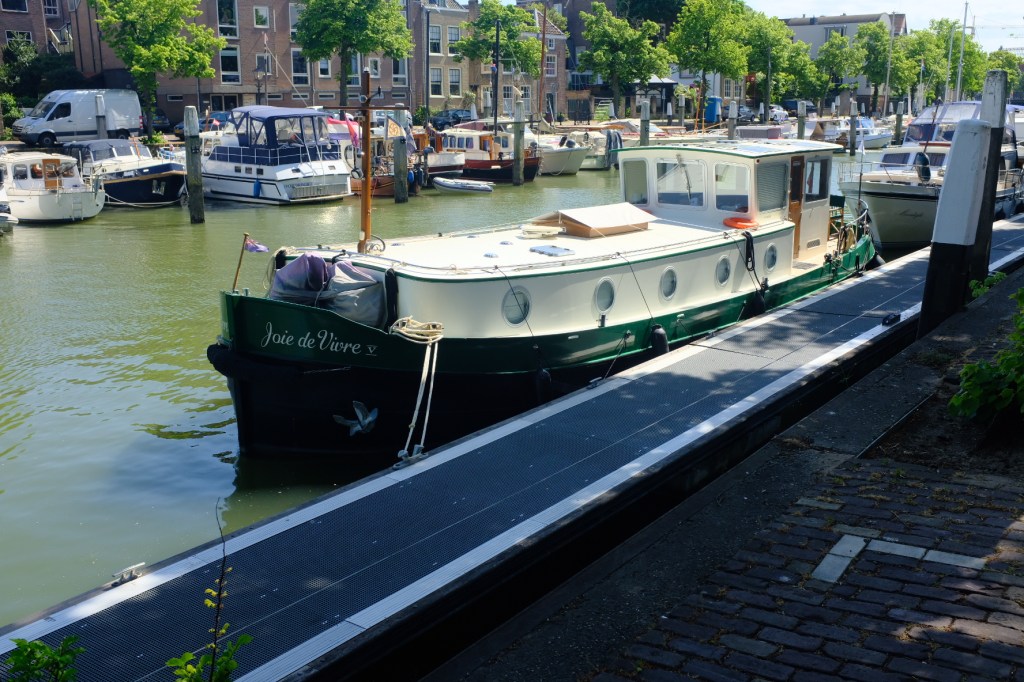
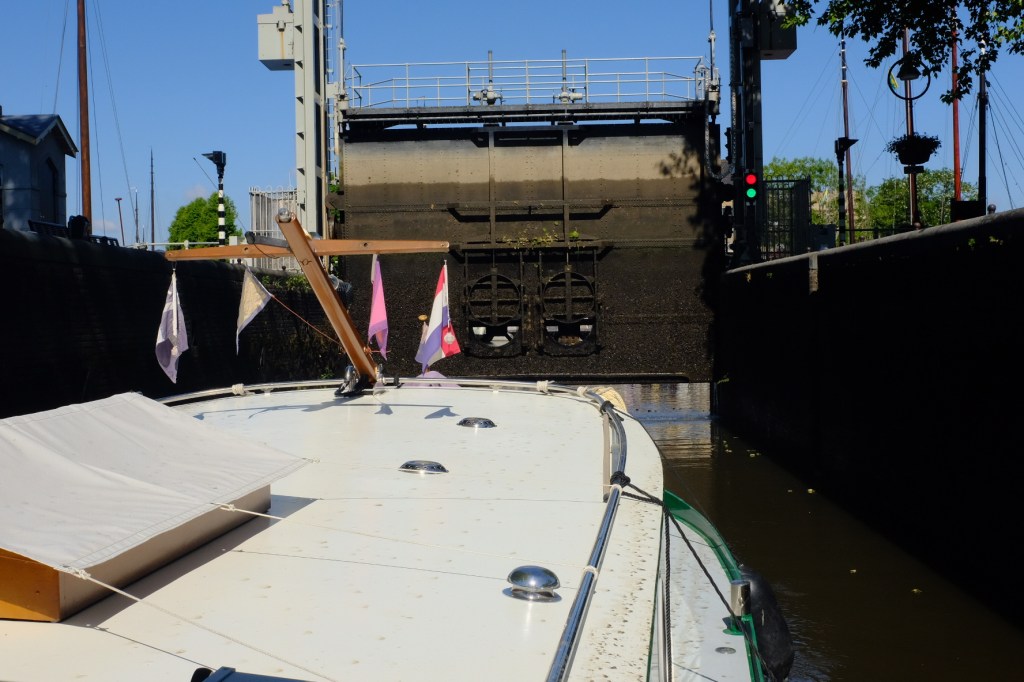
Still an important trading route there was plenty of traffic to avoid both entering and leaving the port

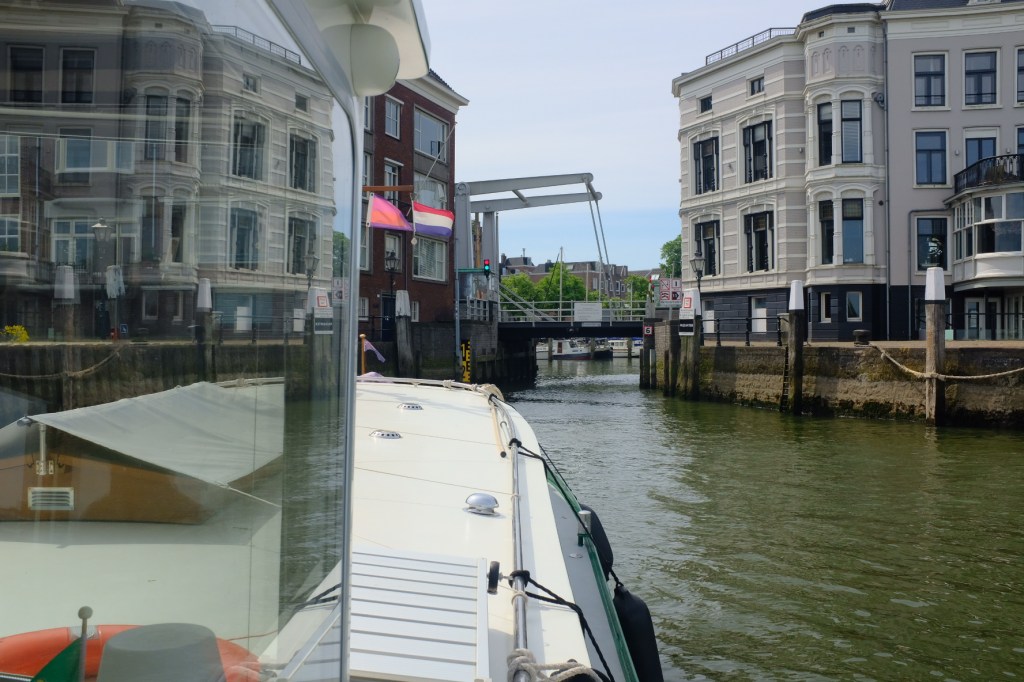

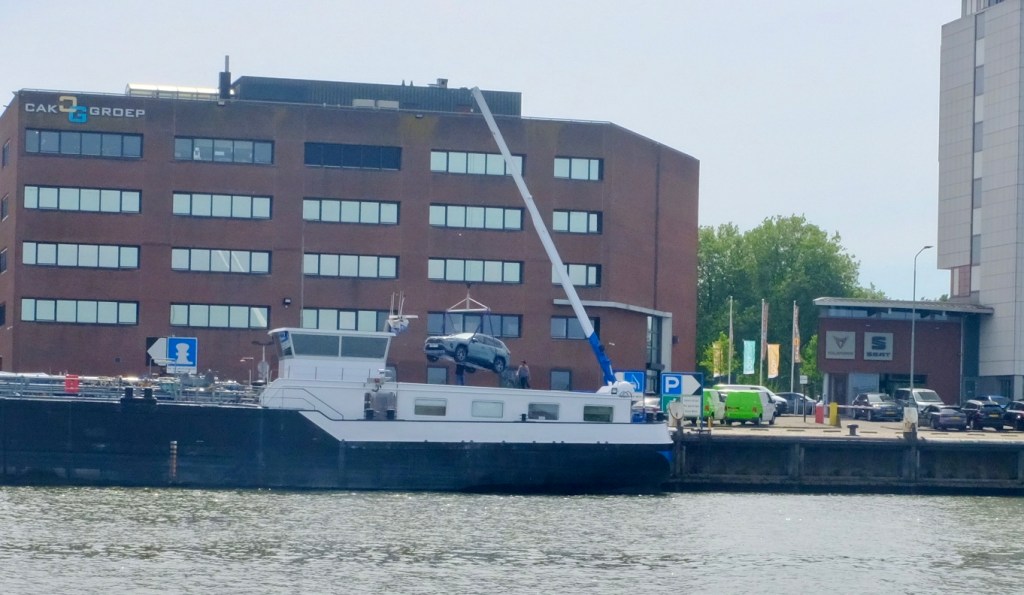
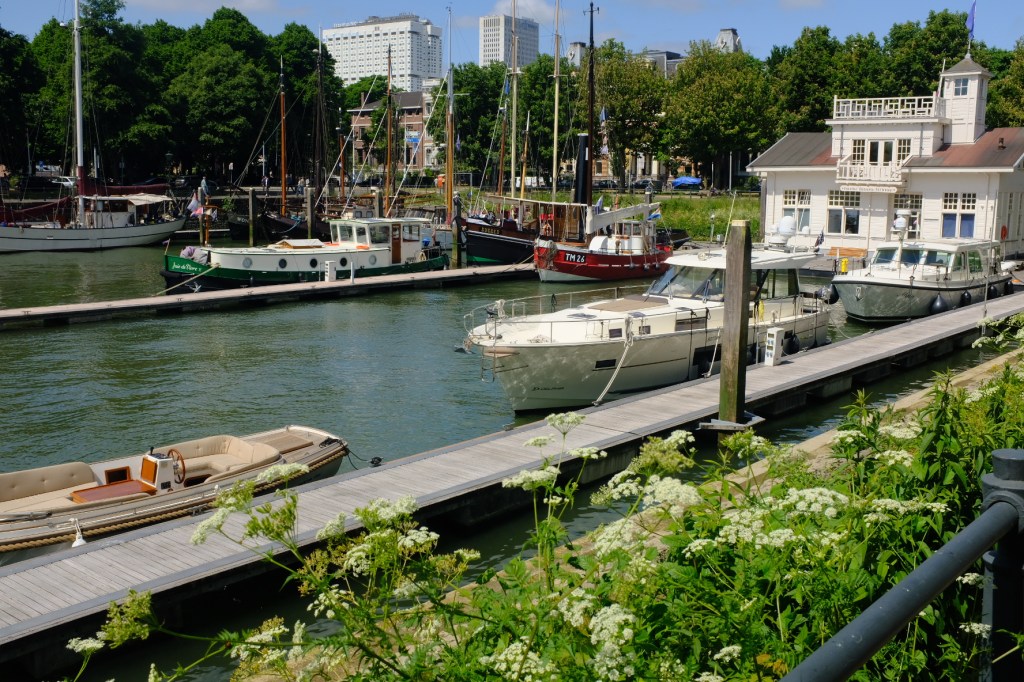
After a short stay in Dordrecht we were off to Rotterdam and our favourite mooring at Veere Haven. This port is adjacent to the historical harbour and many of its permanent residents are historic boats. It is also close to the city centre with a tram stop nearby

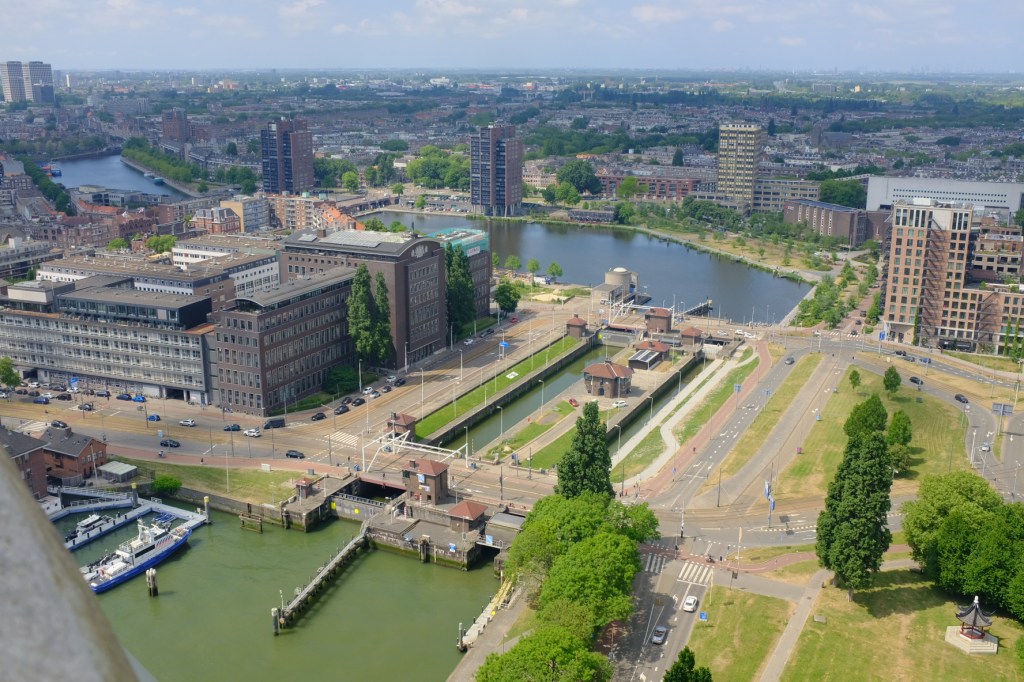
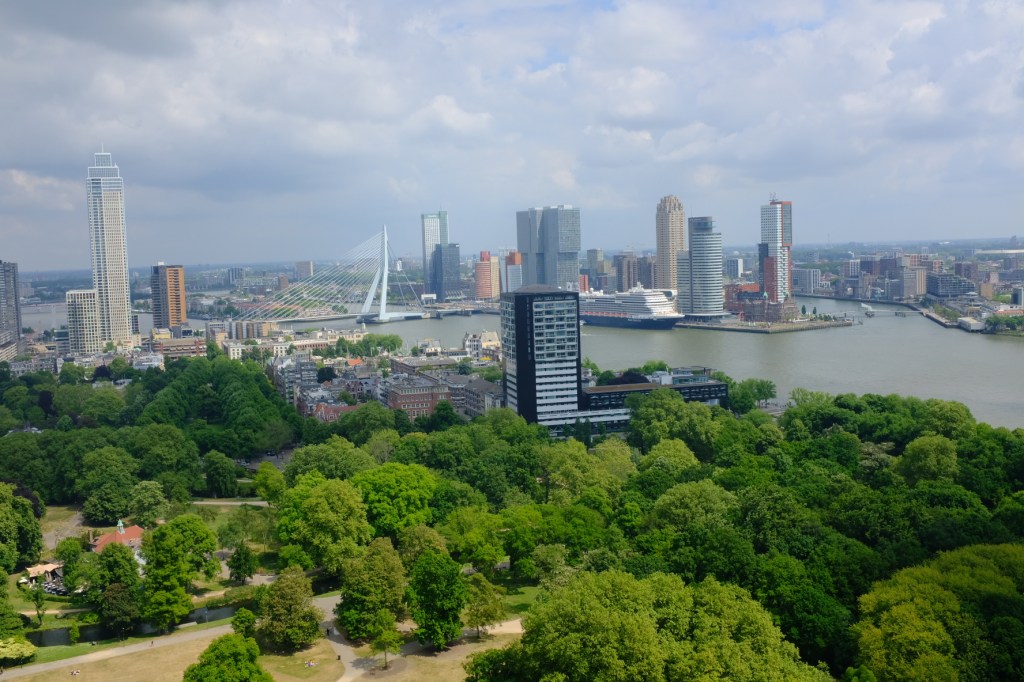
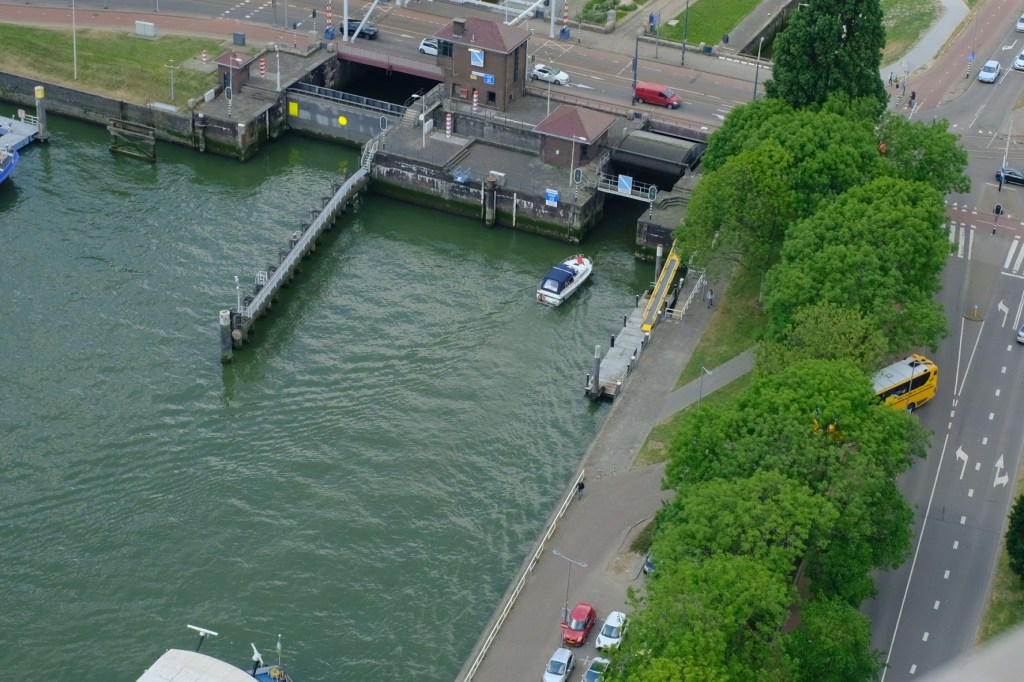
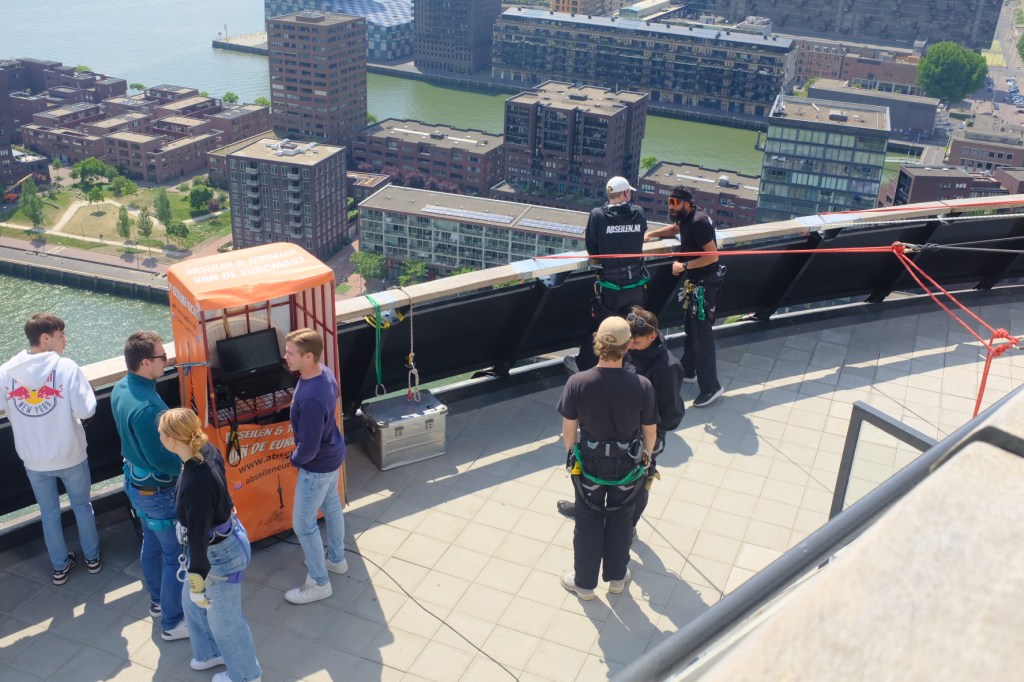
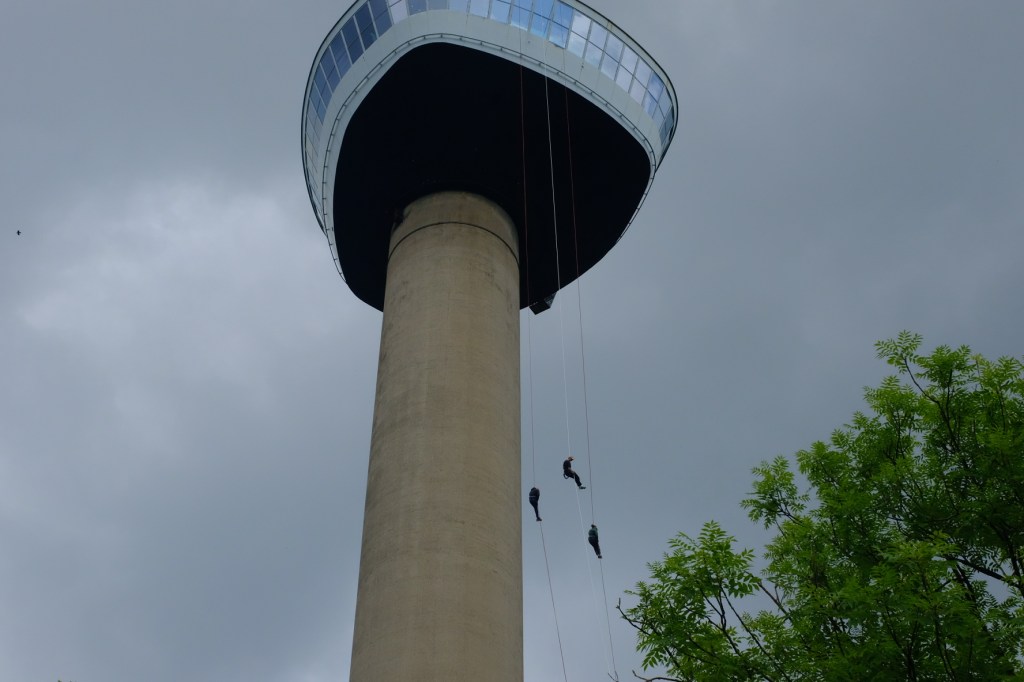
We have travelled this route a few times. In fact it was our 5th visit to Dordrecht and our 6th to Rotterdam. But we had never been to witness the scenic view at the top of the Euro Mast. Well worth the trip.



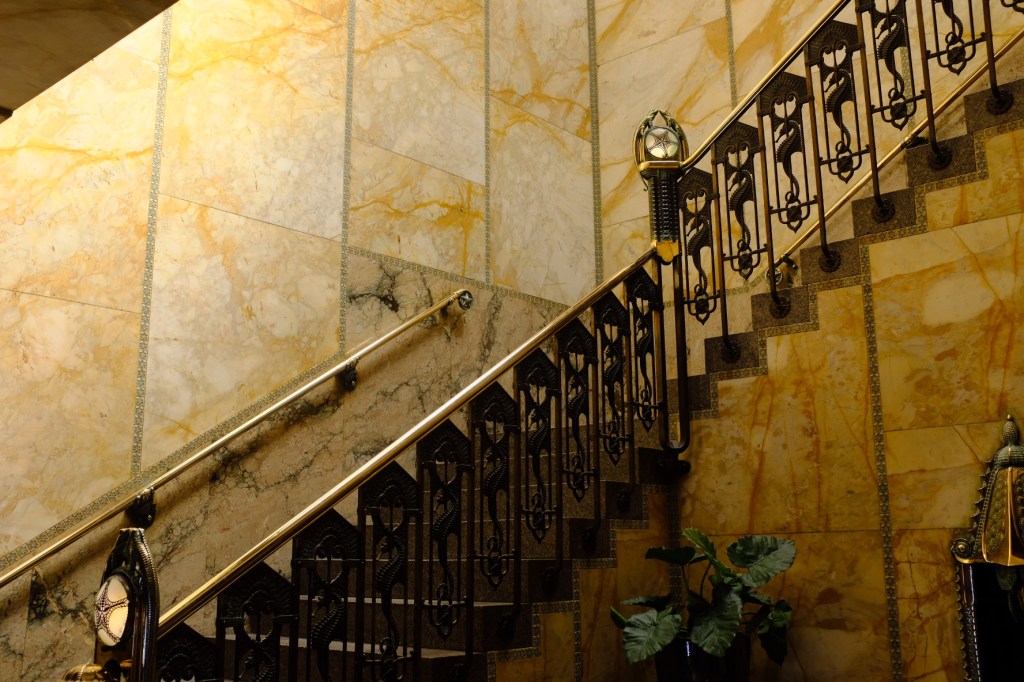
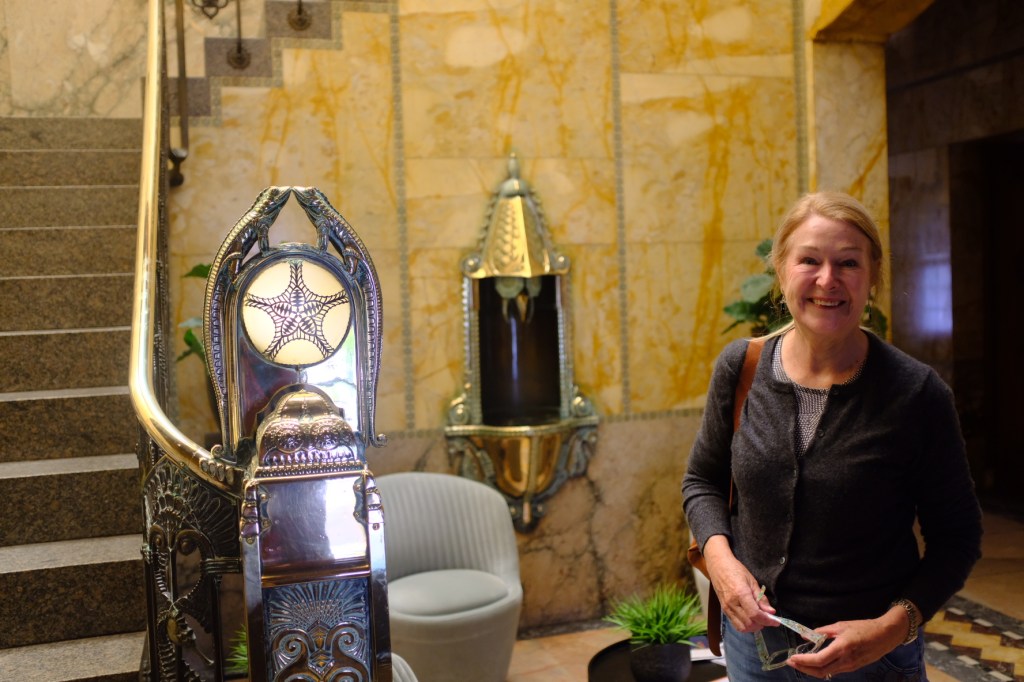
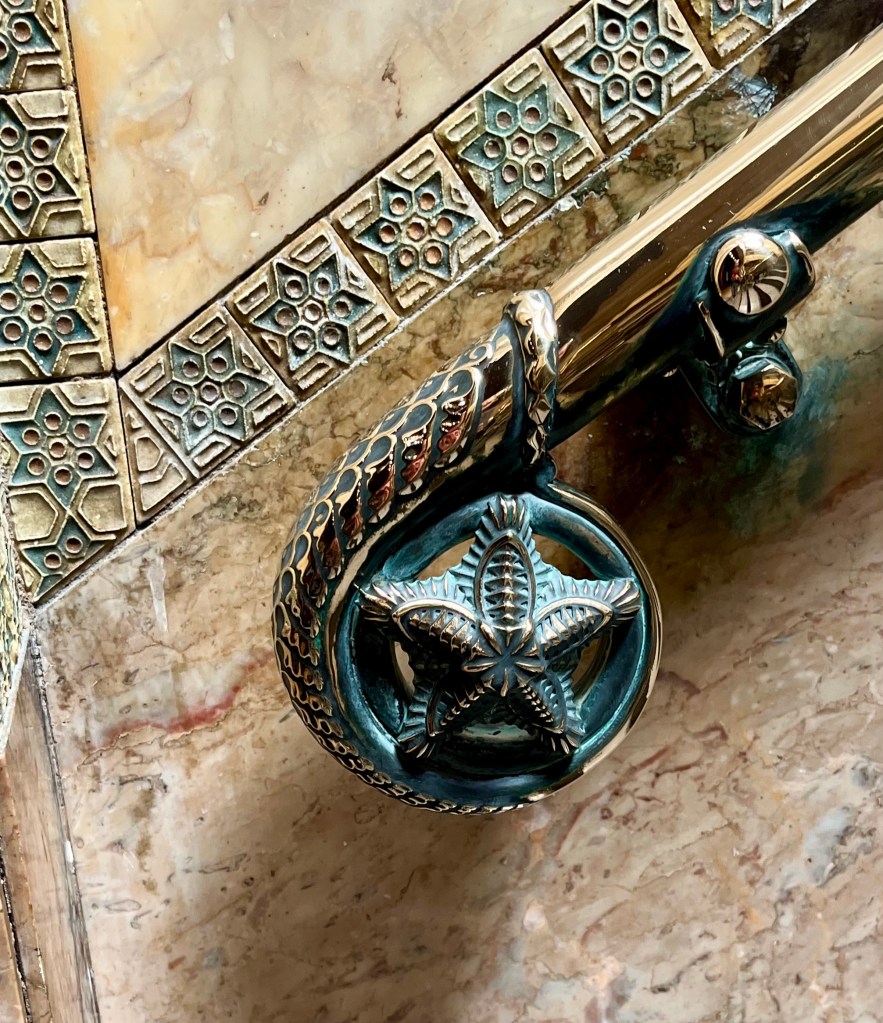
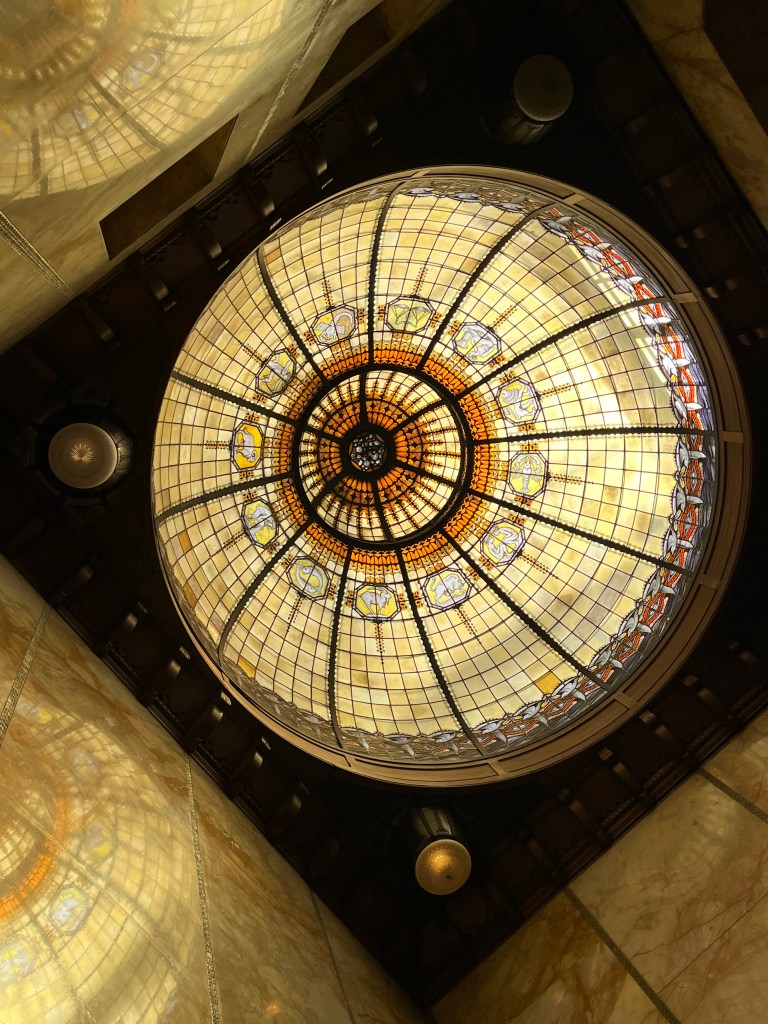
With a book shop to visit we discovered this beautiful stair case and stain glass ceiling in an unremarkable office building. Confirms that not all was lost when the Germans bomber Rotterdam in 1940.


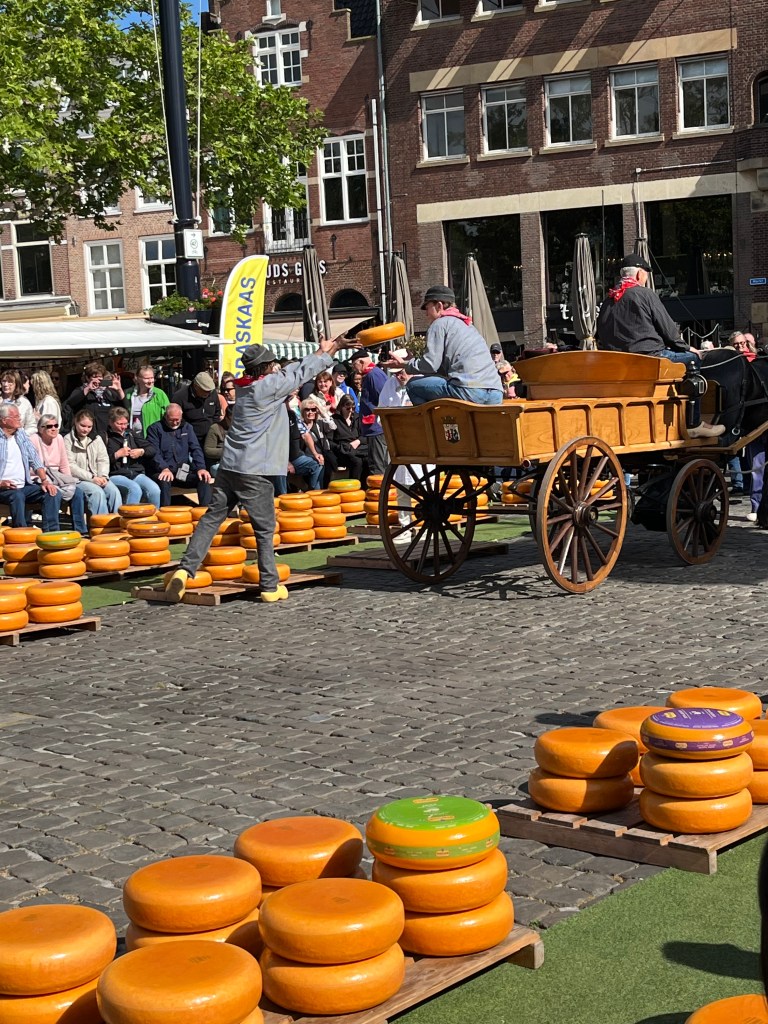
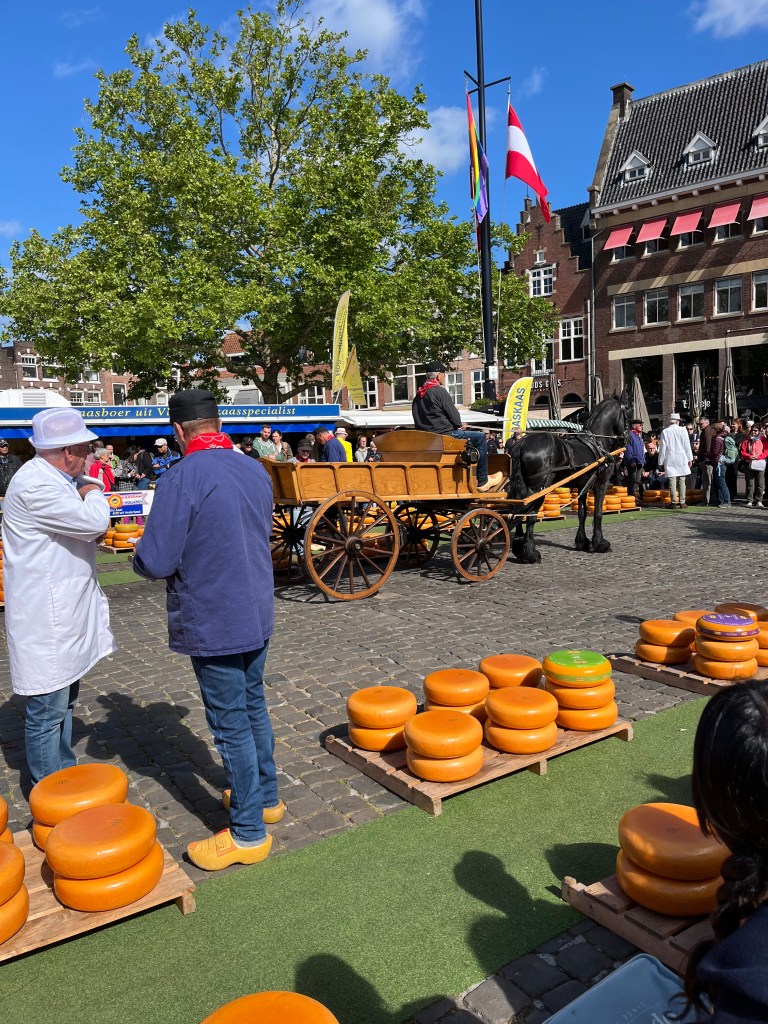
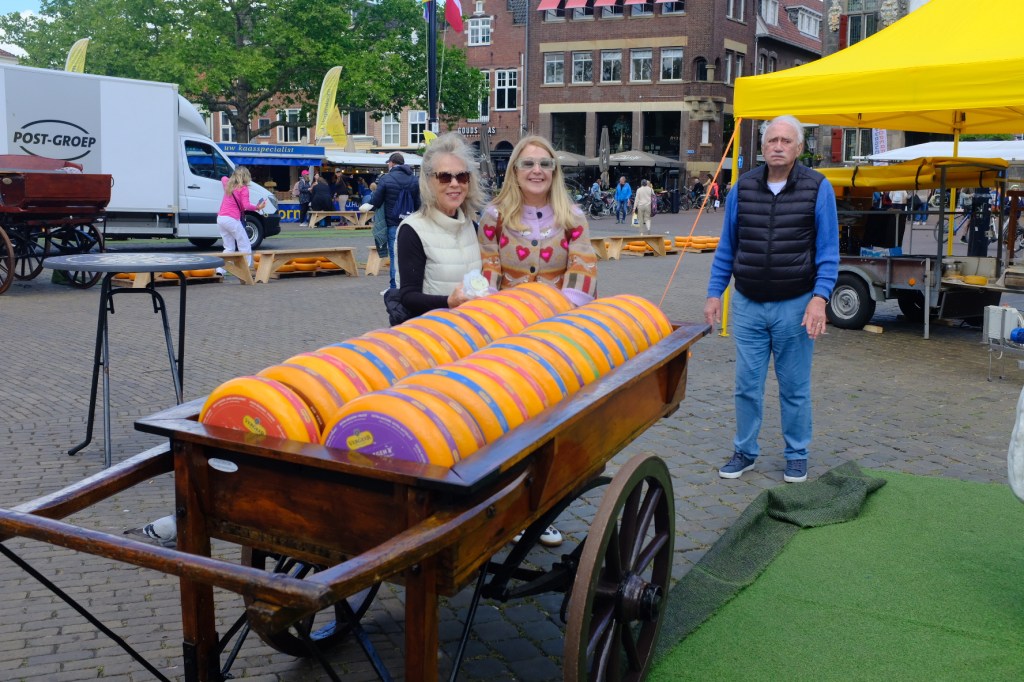
So it was farewell to Rotterdam and hello to Gouda. Yes that’s where the cheese comes from, but though we say Gouda, the Dutch say Oulder. In the Middle Ages cities obtained certain feudal rights that gave them a monopoly on certain goods. Gouda acquired the market rights to cheese. The farmers would take their cheeses to the market square, where they were traded by a ritual bargaining system called handjeklap in which buyers and sellers clap each others hands shouting out various prices. Once a price was agreed the cheese would be taken to the weighing house to complete the sale




We repeated visitation of the plague during the 14th and 15th centuries there are a number of specially built homes for widows, children and the elderly. Today they are renovated luxury accomodation.


St. Johns Church is the longest church in the Netherlands, but its great claim to fame are its more than 70 stain glass windows.
The story of the stained glassed windows
Fire destroy most of the church in 1552. The council decided to renovate the church and commissioned new windows. But like many ambitions projects, they ran out of money. Instead of giving up they appealed to the elite of the time to contribute to the restoration. Even cities in Southern Holland made a donation. With the rise of the Protestant Reformation and the break with the Catholic Church the existing windows were at risk. of being destroyed by ardent Protestants. The council removed the statues and icons from the church and installed militia to guard the completed windows. The subject matter of the windows built after the Reformation changed from biblical stories to messages on mercy and forgiveness as well as current events. During WW2 the windows were again at risk, so they were removed, boxed and stored until they could be safely replaced.
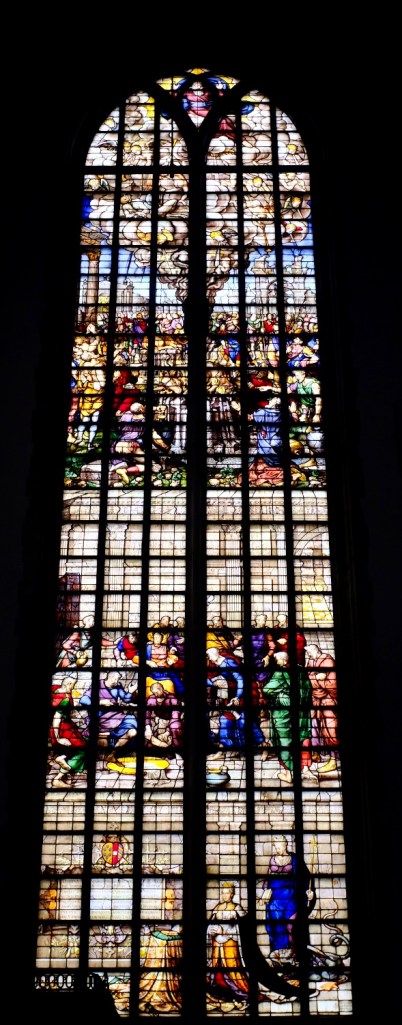
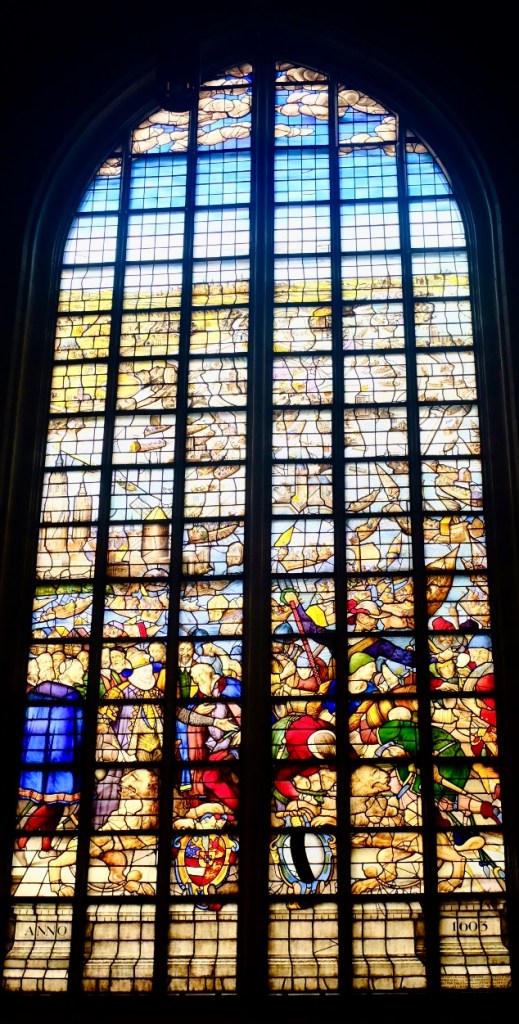
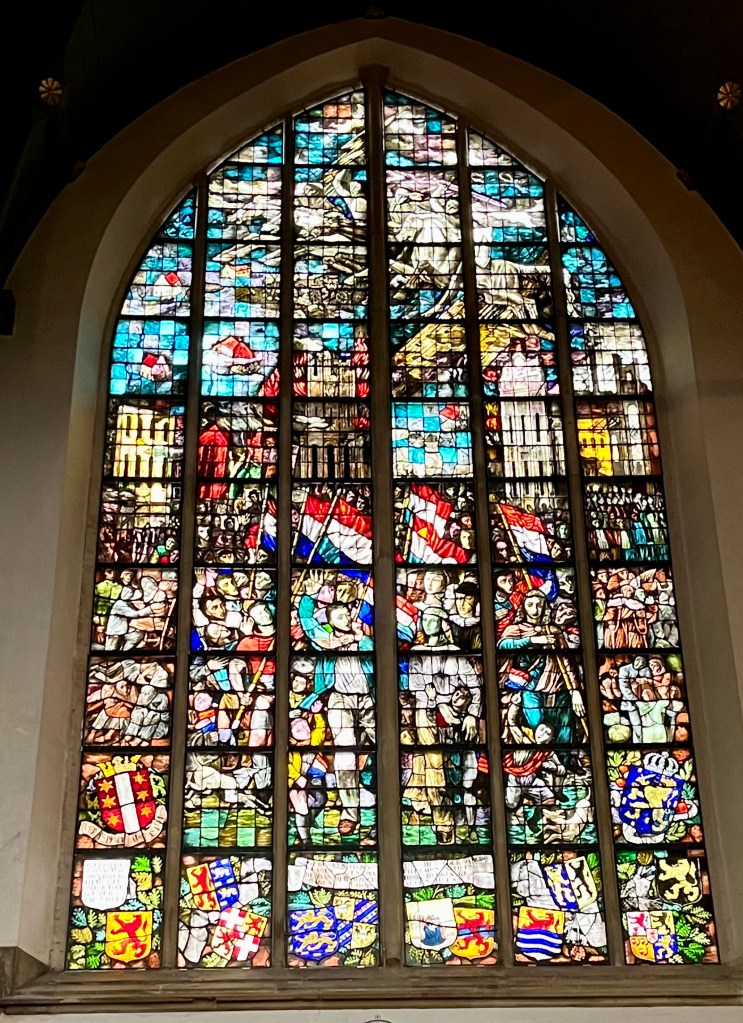
Now I’m not going to describe every window. You need to go and enjoy them yourself.

We were in Gouda to pick up our first visitors for the season, Helen and David Grodski. They arrived on 22nd May, but that’s a story for another time

 Karen’s Travel Blog
Leave a comment