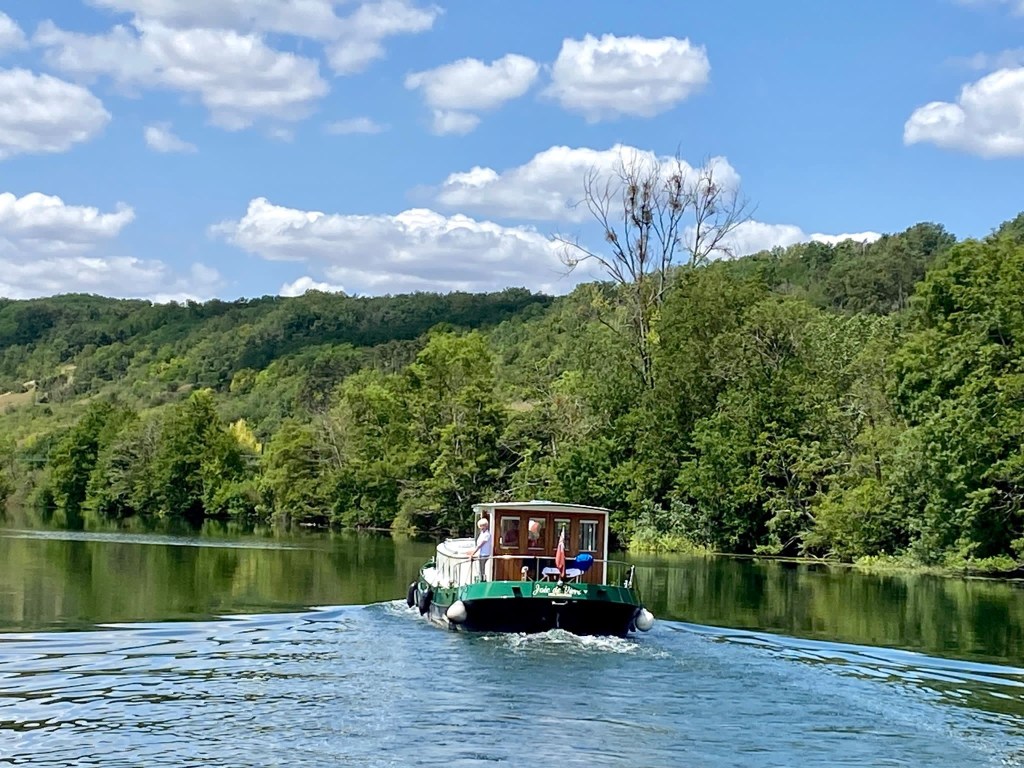
The river Yonne is a tributary of the Seine. It flows from Auxerre to the confluence with the Seine , at Montereau. The river beyond Auxerre was canalised in 1784 in order to aid the floating of timber from the local forests to Paris. It soon became an important transportation route and only lost this crown withe the opening of the railways in the 19th century.
The canalisation of the Yonne dates from the end of the 19th century. Prior to that downstream navigation was made possible by means of artificial floods. Roughly once a week the weirs on the Yonne were opened to allow a motley group of barges, timber rafts and passage boats to be carried by the flood waters to the Seine. Although this system was suitable for floating timber downstream, other vessels were constantly threatened with loss of cargo and passengers, with frequent loss of life! With the opening of the Nivenais canal it was imperative to improve the system with the construction of locks and weirs.
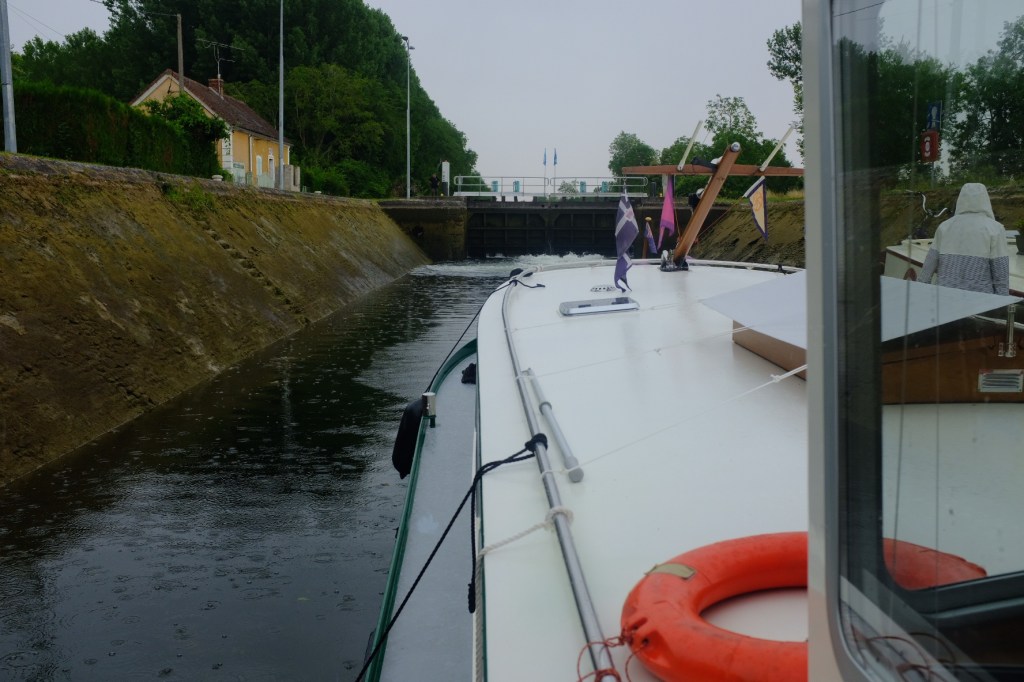
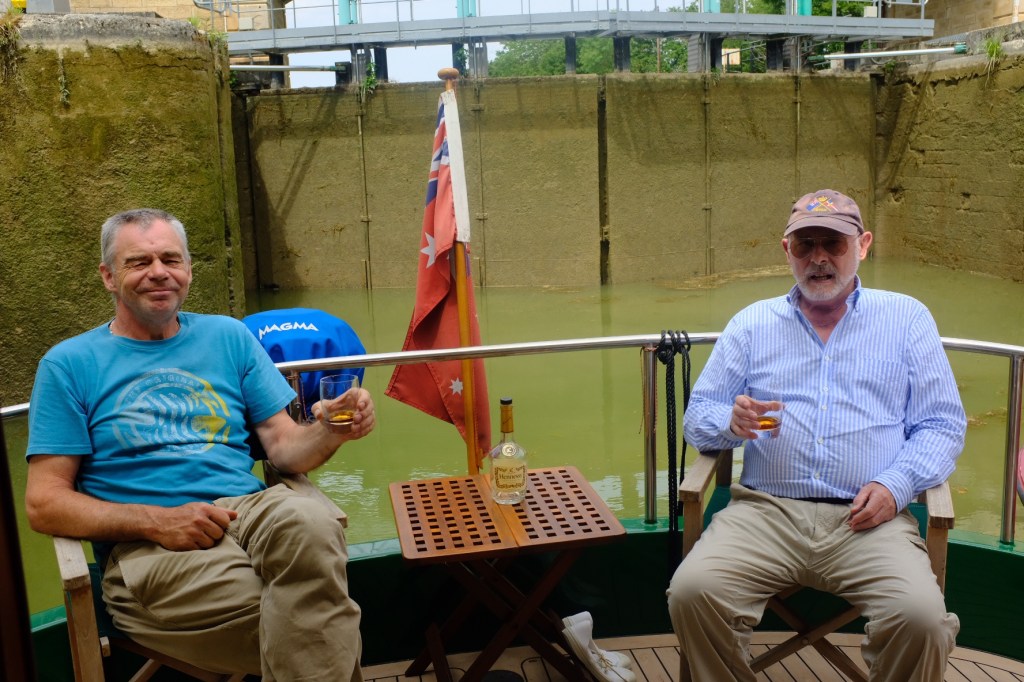
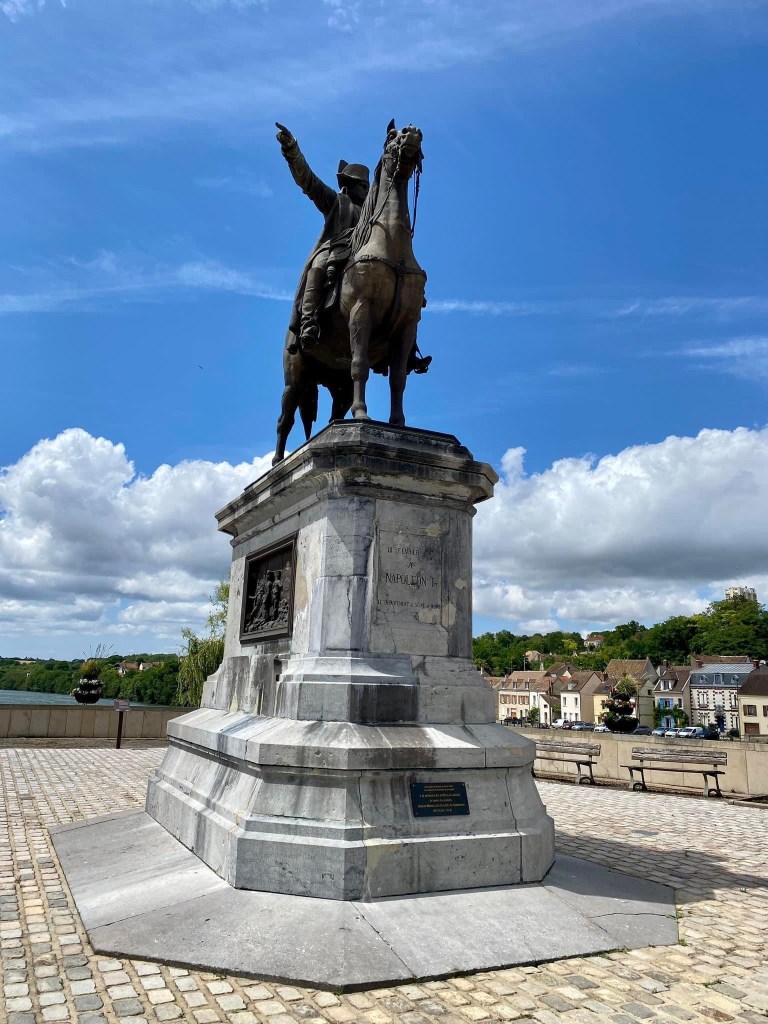
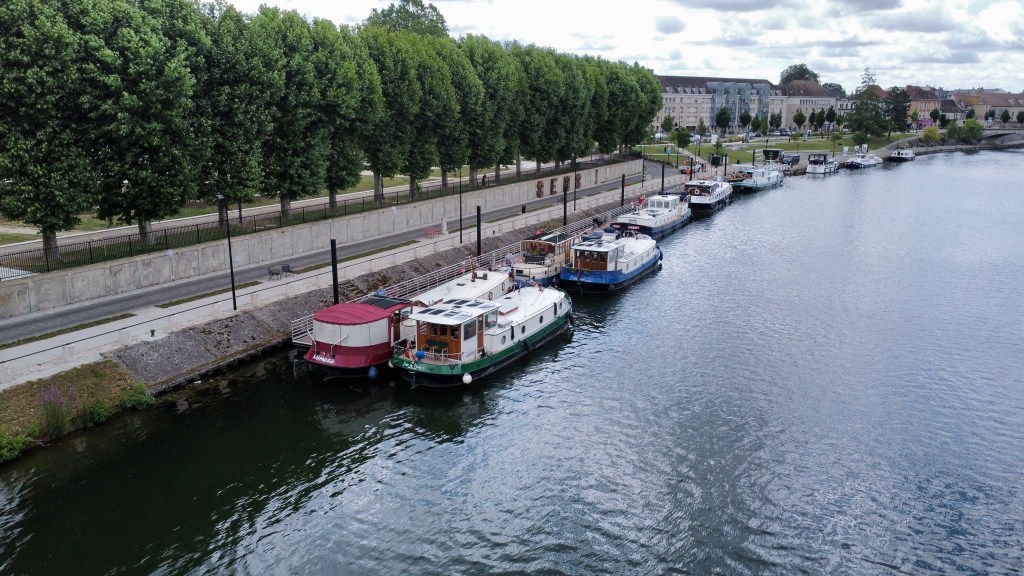
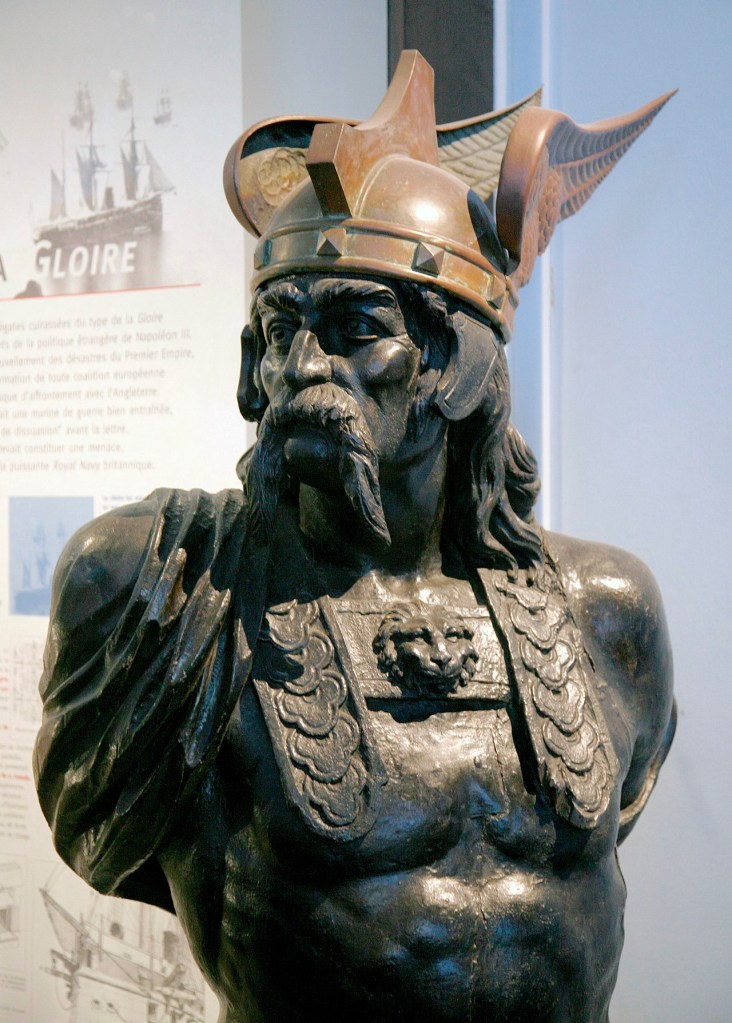
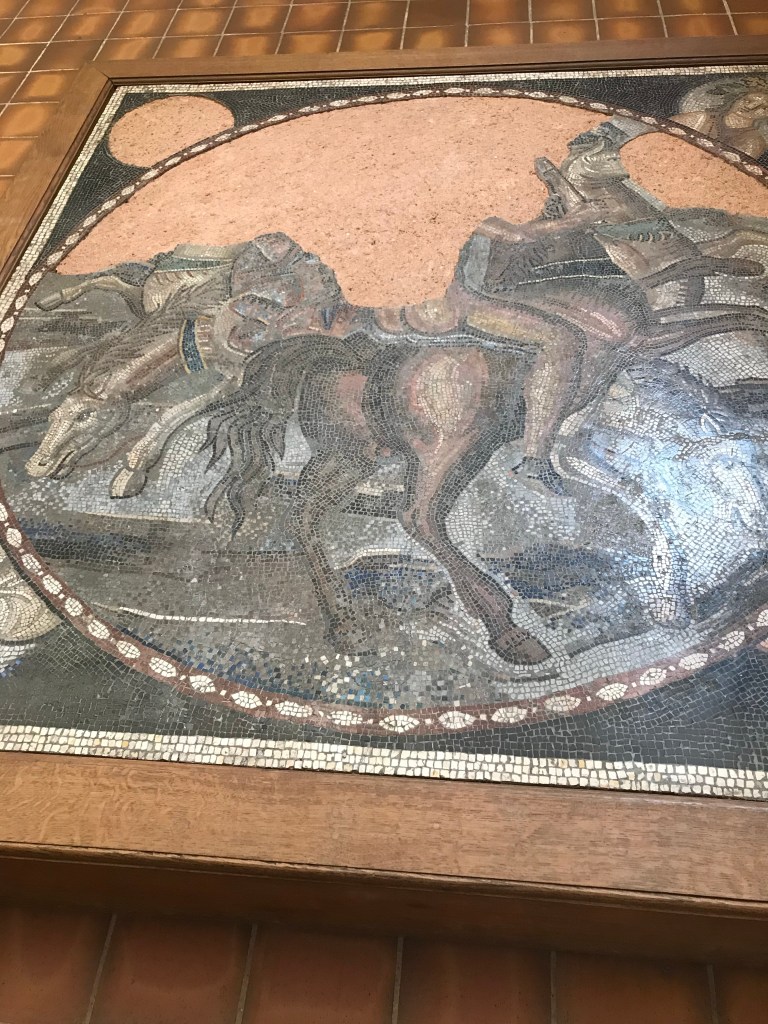
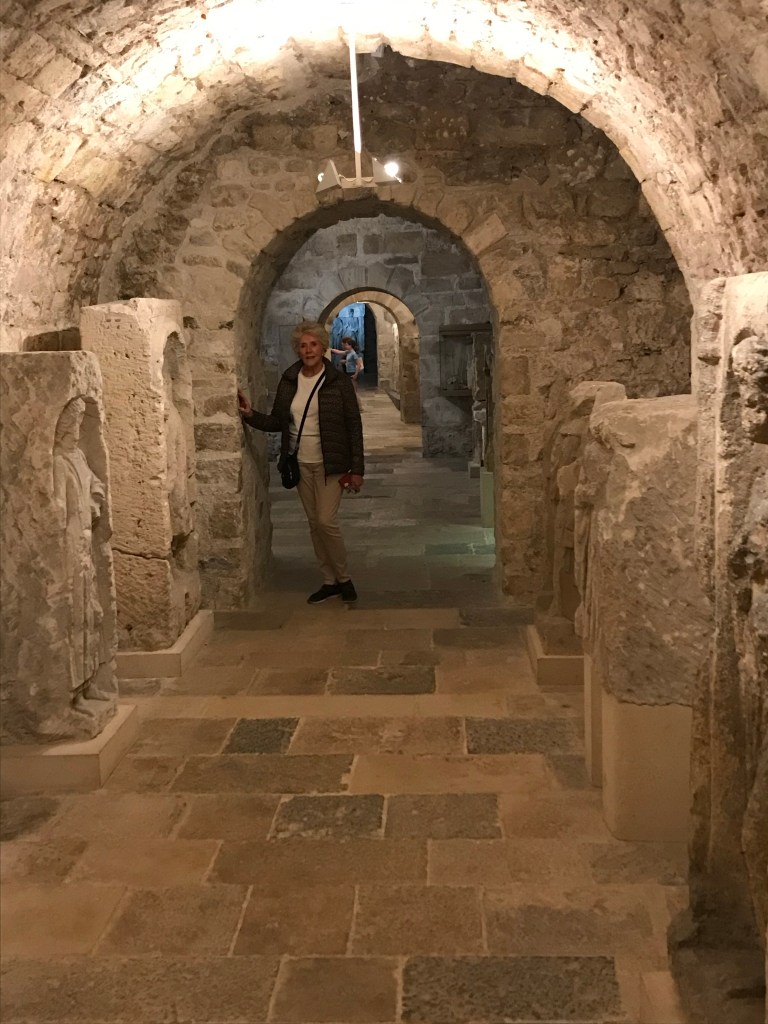
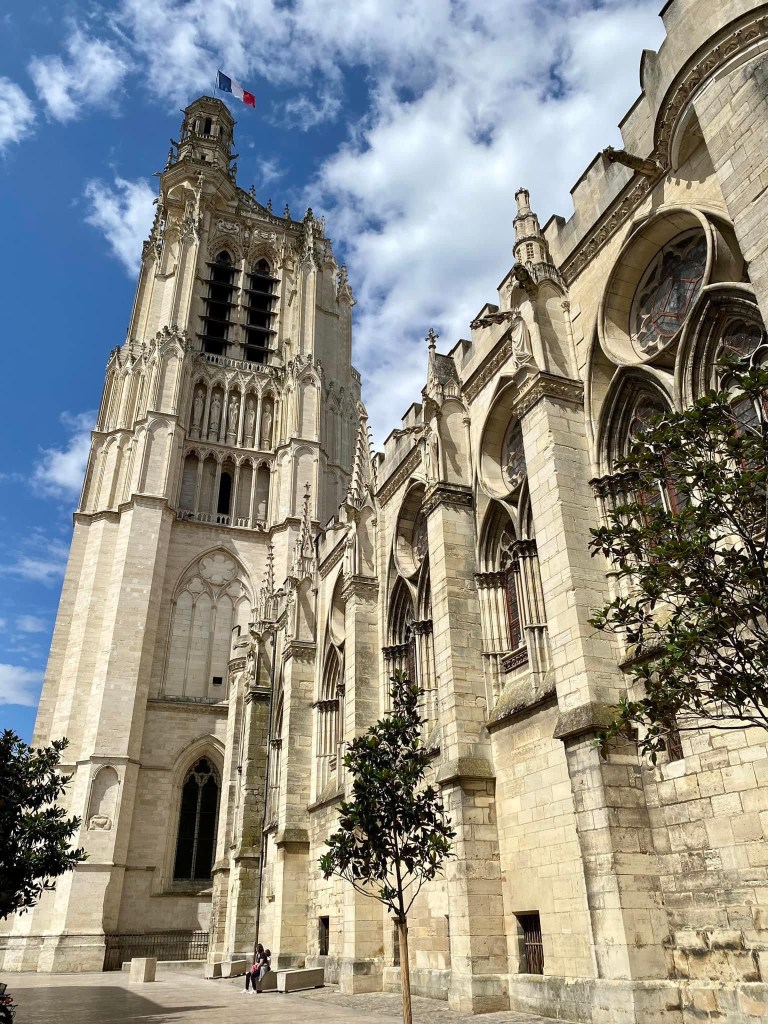
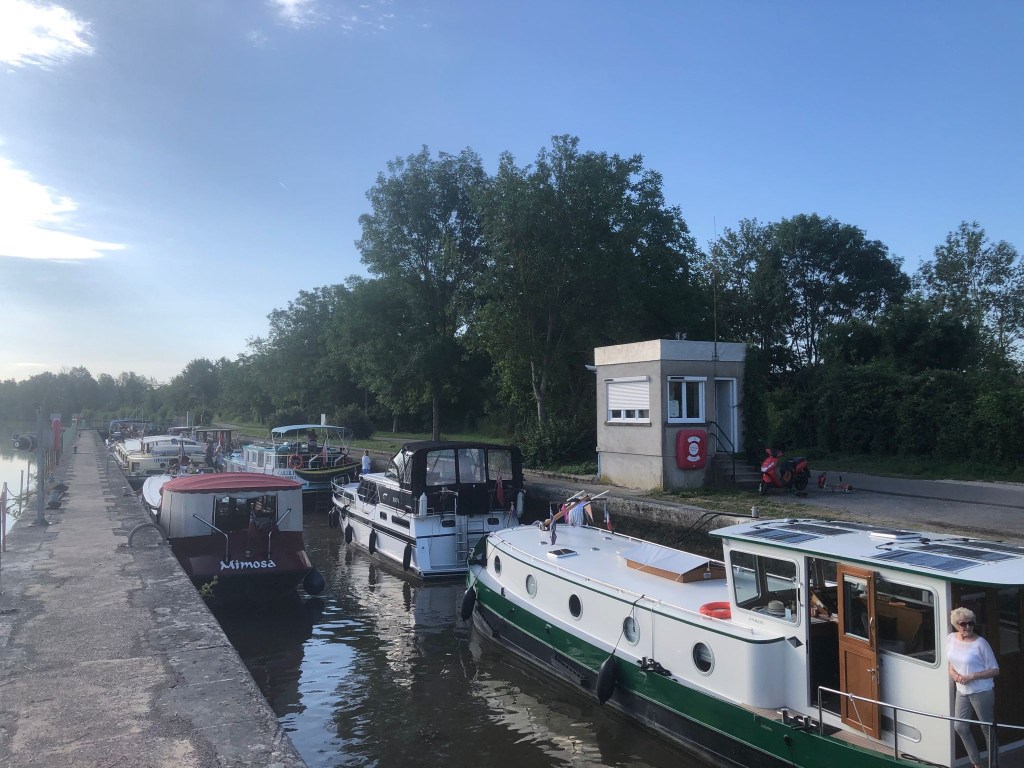
One of the features of the locks on the Yonne is a sloping side. This construction does not put as much pressure on the side walls compared with a straight sided lock, but does make transversing the lock a little more challenging.In some of the sloping sided locks there is a pontoon. Once tied to the pontoon you can relax with a glass of cognac while the pontoon drags the boat up the sloping side of the lock. The only challenge in these locks is not to consume too much cognac!Our first stop on the Yonne was at the confluence of the Seine at the small town of Montereau. Never heard of it, well not surprised, but it was here that Napoleon won one of his last battles in 1814. Apparently the local government was keen to erect a napoleonic theme park to commemorate the site, but they only got as far as painting some murals.40 kms and 7 locks upstream from Montereau is Sens. By now we were starting to see some traffic on the waterway, with a number of boats heading to the rally at Auxerre.The symbol of the city of Sens is the Gaulic chieftain, Brennus. The first settlement in this area was a fortified Gaulish town, and legend has it that Brennus successfully attacked and occupied Rome in 390BC. Their victory was short lived, as by 1st century BC Sens was a Roman town.The museum in Sens stands as a witness to the Roman occupation.Views of Sens, including the Gothic cathedral with its 13th century stain glass and mausoleum of Dauphin Louis and his wife Maria Josepha of Saxony. Louis was the son of Louis XV, but died before his father so never became king. His eldest surviving son became Louis XVI
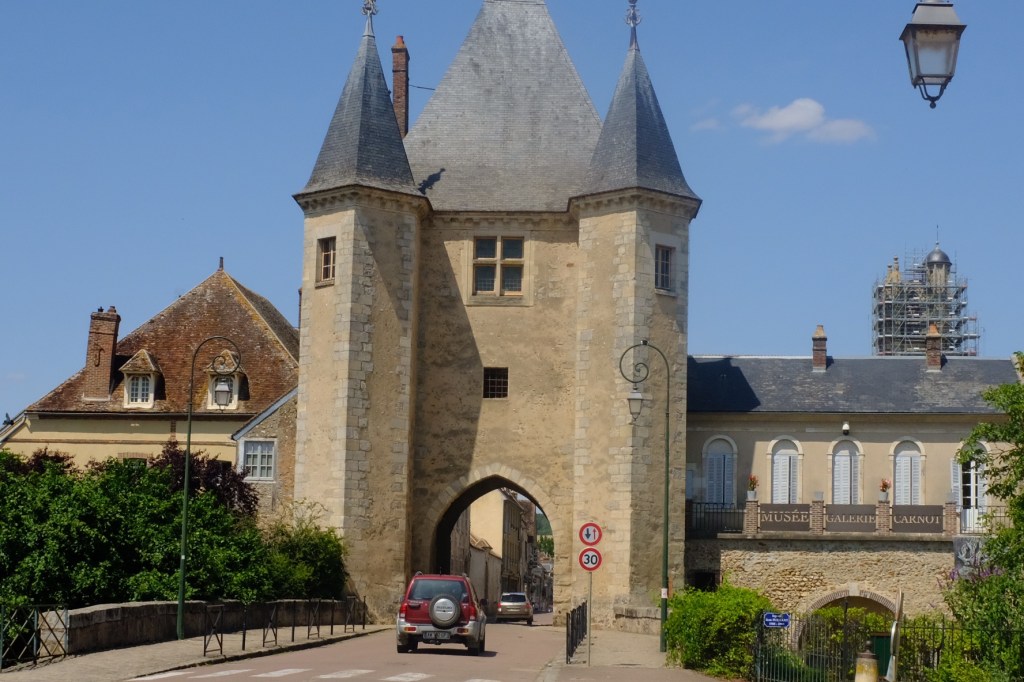
So much for the history lesson! The next town we stopped at as we travelled up the Yonne was Villeneuve. The defensive walls of this medieval town are still partly intact, with impressive gates standing at each end of the main street
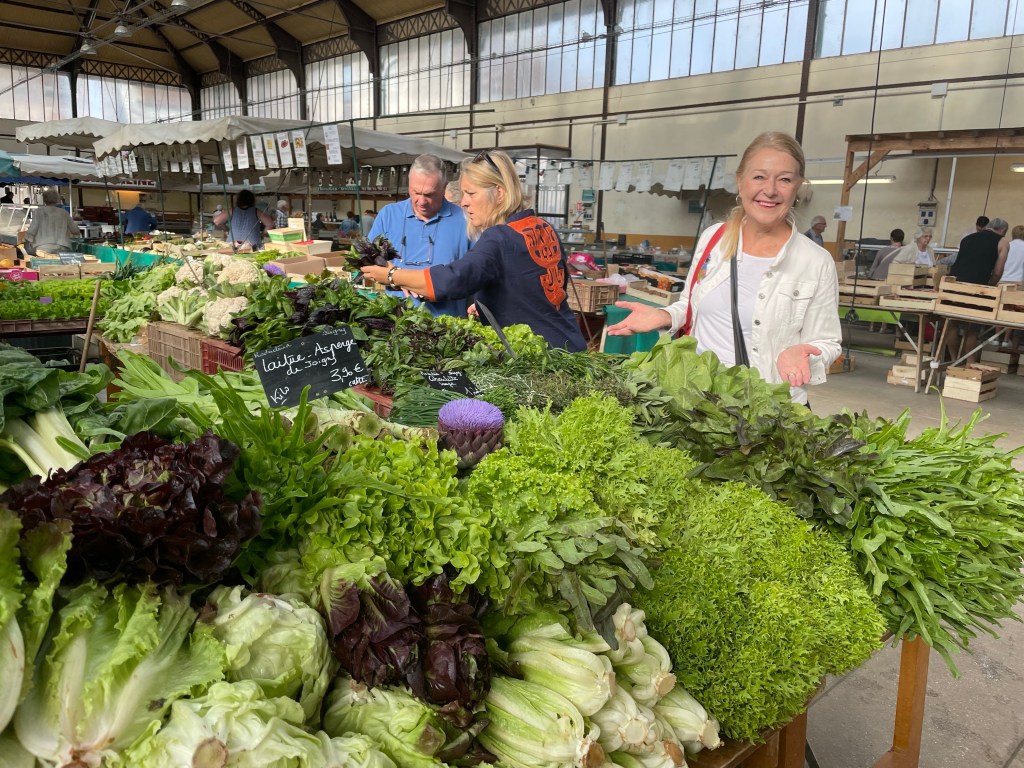
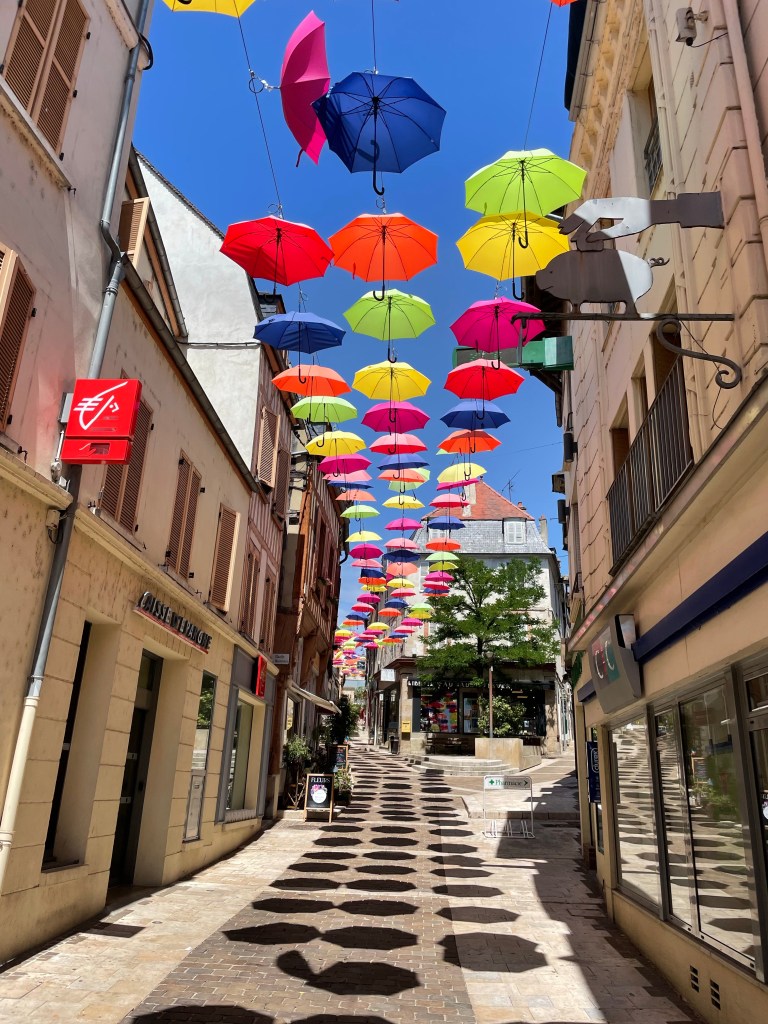
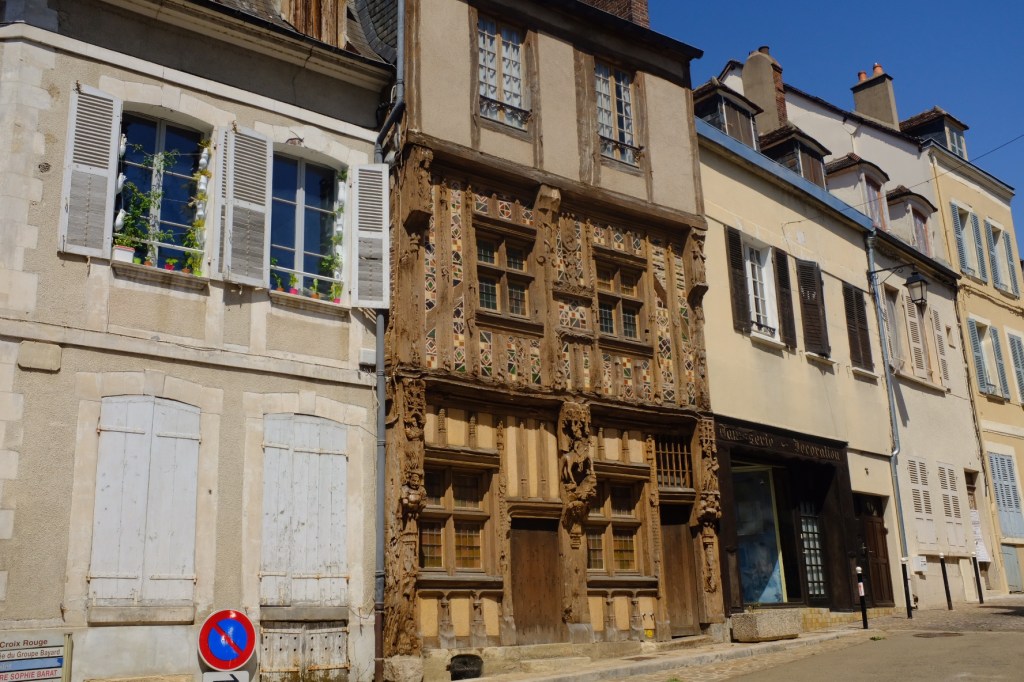
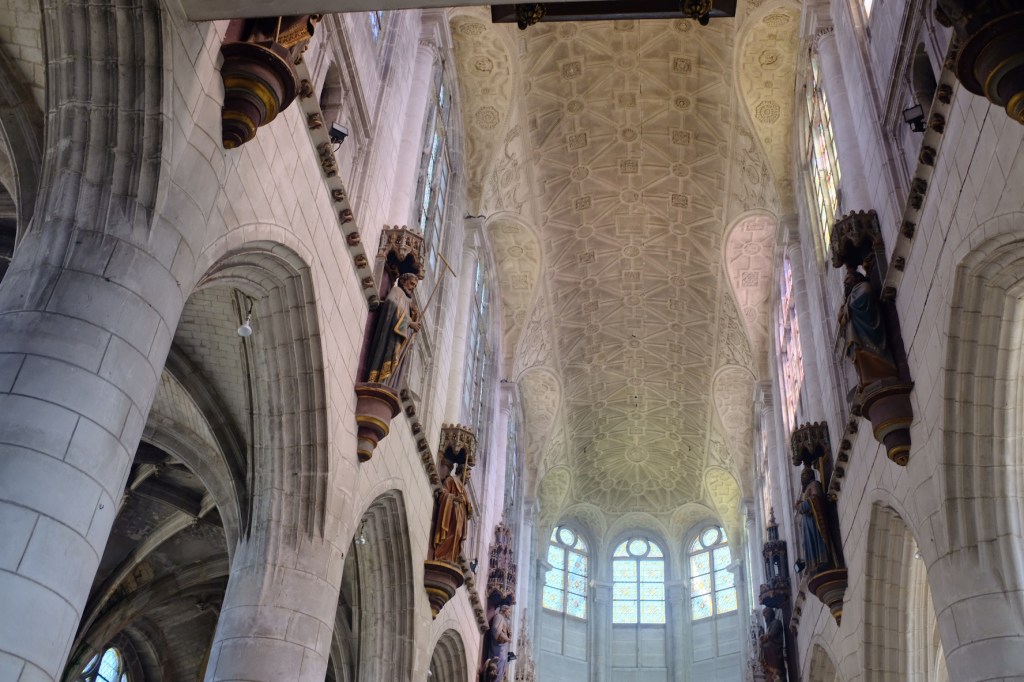
The Joigny Gate and the Sens gate at Villeneuve, oh and the ancient lavoirWe visited a rather impressive covered market at Villeneuve before we departed to JoignyThe Main Street of Joigny. This town is characterised by narrow winding streets and wooden housesViews of Joigny. The church with its impressive ceiling was originally the chapel of the count, whose partly destroyed chateau stands adjacent
The next stop on the river requires little mention. By now we were in the middle of a server heat wave, and if you think the flies in central Australia are the most prolific in the world, then you should, or rather shouldn’t visit Migennes. The port is located on the Canal de Bourgogne, which called for a slight deviation from the Yonne. The heat and the flies made this a less memorable location to rest our heads for the night.
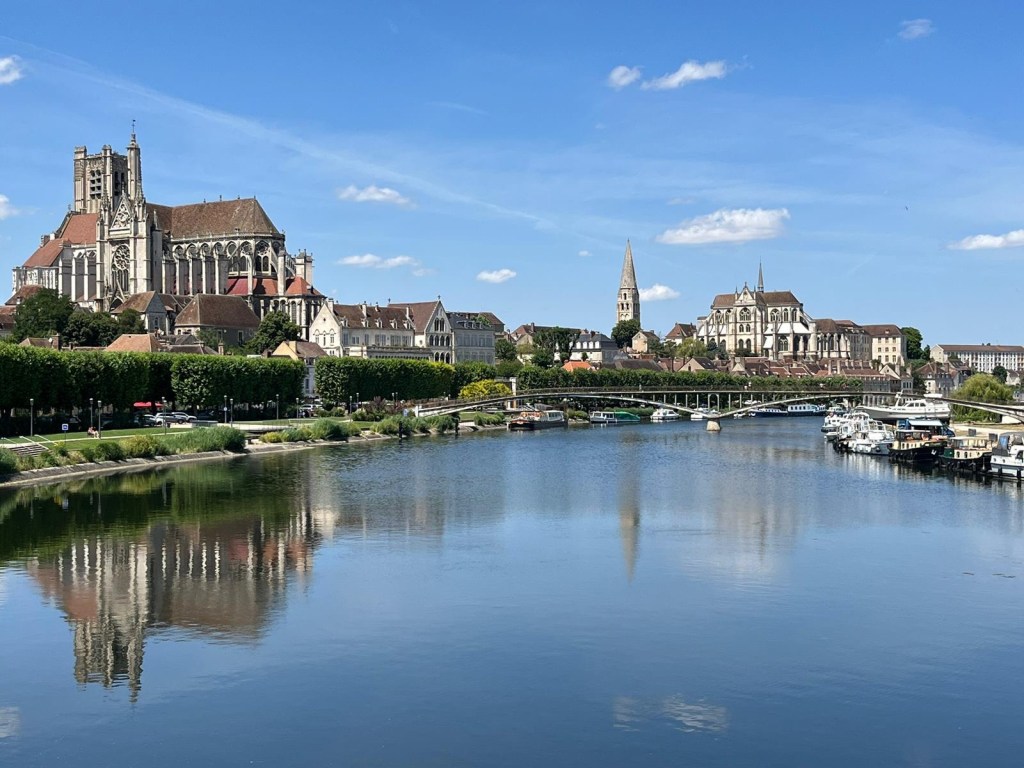
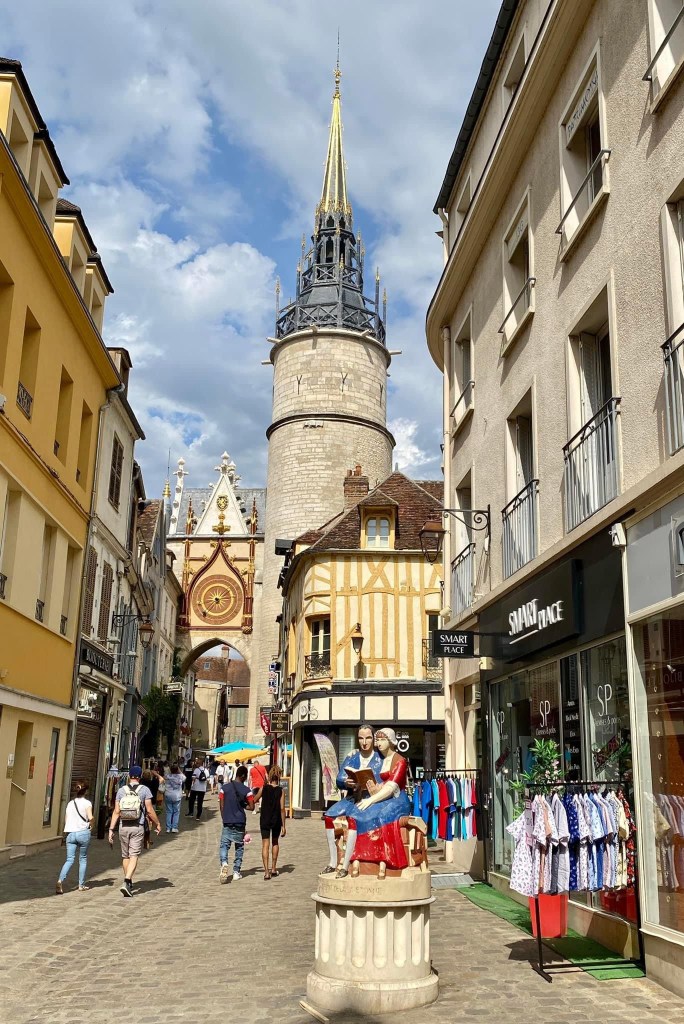
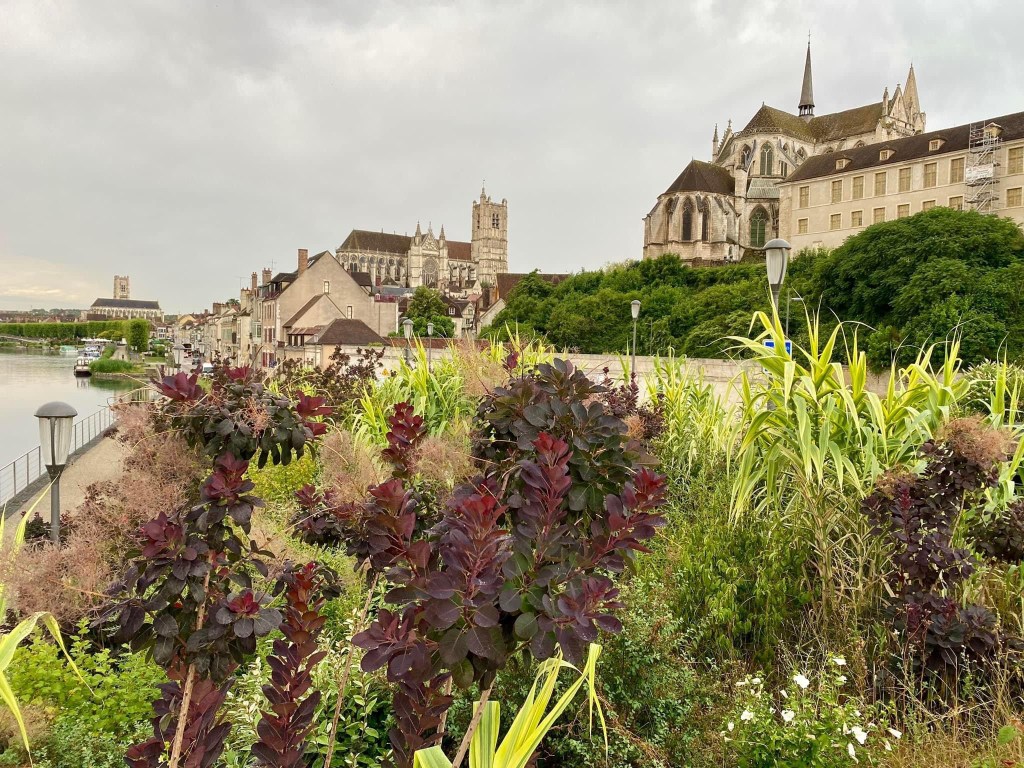
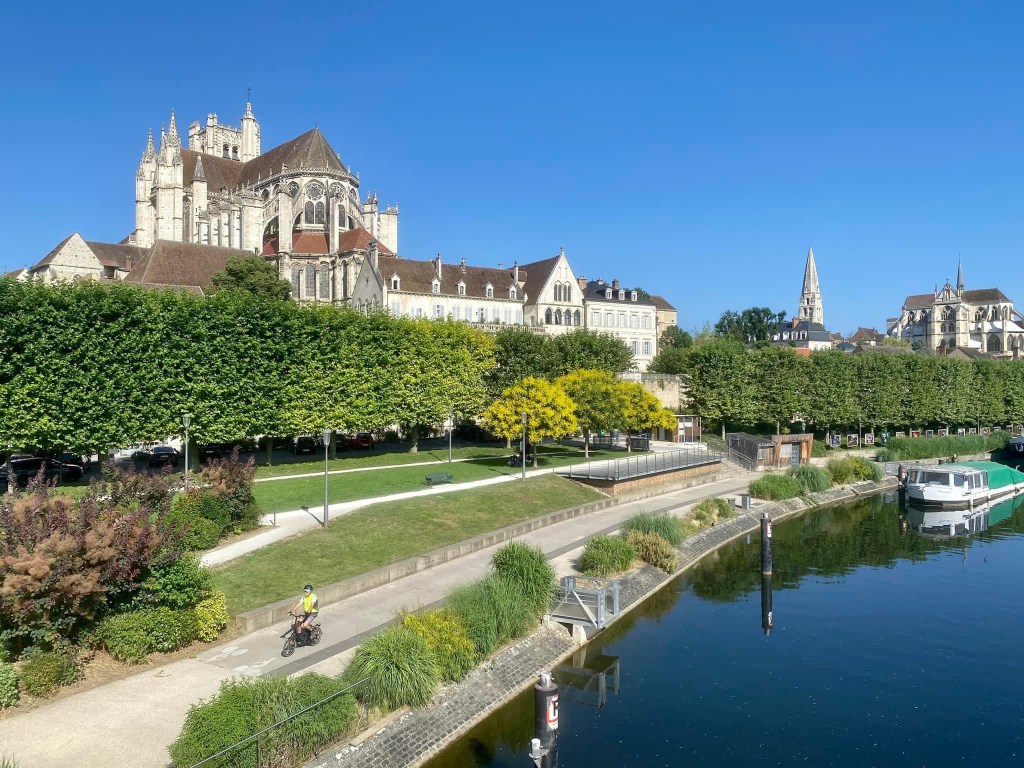
Leaving MigennesWe were now 23 km and 10 locks from our final destination, Auxerre, and the traffic was increasing with the boats going to the rally.Auxerre. The rally was held one lock past the main port, but we rested a few days to gather our strength for the upcoming party.
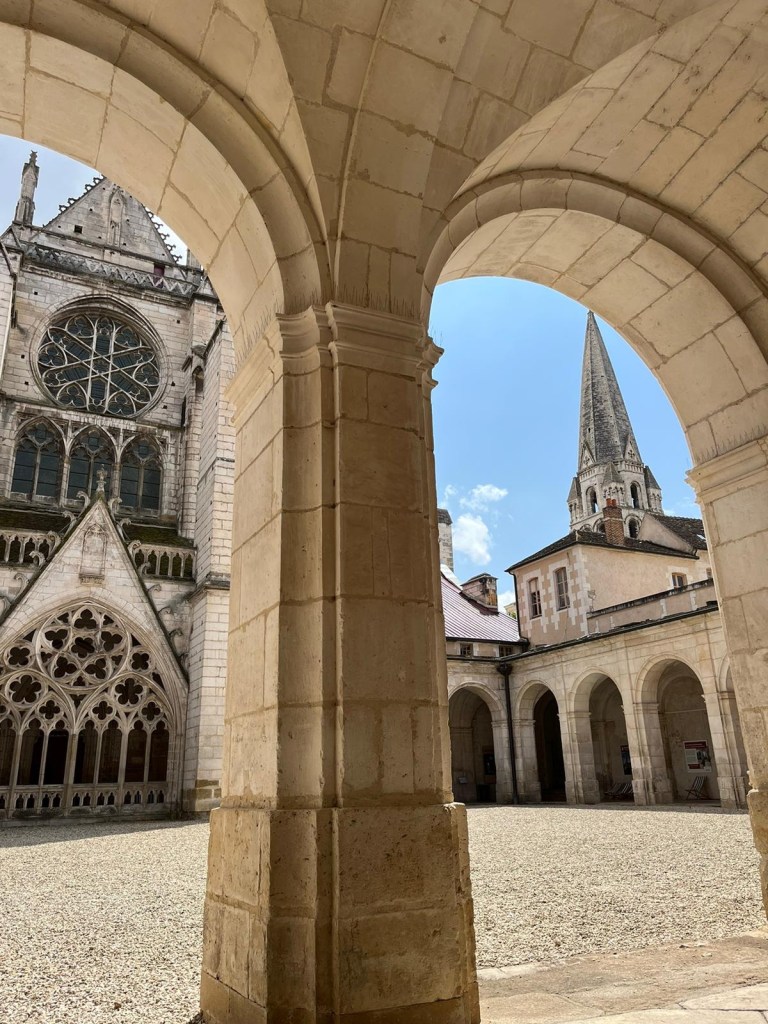
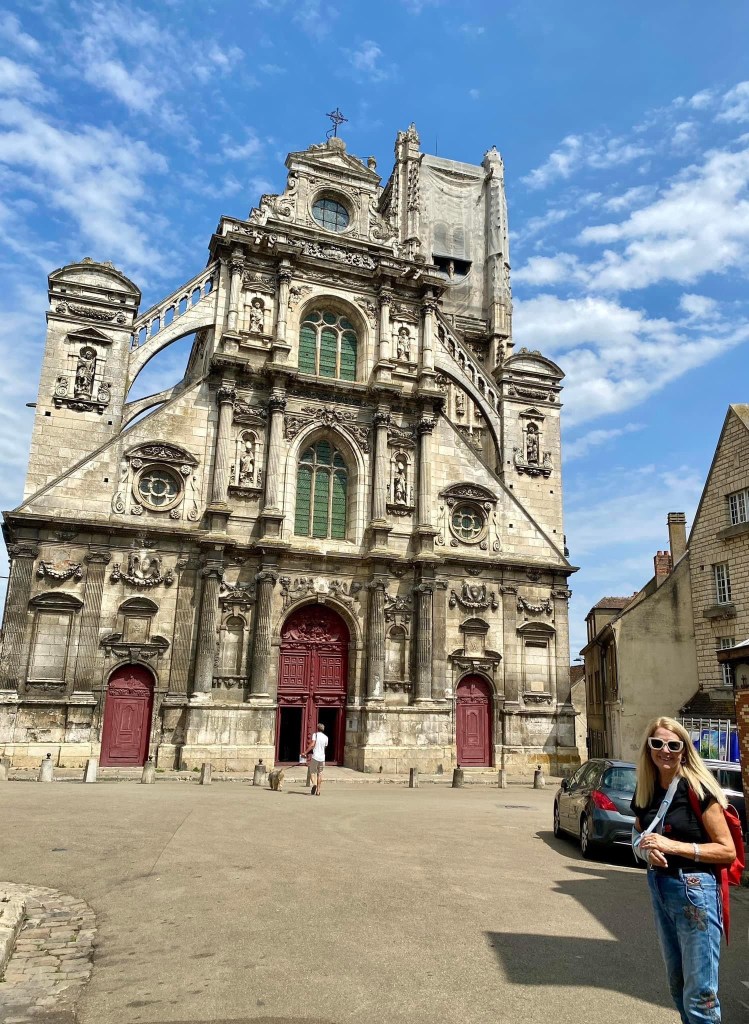
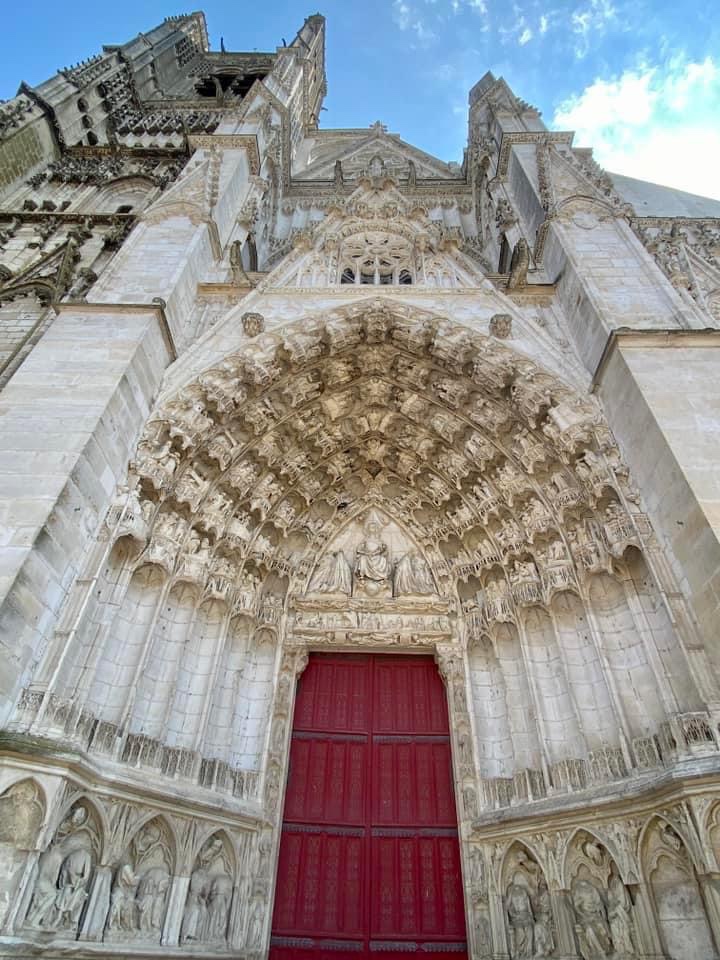
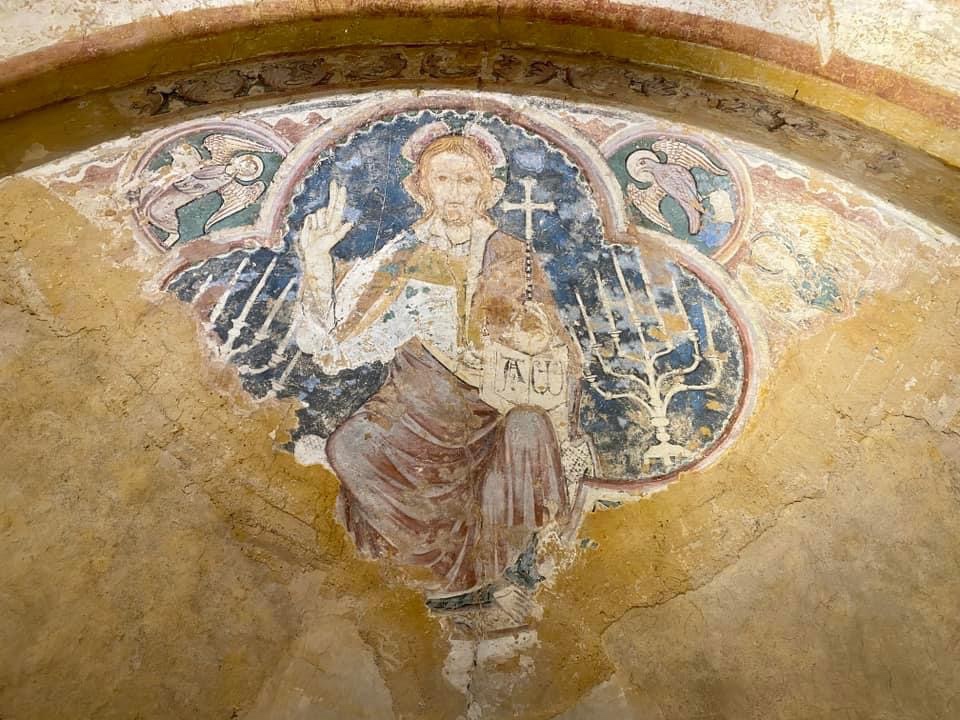
Arriving in Auxerre on 9th July, and not leaving until 19th July gave us plenty of time to explore this lovely city. Quite a few bargees winterise here, and this is certainly a lovely city to spend an extended sojourn in. The only downside, I slipped on a wet pavement and broke my wrist☹️. Can’t complain about the 3 hours at the hospital, but this disability has certainly made living on a barge a little more difficult.
















 Karen’s Travel Blog
Leave a comment